
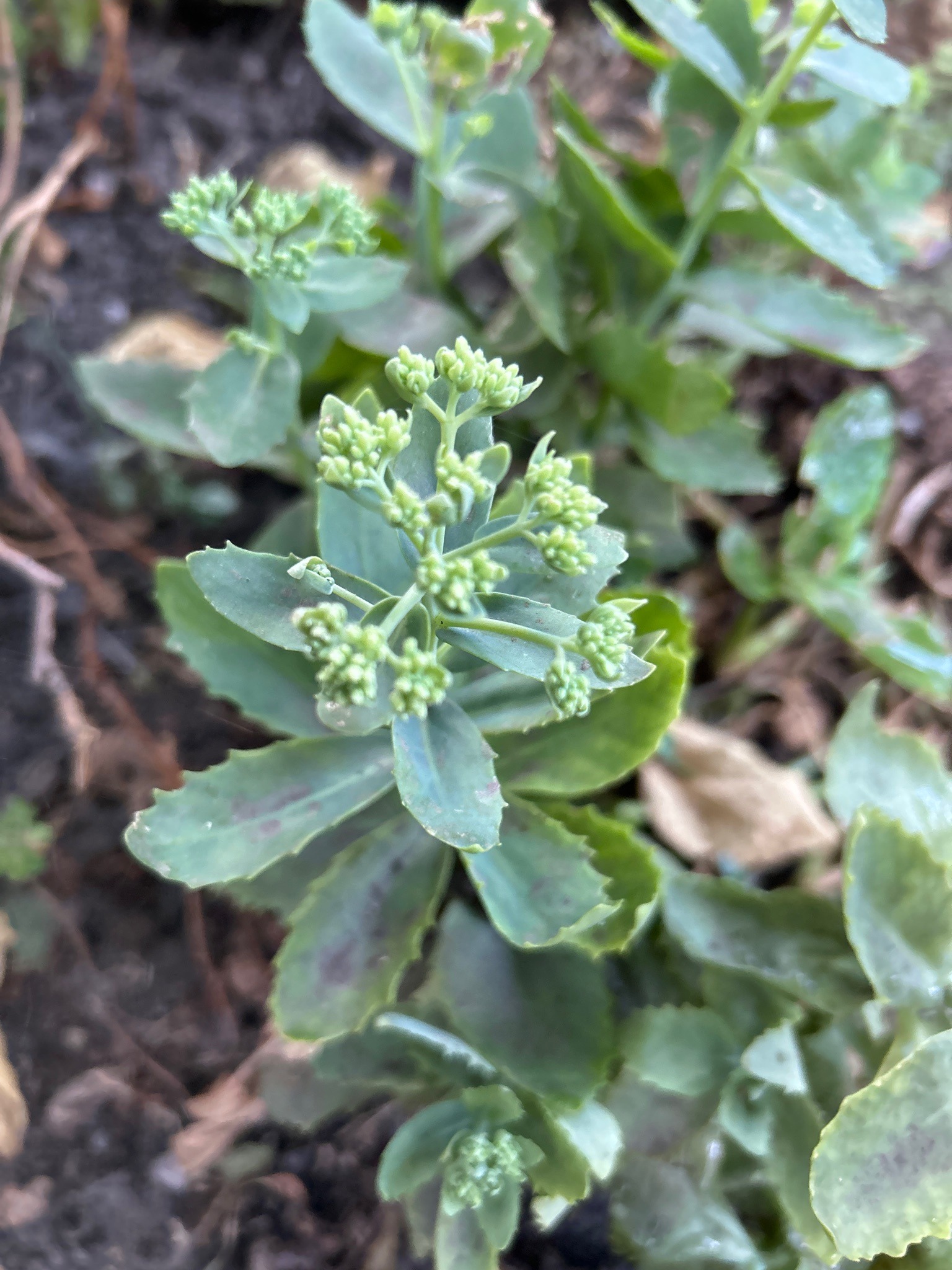
Stonecrop
Sedum spectabile
A succulent perennial featuring fleshy, glaucous green-to-blue-green leaves arranged oppositely or in whorls along upright stems, terminating in prominent flat-topped flower bud clusters.
- Light
- Full sun, requiring at least 6 hours of direct sunlight daily
- Water
- Low watering needs; highly drought-tolerant once established. Water deeply but infrequently. Avoid waterlogged soils, which can lead to root decay.
- Growth
- Herbaceous perennial forming a compact, upright clump with a mature height and spread of 18 to 24 inches, exhibiting a moderate growth rate
Care instructions
Grow in full sun with well-draining soil. Water sparingly once established, allowing the soil to dry completely between waterings. Apply a light, balanced fertilizer in spring if soil fertility is low.
Growing details
Sunlight
Full sun, requiring at least 6 hours of direct sunlight daily
Watering
Low watering needs; highly drought-tolerant once established. Water deeply but infrequently. Avoid waterlogged soils, which can lead to root decay.
Soil
Prefers gritty, sandy, or loamy well-draining soil with a neutral to slightly alkaline pH range of 6.0 to 7.5
Hardiness zone
USDA Hardiness Zones 3 through 9
Growth habit
Herbaceous perennial forming a compact, upright clump with a mature height and spread of 18 to 24 inches, exhibiting a moderate growth rate
Bloom season
Late summer to autumn, featuring dense clusters of star-shaped flowers that transition from green buds to pink and finally deep bronze-red
Propagation
Easily propagated through stem cuttings taken in spring or summer, or by clump division in early spring as new growth emerges
Common pests & issues
Generally pest and disease resistant, but susceptible to root rot in poorly draining soils and occasionally bothered by aphids or powdery mildew
Similar species
Hylotelephium telephium (Orpine), which features slightly more serrated leaf margins and taller, less compact growth habits compared to Sedum spectabile