
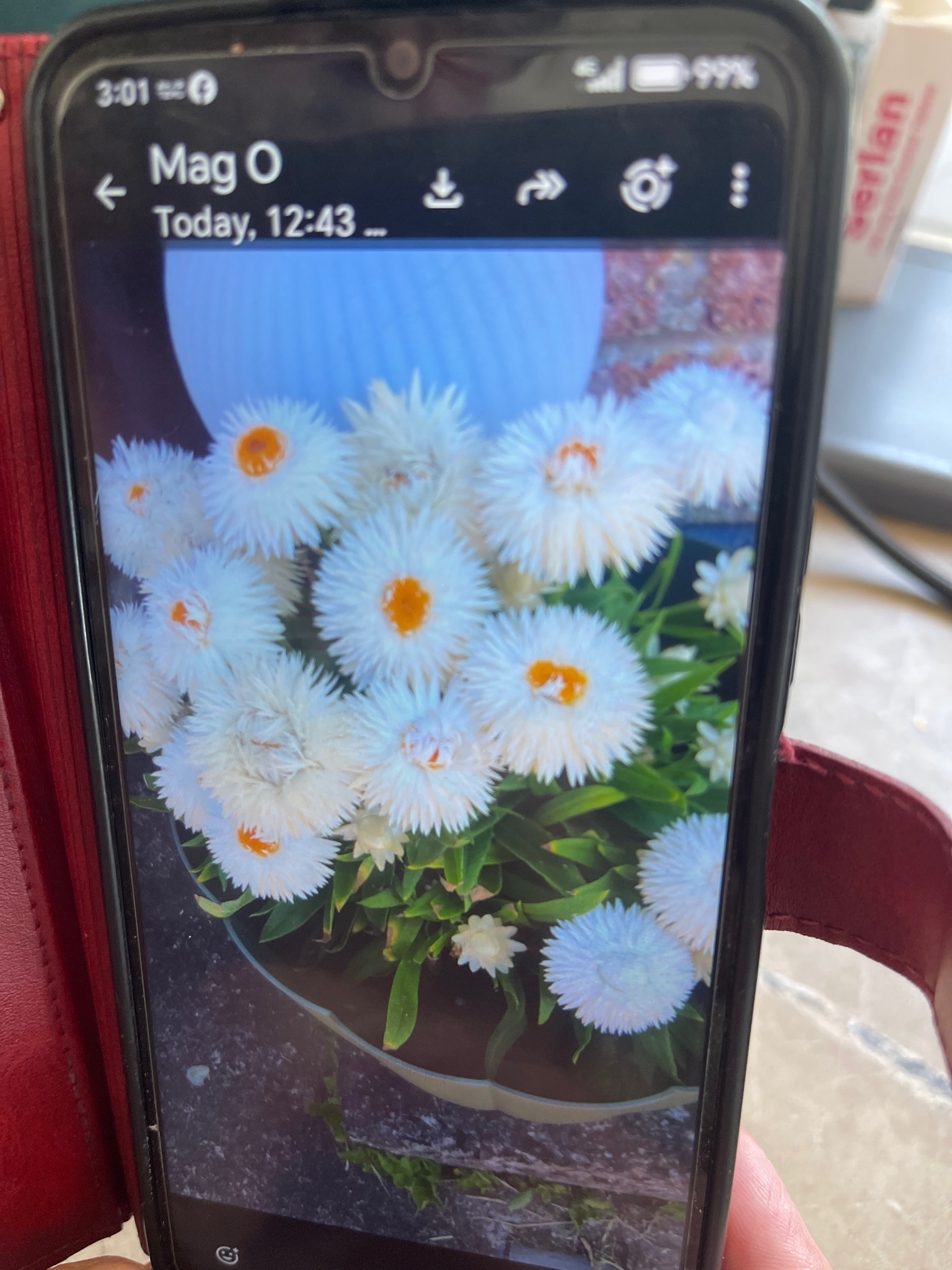
Strawflower
Xerochrysum bracteatum
A popular flowering plant characterized by its daisy-like blossoms that have a papery, stiff texture. The 'petals' are actually colorful bracts that surround a central disc of tiny florets.
- Light
- Full sun; at least 6 to 8 hours of direct sunlight daily for best flowering.
- Water
- Moderate watering; allow the top inch of soil to dry out between waterings. Highly drought-tolerant once established but prone to root rot in poorly drained soil.
- Growth
- Upright, branching perennial or annual growing 1 to 3 feet tall and 6 to 18 inches wide with a moderate growth rate.
Care instructions
Provide full sun and well-drained soil. Water regularly to establish, but avoid soggy conditions as the plant is drought-tolerant once mature. Deadhead to encourage continuous blooming throughout the season.
Growing details
Sunlight
Full sun; at least 6 to 8 hours of direct sunlight daily for best flowering.
Watering
Moderate watering; allow the top inch of soil to dry out between waterings. Highly drought-tolerant once established but prone to root rot in poorly drained soil.
Soil
Well-draining, sandy or loamy soil with a neutral to slightly acidic pH (6.0-7.0).
Hardiness zone
USDA zones 8-11; often grown as an annual in cooler climates.
Growth habit
Upright, branching perennial or annual growing 1 to 3 feet tall and 6 to 18 inches wide with a moderate growth rate.
Bloom season
Spring through autumn; flowers feature stiff, papery bracts in shades of white, yellow, orange, red, and pink with a yellow central disk.
Propagation
Typically propagated by seeds sown indoors 6-8 weeks before the last frost, or by softwood cuttings in early summer.
Common pests & issues
Susceptible to downy mildew and aphids. Overwatering can lead to stem or root rot.
Similar species
Rhodanthe chlorocephala (Everlasting Daisy), which has thinner stems and softer foliage compared to the more robust and woody habit of Xerochrysum.