
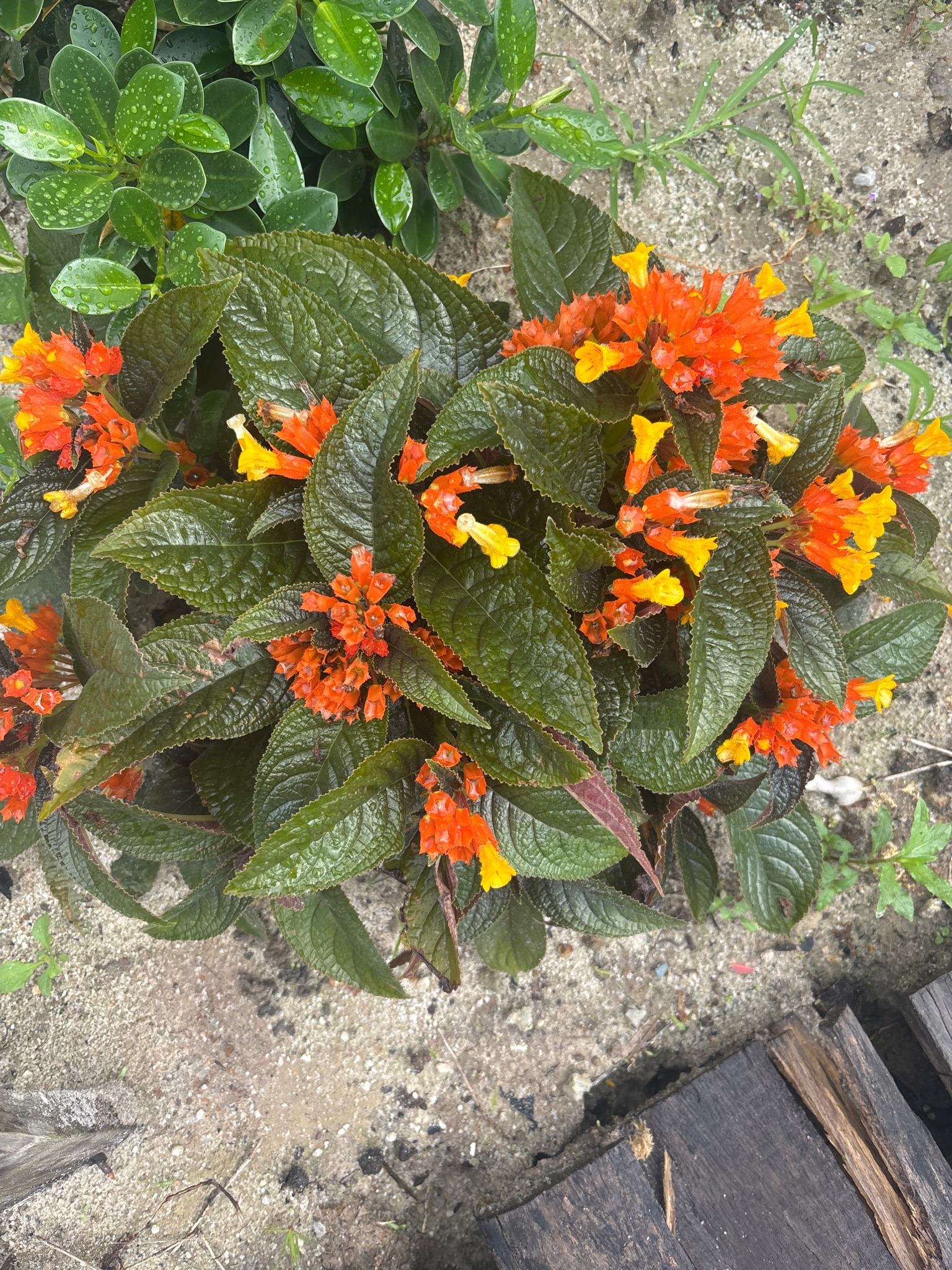
Sunset Bells
Chrysothemis pulchella
A low-growing tropical perennial known for its striking contrast between dark, metallic bronze-green foliage and bright orange calyxes with small yellow flowers. The leaves are ovate, deeply veined, and slightly succulent.
- Light
- Bright indirect light or partial shade; 4 to 6 hours of filtered sunlight is ideal. Intense direct afternoon sun can scorch the dark foliage.
- Water
- Keep soil evenly moist. It prefers high humidity and consistent moisture but is prone to root rot if left in standing water. Water when the top inch of soil feels slightly dry.
- Growth
- Herbaceous perennial with a tuberous root system. Reaches a mature height and spread of approximately 12 to 18 inches, forming a compact mound.
Care instructions
Thrives in warm, humid environments with bright indirect light. Keep the soil consistently moist but never waterlogged. Use a rich, well-draining potting mix and feed with a balanced liquid fertilizer every month during the growing season.
Growing details
Sunlight
Bright indirect light or partial shade; 4 to 6 hours of filtered sunlight is ideal. Intense direct afternoon sun can scorch the dark foliage.
Watering
Keep soil evenly moist. It prefers high humidity and consistent moisture but is prone to root rot if left in standing water. Water when the top inch of soil feels slightly dry.
Soil
Well-draining, humus-rich soil or a peat-based potting mix with a slightly acidic to neutral pH (5.5 to 6.5).
Hardiness zone
USDA Zones 10-12; it is frost-sensitive and will go dormant or die back if temperatures drop below 50 degrees Fahrenheit.
Growth habit
Herbaceous perennial with a tuberous root system. Reaches a mature height and spread of approximately 12 to 18 inches, forming a compact mound.
Bloom season
Primarily blooms from spring through autumn. The showy part consists of long-lasting bright orange bracts (calyxes) that hold smaller, tubular yellow flowers.
Propagation
Typically propagated by division of its underground tubers or by stem cuttings taken during the spring or summer. Can also be grown from seed.
Common pests & issues
Susceptible to mealybugs, spider mites, and whiteflies. Overwatering can lead to tuber rot. Lack of humidity may cause the leaf edges to brown.
Similar species
Episcia cupreata (Flame Violet) has similar metallic foliage but typically grows as a trailing groundcover and has different flower structures. Alloplectus species share similar tubular flowers but often have different growth habits.