
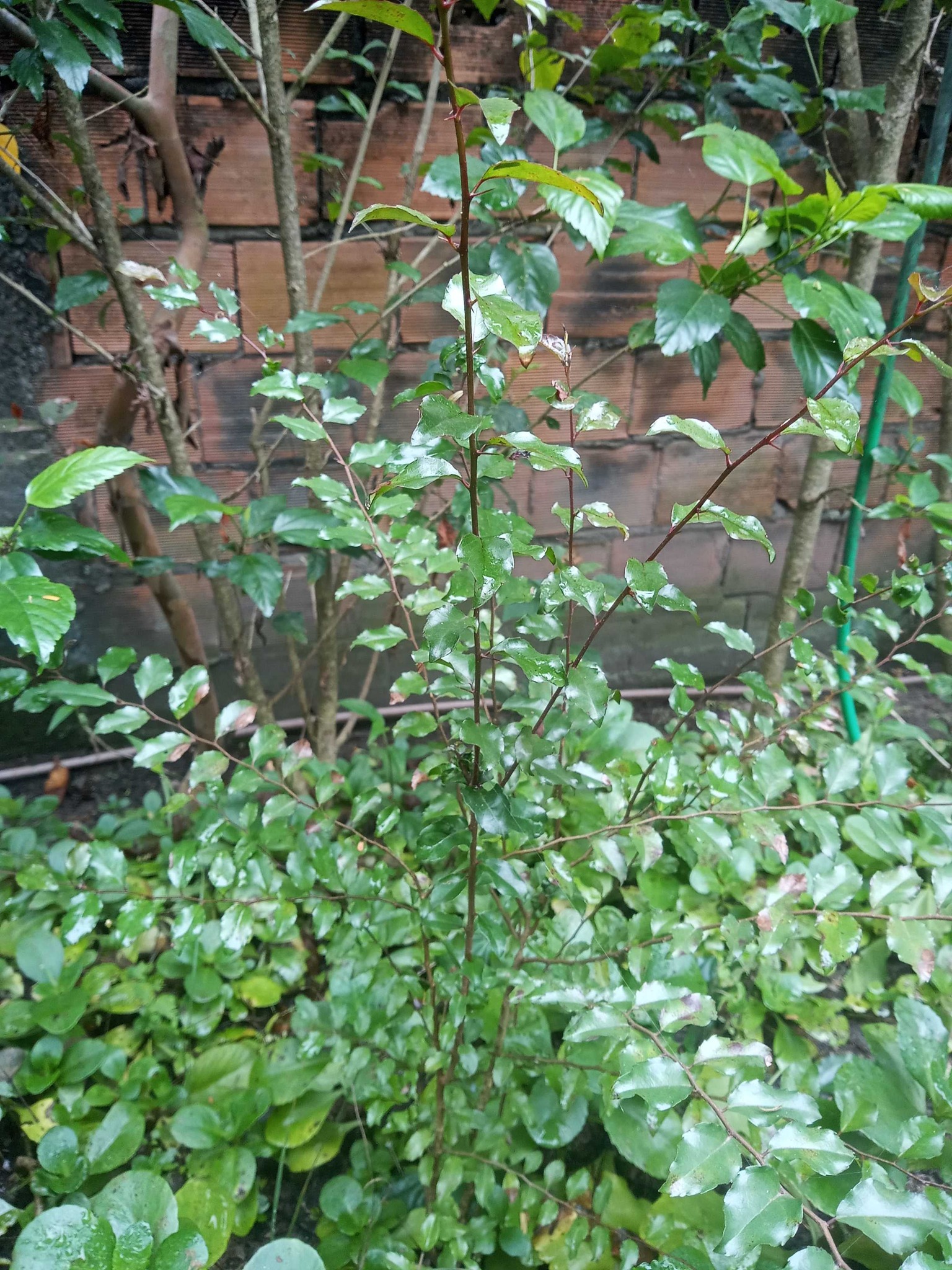
Surinam Cherry
Eugenia uniflora
A dense, multi-branched evergreen shrub or small tree with glossy, ovate-lanceolate leaves that emerge bronze-red and turn dark green. It features small white flowers and distinctive deeply-ribbed, pumpkin-shaped globose fruits.
- Light
- Full sun to partial shade; ideally 6+ hours of direct sunlight per day for maximum fruiting and dense foliage.
- Water
- Moderate; water regularly through the summer and keep the soil moist but not waterlogged. Established plants can withstand brief periods of drought.
- Growth
- Perennial evergreen shrub or small tree; can reach heights of 15–25 feet if not pruned, with a slow-to-moderate growth rate.
Care instructions
Provide full sun to partial shade in well-draining soil. Maintain regular watering while the plant is establishing, though it is somewhat drought-tolerant once mature. Fertilize with a balanced formula during the growing season.
Growing details
Sunlight
Full sun to partial shade; ideally 6+ hours of direct sunlight per day for maximum fruiting and dense foliage.
Watering
Moderate; water regularly through the summer and keep the soil moist but not waterlogged. Established plants can withstand brief periods of drought.
Soil
Adaptable to various soil types including sandy or clay soils, preferring a slightly acidic pH (5.5–6.5). Requires excellent drainage.
Hardiness zone
9b to 11 (USDA hardiness zones); sensitive to deep freezes but may survive light frosts with minimal damage.
Growth habit
Perennial evergreen shrub or small tree; can reach heights of 15–25 feet if not pruned, with a slow-to-moderate growth rate.
Bloom season
Typically blooms in spring, though can flower year-round in tropical climates. Flowers are small, white, and fragrant with prominent stamens.
Propagation
Most commonly grown from seeds, which germinate within 3 to 4 weeks. Can also be propagated via semi-hardwood cuttings or air layering.
Common pests & issues
Generally hardy but can be affected by scale insects, whiteflies, and fruit flies. Susceptible to root rot if soil drainage is poor.
Similar species
Eugenia brasiliensis (Grumichama) – distinguished by thicker, larger leaves and different fruit shape; Syzygium paniculatum – has smoother-skinned fruit and different leaf venation.