
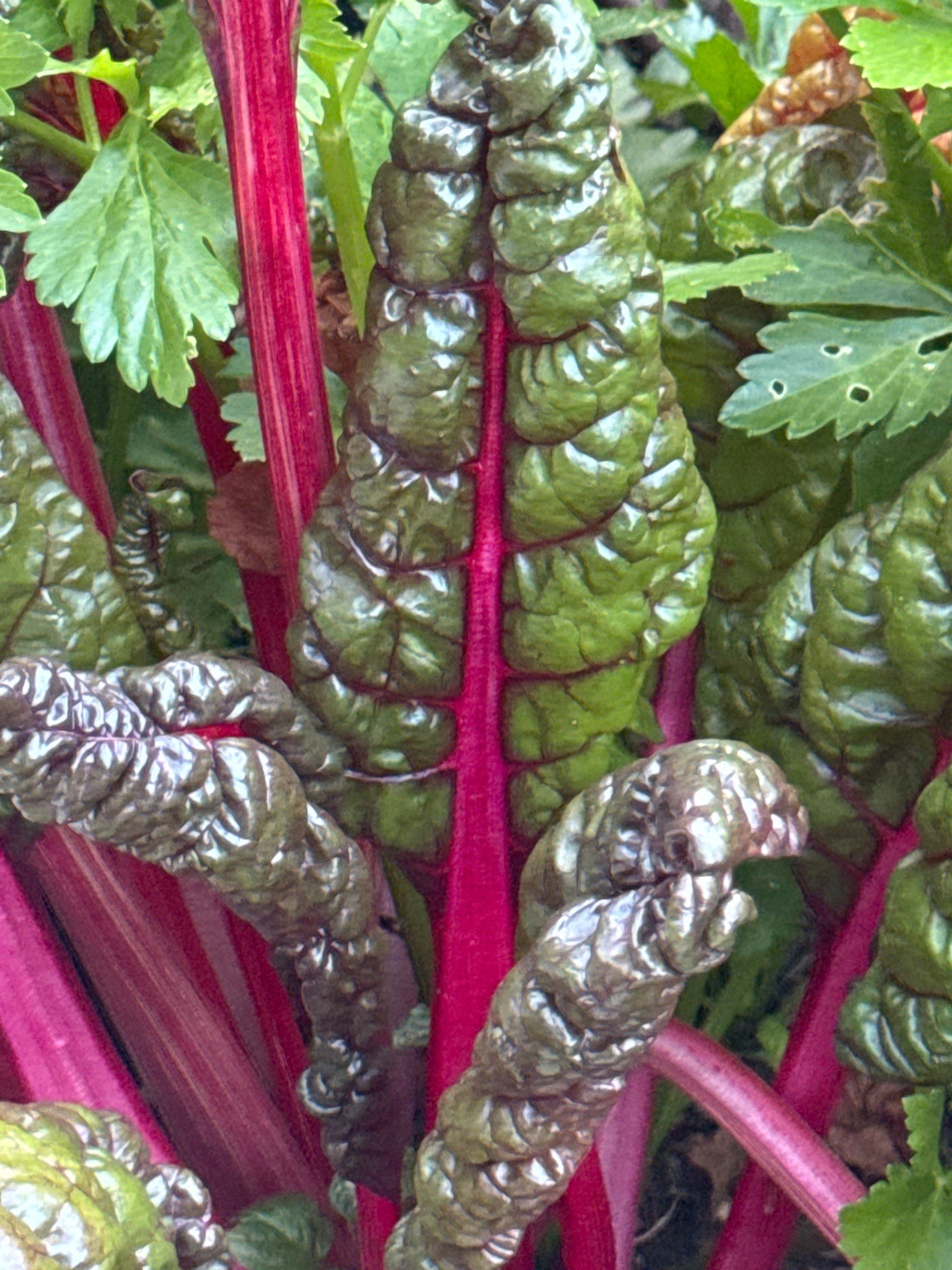
Swiss Chard
Beta vulgaris subsp. vulgaris
A leafy green vegetable known for its large, crinkled, dark green leaves and thick, fleshy, often brightly colored stalks ranging from white and yellow to red and pink.
- Light
- Full sun to partial shade; ideally 6-8 hours of sunlight per day.
- Water
- Consistent watering to keep soil evenly moist. Provide about 1-1.5 inches of water per week. Drought stress can cause leaves to become bitter.
- Growth
- Biennial grown as an annual. Forms a rosette of leaves reaching 12-24 inches in height and 10-18 inches in spread. Fast growing.
Care instructions
Provide full sun to partial shade, maintain consistently moist soil, and plant in nutrient-rich, well-draining soil. Apply a balanced organic fertilizer every 4-6 weeks during the growing season.
Growing details
Sunlight
Full sun to partial shade; ideally 6-8 hours of sunlight per day.
Watering
Consistent watering to keep soil evenly moist. Provide about 1-1.5 inches of water per week. Drought stress can cause leaves to become bitter.
Soil
Well-drained, fertile soil rich in organic matter. Prefers a pH between 6.0 and 7.0.
Hardiness zone
Zones 2-11 (grown as an annual in most climates, though it is a biennial).
Growth habit
Biennial grown as an annual. Forms a rosette of leaves reaching 12-24 inches in height and 10-18 inches in spread. Fast growing.
Bloom season
Non-flowering in its first year (harvested for leaves); produces small green flowers on a tall stalk in its second year if not harvested.
Propagation
Propagated primarily by seed, sown directly into the garden in spring or late summer for a fall crop.
Common pests & issues
Leaf miners, aphids, and slugs are common pests. Cercospora leaf spot and downy mildew can occur in humid conditions.
Similar species
Beet greens (look identical but chard has larger stalks), Rhubarb (poisonous leaves, but stalks look similar to red chard), Spinach (smaller, smoother leaves).