
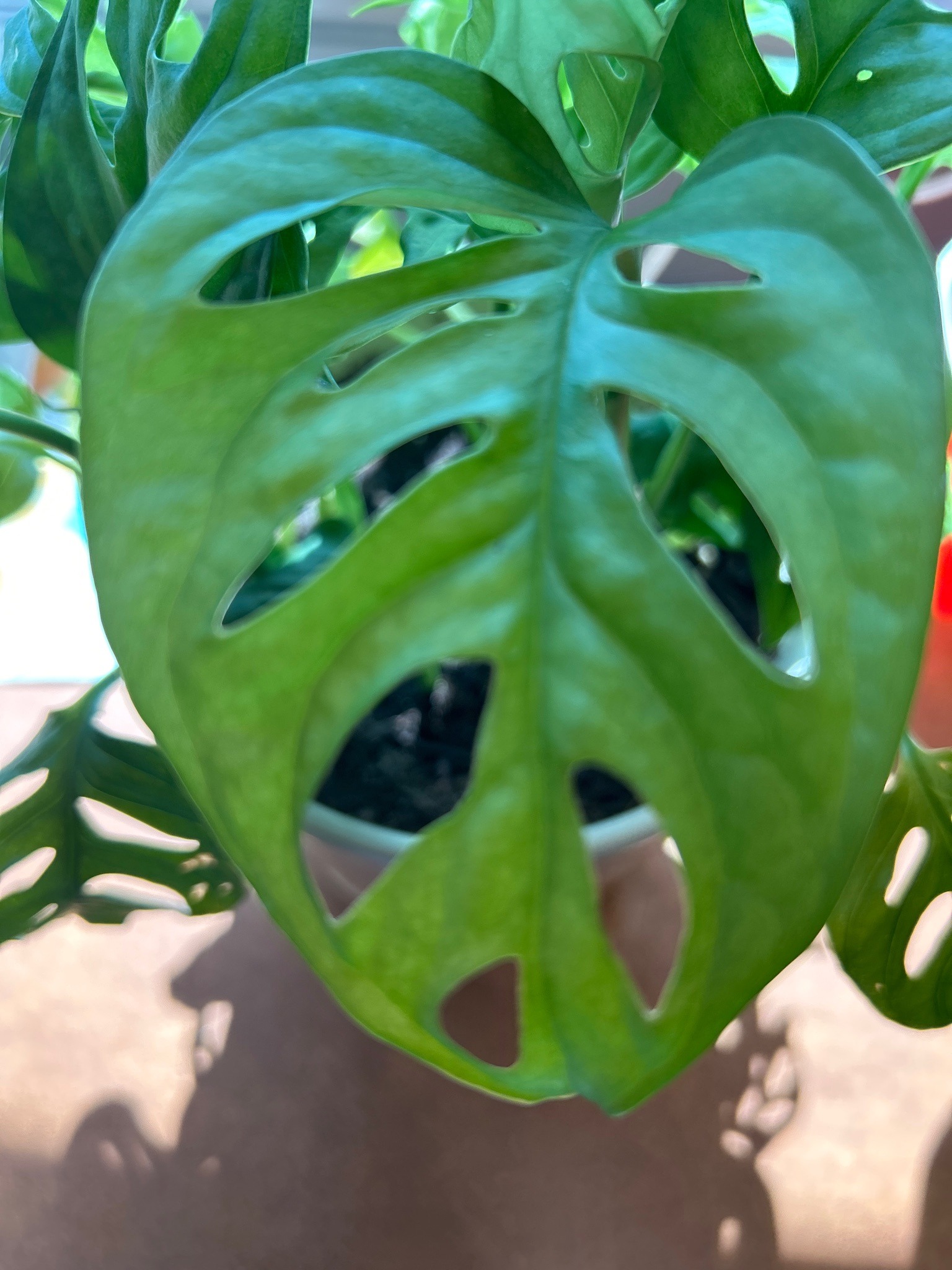
Swiss Cheese Plant (Adanson's Monstera)
Monstera adansonii
A popular tropical climbing vine known for its heart-shaped leaves that develop oval-shaped holes (fenestrations) as the plant matures.
- Light
- Bright, indirect light (6-8 hours daily). Avoid direct sunlight which can scorch the leaves; can tolerate lower light but growth will be slower.
- Water
- Water every 1-2 weeks when the top inch of soil feels dry. Sensitive to overwatering; yellowing leaves and mushy stems indicate root rot.
- Growth
- Perennial evergreen climber. Can reach 10-20 feet long when provided with a moss pole or trellis; grows at a medium to fast rate.
Care instructions
Thrives in bright indirect light and high humidity. Water when the top inch of soil is dry. Use a well-draining aroid mix and feed monthly during the growing season with a balanced liquid fertilizer.
Growing details
Sunlight
Bright, indirect light (6-8 hours daily). Avoid direct sunlight which can scorch the leaves; can tolerate lower light but growth will be slower.
Watering
Water every 1-2 weeks when the top inch of soil feels dry. Sensitive to overwatering; yellowing leaves and mushy stems indicate root rot.
Soil
Well-draining, peat-based potting mix with perlite or orchid bark to ensure aeration. Prefer slightly acidic to neutral pH (5.5 to 7.0).
Hardiness zone
USDA zones 10-12 (cold sensitive, prefers temperatures between 65-85°F).
Growth habit
Perennial evergreen climber. Can reach 10-20 feet long when provided with a moss pole or trellis; grows at a medium to fast rate.
Bloom season
Rarely blooms indoors; in the wild, it produces a cream-colored spadix surrounded by a spathe, typically in spring or summer.
Propagation
Easily propagated via stem cuttings in water or moist soil. Ensure each cutting has at least one node.
Common pests & issues
Susceptible to spider mites, mealybugs, and thrips. Overwatering leads to root rot, while low humidity can cause brown leaf tips.
Similar species
Monstera deliciosa (larger, split leaves rather than just holes), Monstera obliqua (extremely rare, more hole than leaf surface).