Small Carpetgrass
Scientific Name: Arthraxon hispidus
Plant Family: Poaceae (Grass Family)
Native Region: East Asia and parts of Africa; invasive in much of the Eastern United States
Brief Description
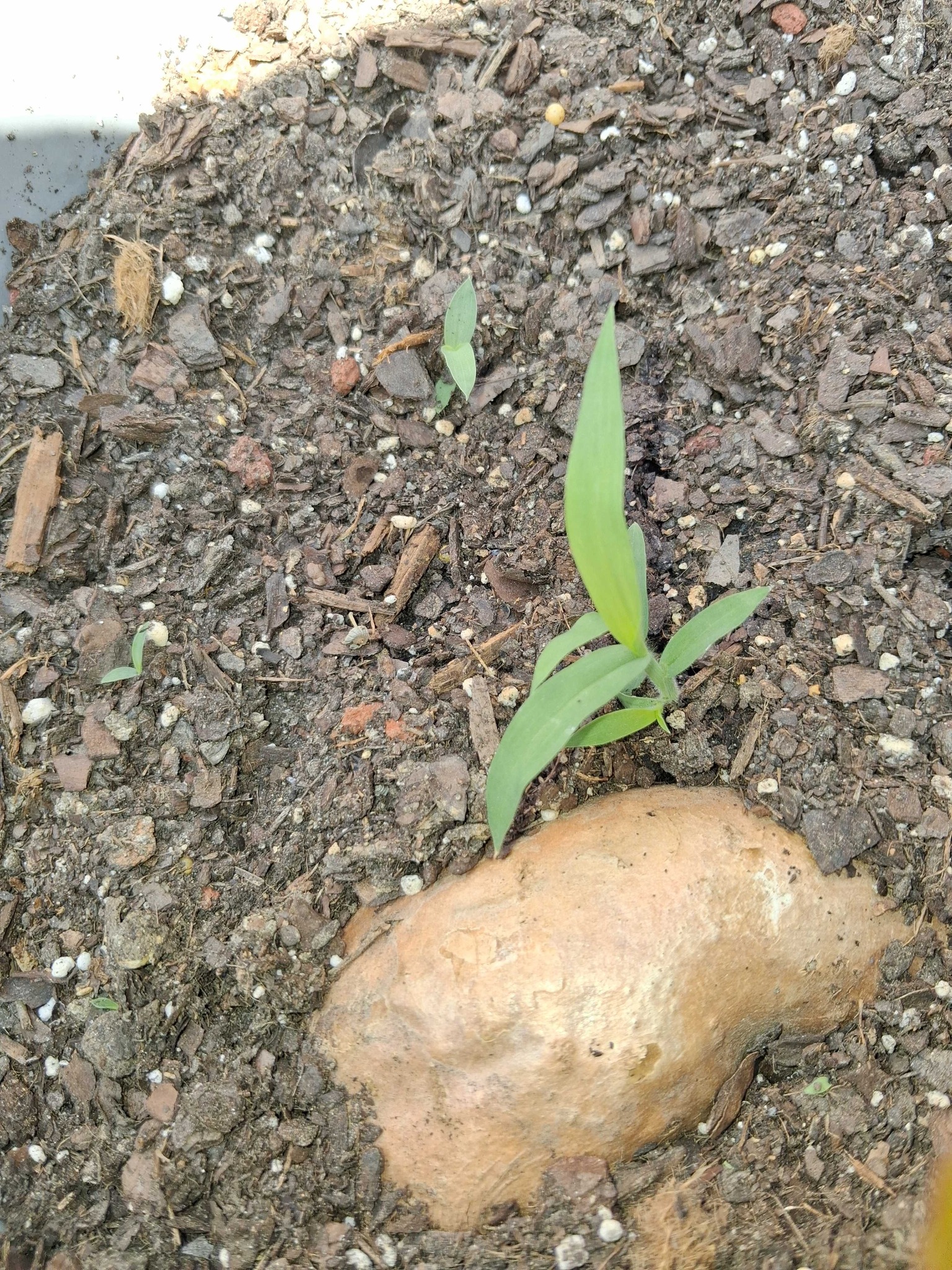
A sprawling, low-growing annual grass with ovate-to-lanceolate leaves that clasp the stem. It features hairs along the leaf margins near the base.
Care Instructions
As a common weed, it requires little care. To control it, maintain a thick lawn or pull manually before it sets seed. If grown intentionally, provide full sun to partial shade and moderate water.
Medicinal Value
We do not currently provide medicinal value for plant identifications.
Sunlight
Full sun to partial shade; typically requires at least 4-6 hours of light per day.
Watering
Prefers moist to wet conditions; often found in drainage ditches or low-lying areas. Moderate drought tolerance.
Soil
Thrives in moist, disturbed soils, often in clay or loam with a pH range of 5.0 to 7.5.
Hardiness Zone
Grown as an annual in USDA zones 3 to 11.
Growth Habit
Summer annual; low-growing, creeping habit. Can reach 1-1.5 feet in height.
Bloom Season
Late summer to early autumn; produces small, inconspicuous green or purplish flower spikes.
Toxicity
Non-toxic to humans and common pets, but not intended for consumption.
Propagation
Primarily via seeds; also spreads by rooting at the nodes (stolons).
Common Pests & Issues
Prone to spreading aggressively in lawns and wetlands, displacing native vegetation.
Similar Species
Japanese Stiltgrass (Microstegium vimineum), which has a silver line down the center of the leaf, and Crabgrass (Digitaria spp.), which has longer, thinner leaves.
Interesting Facts
Small Carpetgrass is often used for bank stabilization in its native range but is considered a noxious weed in many US states because it outcompetes native wet-meadow species.
Created At: 2026-05-18T15:12:13.640480