Crabgrass
Scientific Name: Digitaria sanguinalis
Plant Family: Poaceae
Native Region: Europe, North Africa, and much of Asia; now naturalized worldwide in temperate and tropical regions.
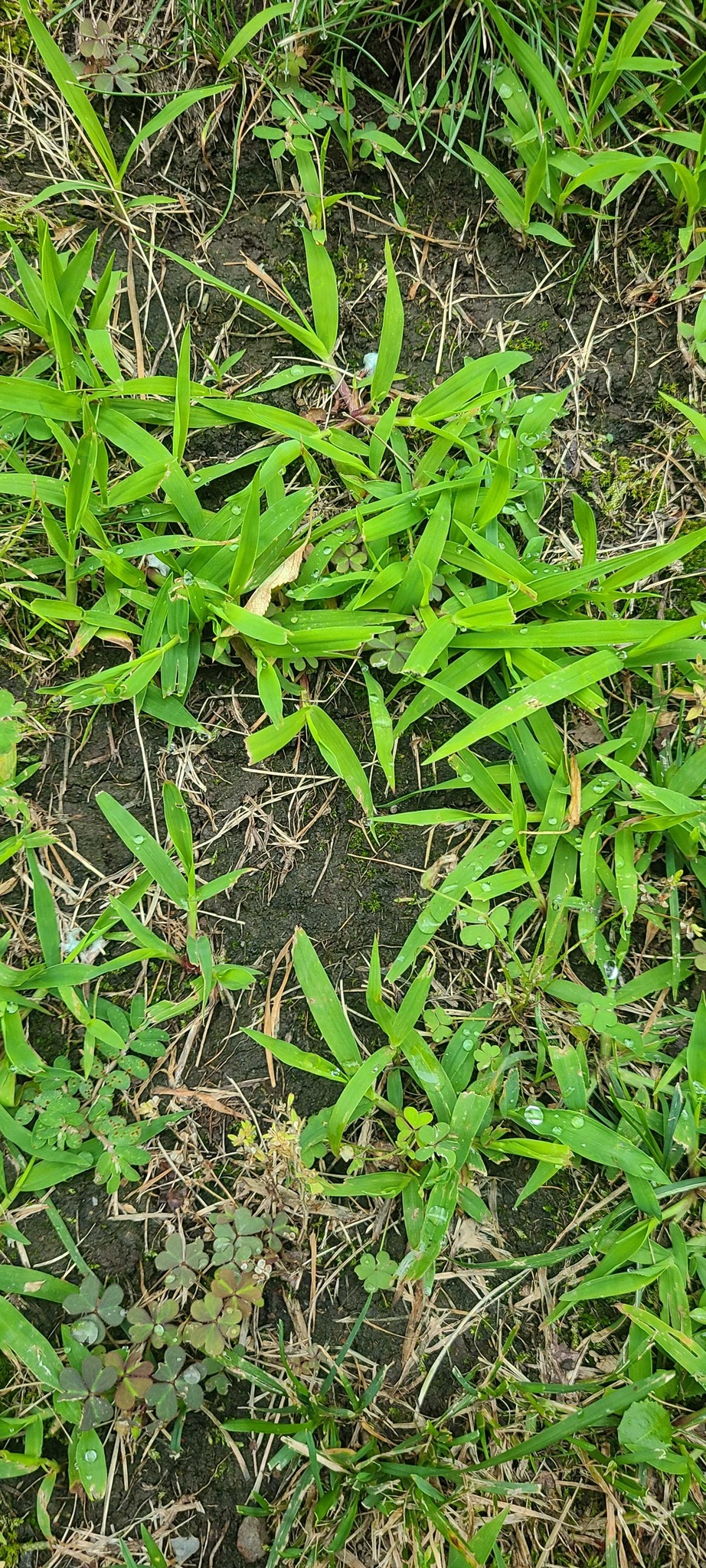
Brief Description
A low-growing, spreading annual grass characterized by wide, light green leaf blades and stems that sprawl outward from a central root, resembling a crab. It often has a reddish tint at the base of the stems.
Care Instructions
As a common weed, it requires no care to thrive. It flourishes in full sun and disturbed soil with regular watering. In a lawn context, it is usually managed via pre-emergent herbicides in early spring.
Medicinal Value
We do not currently provide medicinal value for plant identifications.
Sunlight
Full sun (6+ hours per day); it is highly shade-intolerant and will not thrive under dense tree canopies.
Watering
Highly adaptable; thrives in moist conditions but is very drought-tolerant once established. It often stays green when turf grasses go dormant during hot, dry spells.
Soil
Well-drained to compacted soils; adapts to a wide pH range (5.5 to 7.5). It particularly likes bare, disturbed soil or thin lawns.
Hardiness Zone
Generally grown as a summer annual in USDA zones 2-11; dies back at the first hard frost.
Growth Habit
Summer annual; prostrate/decumbent growth form. Can reach 1-2 feet in height if not mowed, but typically spreads horizontally via rooting at nodes (stolons).
Bloom Season
Mid-summer to early autumn; produces finger-like spikes (racemes) containing hundreds of tiny seeds.
Toxicity
Non-toxic to humans, dogs, and cats. It is often safely grazed by livestock, though it is rarely grown intentionally for forage.
Propagation
Primarily by seeds; a single plant can produce up to 150,000 seeds. Can also spread vegetatively by rooting at the nodes of its stems.
Common Pests & Issues
Susceptible to various fungal leaf spots, but its main 'issue' is being an invasive nuisance in manicured turf and flower beds.
Similar Species
Goosegrass (Eleusine indica) which has a tougher, flatter white center; Quackgrass which has auricles (small appendages) at the leaf base.
Interesting Facts
The seeds of crabgrass can remain dormant and viable in the soil for up to 30 years before germinating when conditions are right.
Created At: 2026-06-28T18:19:49.195686