
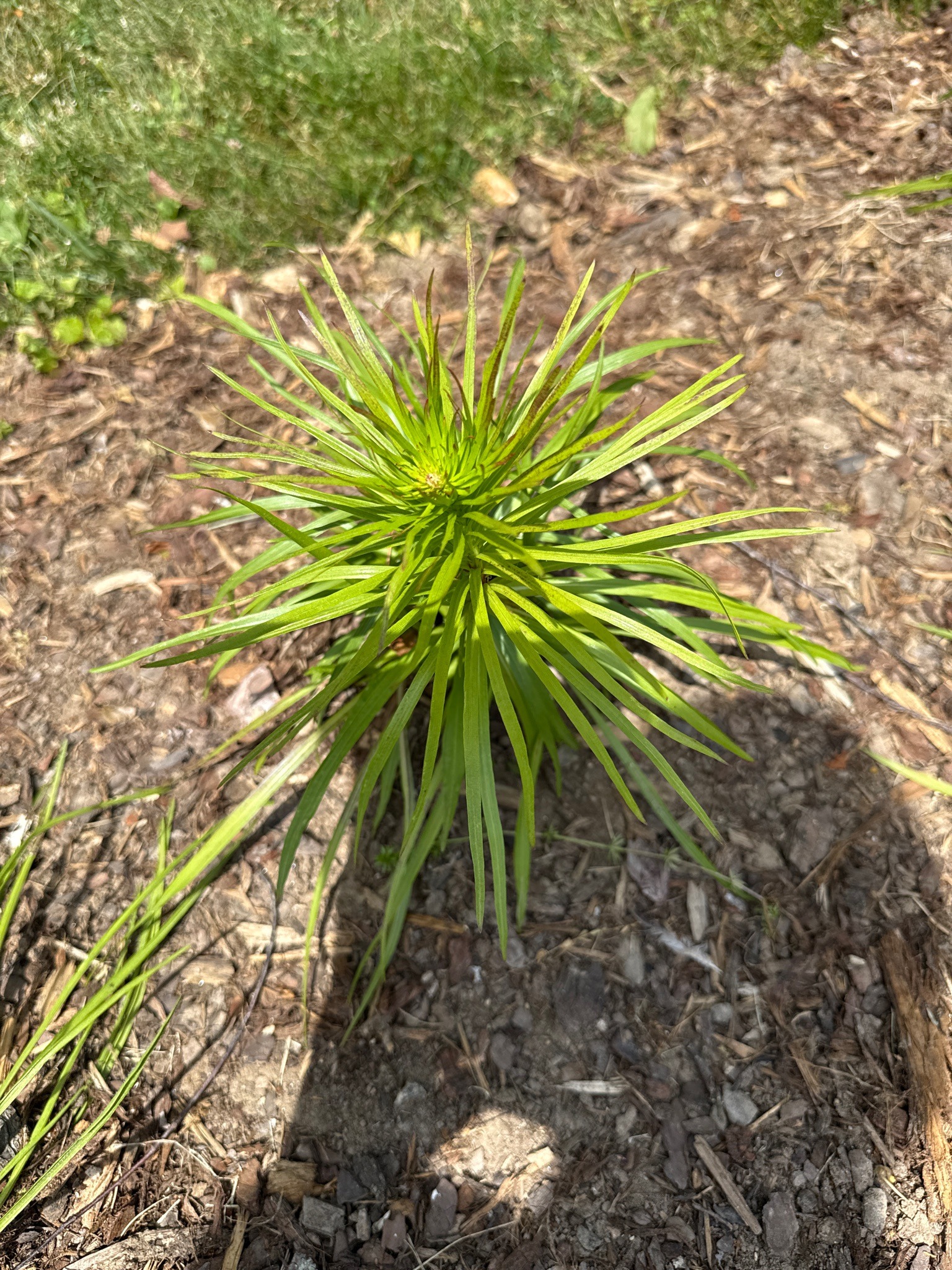
Tiger Lily
Lilium lancifolium
A bulbous perennial known for its tall stems covered in numerous lance-shaped leaves arranged in a spiral or whorled pattern. Mature plants produce large, downward-facing orange flowers with dark spots.
- Light
- Full sun to partial shade (at least 6 hours of direct sunlight for best blooms).
- Water
- Moderate; requires about 1 inch of water per week. Drought tolerant once established but prefers consistent moisture.
- Growth
- Upright bulbous perennial; typically grows 2-5 feet tall with a spread of 6-12 inches.
Care instructions
Plant in full sun to partial shade in well-draining soil. Keep the soil consistently moist but not waterlogged. Mulch the base to keep roots cool. Apply a balanced fertilizer in early spring.
Growing details
Sunlight
Full sun to partial shade (at least 6 hours of direct sunlight for best blooms).
Watering
Moderate; requires about 1 inch of water per week. Drought tolerant once established but prefers consistent moisture.
Soil
Rich, well-draining loam or sandy soil; slightly acidic to neutral pH (5.5 to 7.0).
Hardiness zone
USDA Zones 3-9
Growth habit
Upright bulbous perennial; typically grows 2-5 feet tall with a spread of 6-12 inches.
Bloom season
Mid to late summer (July and August); produces bright orange tepals with black-purple spots.
Propagation
Easily propagated via bulbils (small black bulbs that form in leaf axils), bulb scales, or division of bulbs in autumn.
Common pests & issues
Red lily leaf beetles are a major pest; susceptible to lily mosaic virus and bulb rot in poorly drained soil.
Similar species
Turk's Cap Lily (Lilium superbum) - distinguished by lack of bulbils in leaf axils and a green star pattern in the center of the flower.