
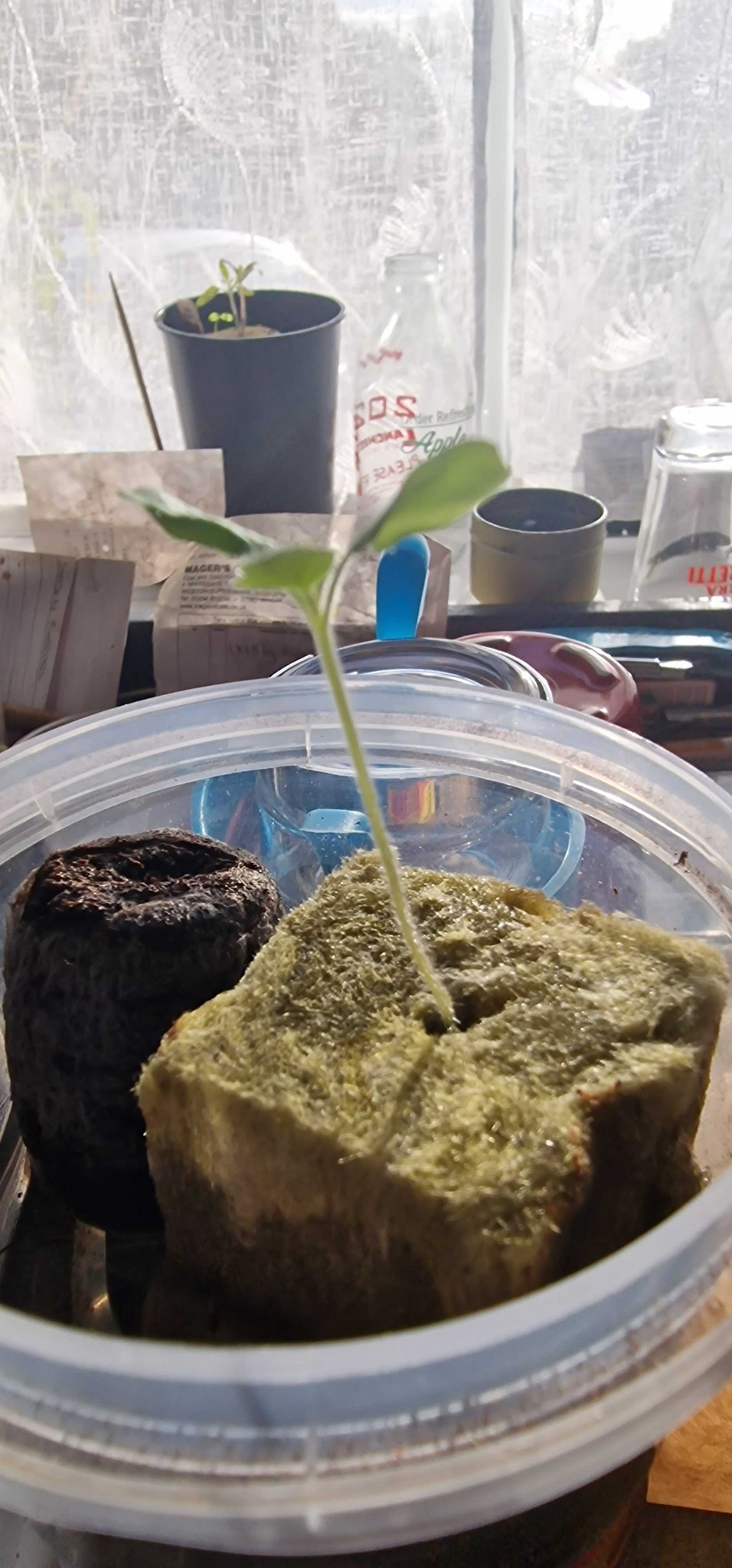
Tomato (Seedling)
Solanum lycopersicum
A young tomato seedling at the early cotyledon and first true leaf stage. It features a slender stem and green leaves, currently growing in a rockwool starter cube.
- Light
- Full sun; 12-16 hours of light per day if using grow lights, or a very bright south-facing window.
- Water
- Keep the rockwool or soil consistently damp. If the medium feels light or dry to the touch, add water. Do not let seedlings wilt.
- Growth
- Annual herb/vine. Can be 'Determinate' (bush-like, fixed size) or 'Indeterminate' (vining, continues to grow until frost).
Care instructions
Provide intense light to prevent legginess. Keep the growing medium consistently moist but not waterlogged. Once true leaves appear, start with a very weak nutrient solution. Provide airflow to strengthen the stem.
Growing details
Sunlight
Full sun; 12-16 hours of light per day if using grow lights, or a very bright south-facing window.
Watering
Keep the rockwool or soil consistently damp. If the medium feels light or dry to the touch, add water. Do not let seedlings wilt.
Soil
Seed-starting mix, coconut coir, or rockwool. Prefers a slightly acidic pH of 6.0 to 6.8.
Hardiness zone
Grown as an annual in most zones; USDA zones 10-11 as a perennial.
Growth habit
Annual herb/vine. Can be 'Determinate' (bush-like, fixed size) or 'Indeterminate' (vining, continues to grow until frost).
Bloom season
Summer; produces small yellow star-shaped flowers that develop into fleshy fruits.
Propagation
Most commonly by seed; can also be propagated via stem cuttings or 'suckers' which root easily in water or soil.
Common pests & issues
Damping off (fungal), aphids, whiteflies, and 'legginess' caused by insufficient light.
Similar species
Physalis (husk tomatoes/groundcherries) or Peppers (seedling stage), but tomato seedlings have a distinct scent and hairy stems.