
Tomato
Solanum lycopersicum
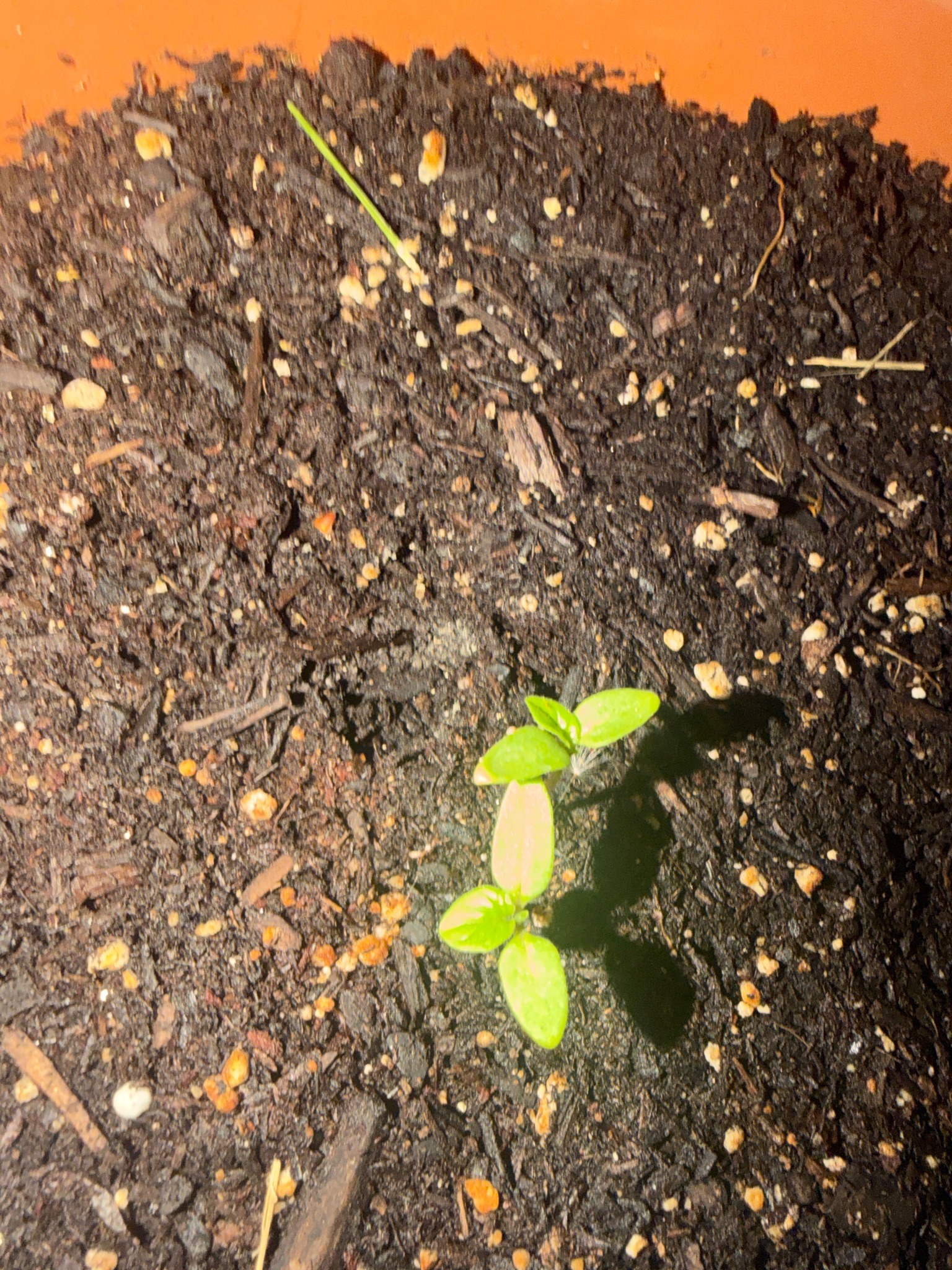
Shown here in its early seedling stage, characterized by two oval cotyledons (seed leaves) followed by the emergence of serrated or lobed true leaves. The stems have fine hairs.
- Light
- Full sun; 6-8 hours of direct sunlight per day is ideal for growth and fruit production.
- Water
- Consistent moisture is key. Water when the top inch of soil feels dry. Avoid wetting foliage to prevent fungal issues. Drought causes blossom end rot.
- Growth
- Annual herb/vine; can be determinate (bush-like) or indeterminate (vining). Can reach 3-10 feet in height depending on variety.
Care instructions
Requires high light levels, consistent moisture without waterlogging, and nutrient-rich soil. Seedlings need protection from extreme cold and should be hardened off before outdoor transplanting.
Growing details
Sunlight
Full sun; 6-8 hours of direct sunlight per day is ideal for growth and fruit production.
Watering
Consistent moisture is key. Water when the top inch of soil feels dry. Avoid wetting foliage to prevent fungal issues. Drought causes blossom end rot.
Soil
Well-draining, loamy soil rich in organic matter. Prefers a slightly acidic pH between 6.0 and 6.8.
Hardiness zone
Usually grown as an annual in zones 2-11; tender perennial in zones 10-12.
Growth habit
Annual herb/vine; can be determinate (bush-like) or indeterminate (vining). Can reach 3-10 feet in height depending on variety.
Bloom season
Summer; produces small yellow star-shaped flowers that precede the fruit development.
Propagation
Most commonly by seed; can also be grown from stem cuttings which root easily in water or moist soil.
Common pests & issues
Aphids, tomato hornworms, early/late blight, and damping-off in seedlings. Ensure good air circulation and avoid overhead watering.
Similar species
Potato (Solanum tuberosum) and Nightshade (Solanum nigrum) seedlings. Tomato seedlings are distinguished by their distinct 'tomato' scent when the leaves are rubbed.