
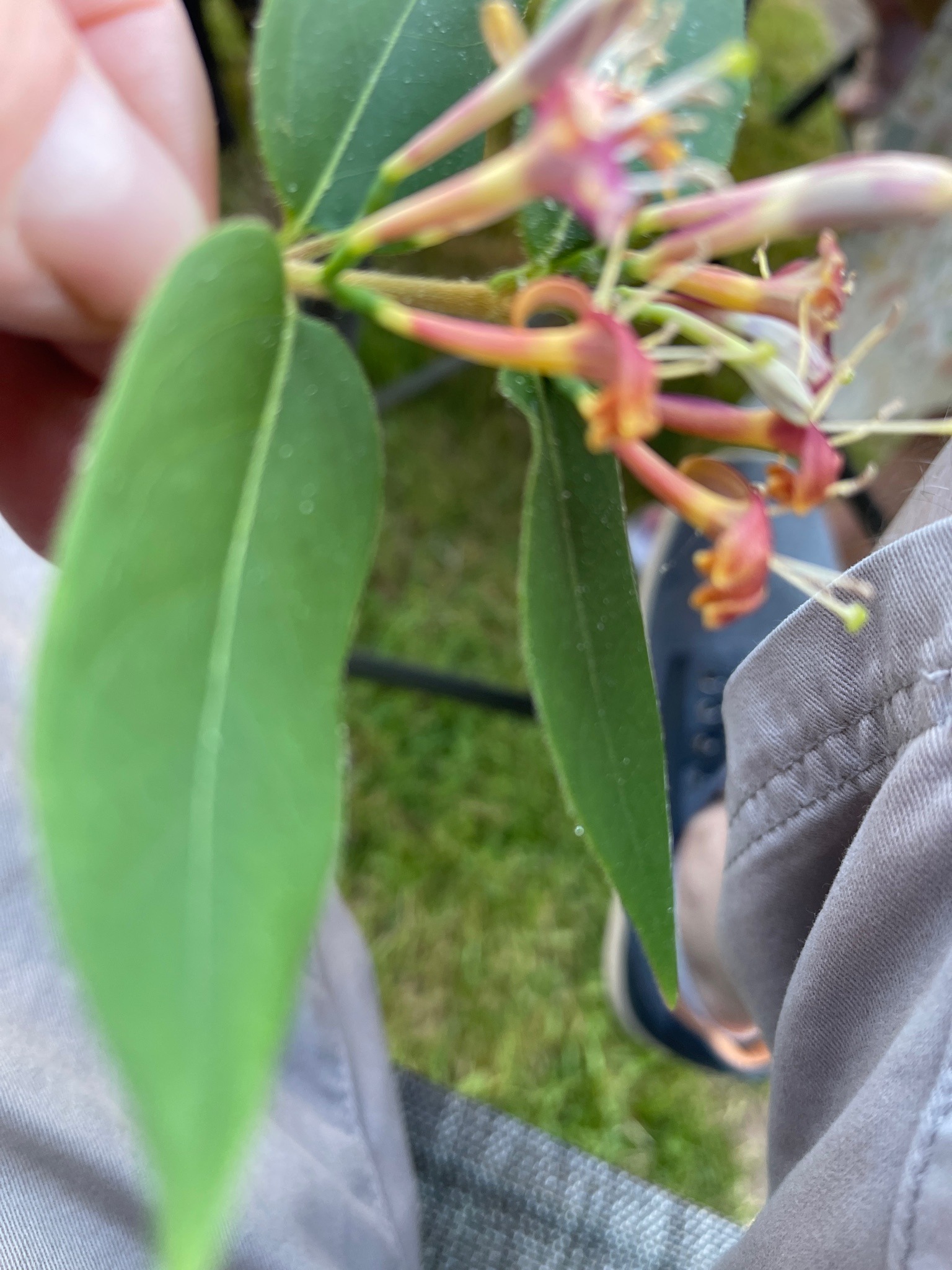
Trumpet Honeysuckle
Lonicera sempervirens
A vigorous woody climbing vine with smooth, oval, bluish-green leaves and clusters of tubular flowers. The top pair of leaves is often fused together at the base, surrounding the stem (perfoliate).
- Light
- Full sun to partial shade (at least 6 hours of direct sunlight per day for maximum blooming)
- Water
- Average water needs; water regularly during the first growing season to establish a deep root system. Once established, it is moderately drought-tolerant.
- Growth
- Perennial climbing vine; can reach 10 to 20 feet in length with a 3 to 6 foot spread; moderate to fast growth rate.
Care instructions
Provide a sturdy support such as a trellis or fence for the vine to climb. Grow in full sun for the best floral display, ensuring the soil is well-drained and kept moderately moist. Prune after flowering to maintain shape.
Growing details
Sunlight
Full sun to partial shade (at least 6 hours of direct sunlight per day for maximum blooming)
Watering
Average water needs; water regularly during the first growing season to establish a deep root system. Once established, it is moderately drought-tolerant.
Soil
Rich, moist, well-draining loamy soil with a neutral to slightly acidic pH (6.0–7.0)
Hardiness zone
USDA zones 4 through 9
Growth habit
Perennial climbing vine; can reach 10 to 20 feet in length with a 3 to 6 foot spread; moderate to fast growth rate.
Bloom season
Primary bloom in late spring/early summer, with sporadic flowering continuing into autumn. Flowers are trumpet-shaped, typically coral-red on the outside and yellow inside.
Propagation
Softwood cuttings in summer or hardwood cuttings in winter; can also be grown from seed after cold stratification.
Common pests & issues
Generally resistant to pests and diseases, though aphids or powdery mildew may occur in poorly ventilated or shaded areas.
Similar species
Lonicera japonica (Japanese Honeysuckle), which has white/yellow fragrant flowers, non-fused leaves, and is more aggressive/invasive compared to the native L. sempervirens.