
Unknown Seedling
Unable to identify at this stage
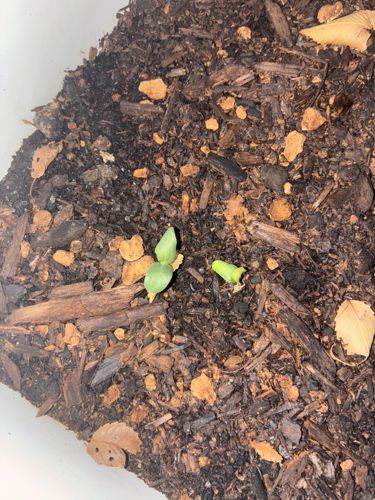
The image shows a very young seedling with two cotyledons (seed leaves) that are round to oval-shaped and light green. There are no true leaves visible yet, and the plant is very small, emerging from a dark, woody-textured soil mix.
Learn more about Unknown Seedling in the encyclopedia →Care instructions
Based on the image of a very young seedling, general care for such a plant would include: - **Light:** Provide bright, indirect light. Avoid direct, harsh sunlight which can scorch fragile seedlings. - **Watering:** Keep the soil consistently moist but not waterlogged. Water gently to avoid disturbing the delicate roots, perhaps using a spray bottle or bottom watering. - **Soil:** Use a well-draining, sterile seed-starting mix to prevent damping-off disease. - **Temperature & Humidity:** Maintain a warm and stable temperature (typically 65-75°F or 18-24°C). High humidity can be beneficial for seedlings, which can be achieved with a humidity dome or by misting. - **Nutrients:** Young seedlings usually have enough stored energy in the seed to get started. Once true leaves appear, a very dilute liquid fertilizer can be introduced. - **Transplanting:** Once the seedling has developed a few sets of true leaves and is strong enough, it can be carefully transplanted into a larger pot or its final growing location.