
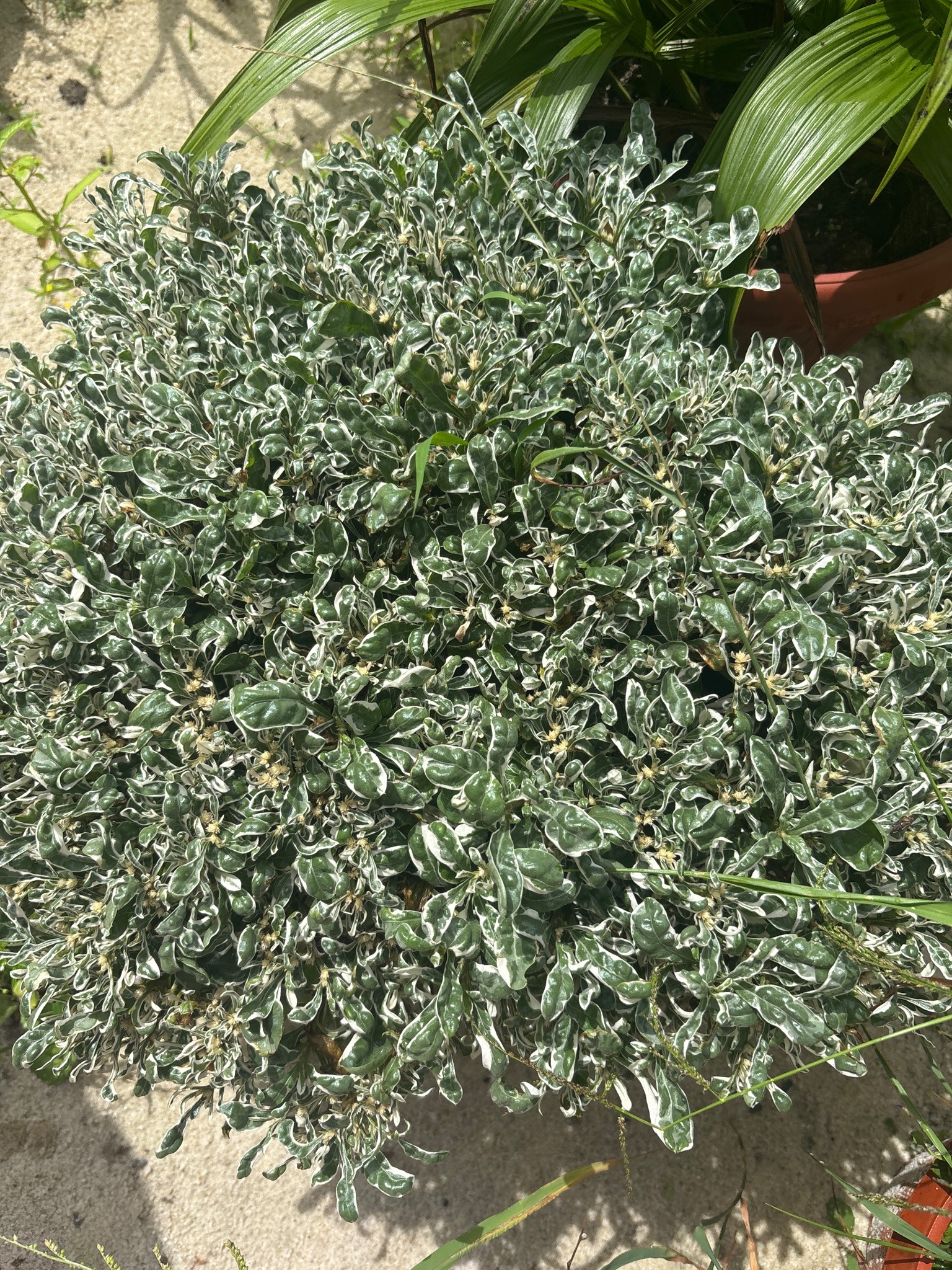
Variegated Joyweed
Alternanthera ficoidea
A low-growing, bushy perennial herb known for its dense, mounding habit and small, elliptical leaves with striking white or creamy variegated margins against a dark green center.
- Light
- Full sun to partial shade (4-6+ hours). More direct light results in brighter variegation and tighter growth.
- Water
- Requires consistent moisture. Water when the top inch of soil feels dry. It is not highly drought-tolerant and will wilt if underwatered.
- Growth
- Perennial; low-growing, mounding, or carpeting form. Reaches 6-12 inches in height with a similar or wider spread.
Care instructions
Provide bright light to maintain variegation, water regularly to keep soil moist but not waterlogged, and plant in well-draining soil. Apply a balanced liquid fertilizer every 4-6 weeks during the growing season.
Growing details
Sunlight
Full sun to partial shade (4-6+ hours). More direct light results in brighter variegation and tighter growth.
Watering
Requires consistent moisture. Water when the top inch of soil feels dry. It is not highly drought-tolerant and will wilt if underwatered.
Soil
Rich, loamy, well-draining soil with a neutral to slightly acidic pH (6.1 to 7.5).
Hardiness zone
USDA Zones 9-11; grown as an indoor plant or annual in cooler climates.
Growth habit
Perennial; low-growing, mounding, or carpeting form. Reaches 6-12 inches in height with a similar or wider spread.
Bloom season
Year-round in tropical climates; produces small, inconspicuous white or straw-colored axillary flower clusters.
Propagation
Easily propagated through softwood stem cuttings placed in water or moist soil; also possible by seed or division.
Common pests & issues
Susceptible to aphids, spider mites, and whiteflies. Overwatering can lead to root rot. High humidity without airflow may encourage fungal leaf spots.
Similar species
Alternanthera bettzickiana, which has more spatulate leaves, and Plectranthus coleoides, which has larger, scalloped leaves and a distinct scent.