Ghost Plant
Scientific Name: Graptopetalum paraguayense
Plant Family: Crassulaceae
Native Region: Mexico (Tamaulipas region)
Brief Description
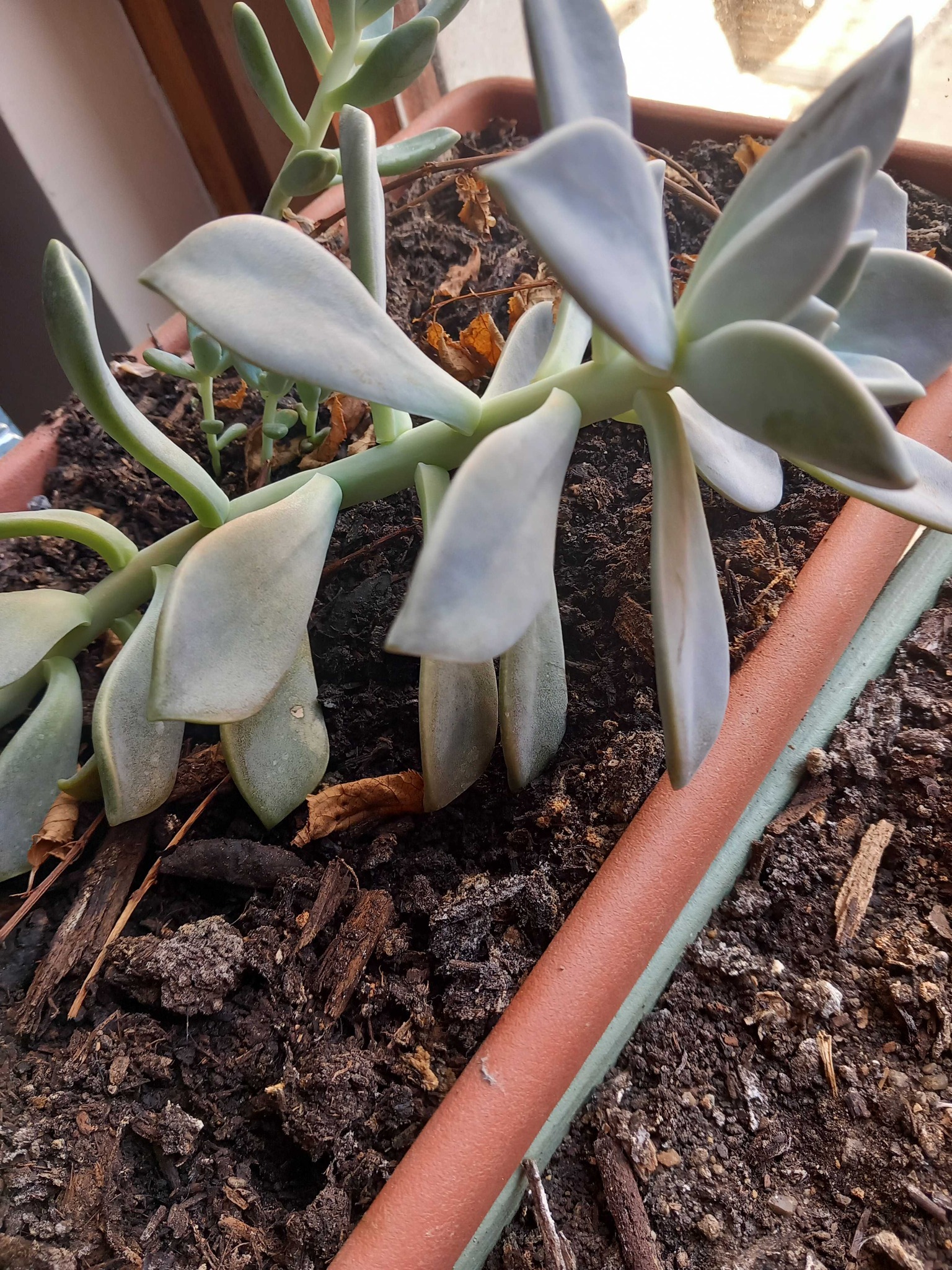
A spreading succulent with rosettes of thick, fleshy, pointed leaves that have a powdery coating called epicuticular wax. The leaves typically appear pale gray, bluish, or pinkish depending on sun exposure.
Care Instructions
Provide bright light to maintain compact growth. Use well-draining soil and water only when the soil is completely dry. Avoid overwatering to prevent root rot.
Medicinal Value
We do not currently provide medicinal value for plant identifications.
Sunlight
Full sun to partial shade; at least 6 hours of bright light is recommended to prevent stretching (etiolation).
Watering
Low water requirements. Use the 'soak and dry' method, watering thoroughly but waiting for the soil to dry out entirely between sessions.
Soil
Well-drained succulent or cactus mix; pH 6.1 to 7.8 preferred.
Hardiness Zone
USDA zones 9a to 11b; can tolerate light frost but should be protected from hard freezes.
Growth Habit
Perennial succulent; initially grows as upright rosettes but eventually trailing or sprawling. Can spread up to 3 feet across.
Bloom Season
Late winter to spring; produces small, star-shaped yellow-white flowers on long stalks.
Toxicity
Generally considered non-toxic to cats, dogs, and humans.
Propagation
Very easy to propagate via leaf cuttings, stem cuttings, or offsets (pups). Leaves will often sprout new plants on their own if they fall onto soil.
Common Pests & Issues
Susceptible to mealybugs and root rot if overwatered. Stretching occurs if light is insufficient.
Similar Species
Echeveria species (which have tighter rosettes and different flower shapes) and Graptosedum hybrids.
Interesting Facts
The powdery coating on the leaves acts as a natural sunscreen and waterproof barrier. The name 'Ghost Plant' comes from the pale, opalescent color of the leaves.
Created At: 2026-06-23T14:41:20.360326