
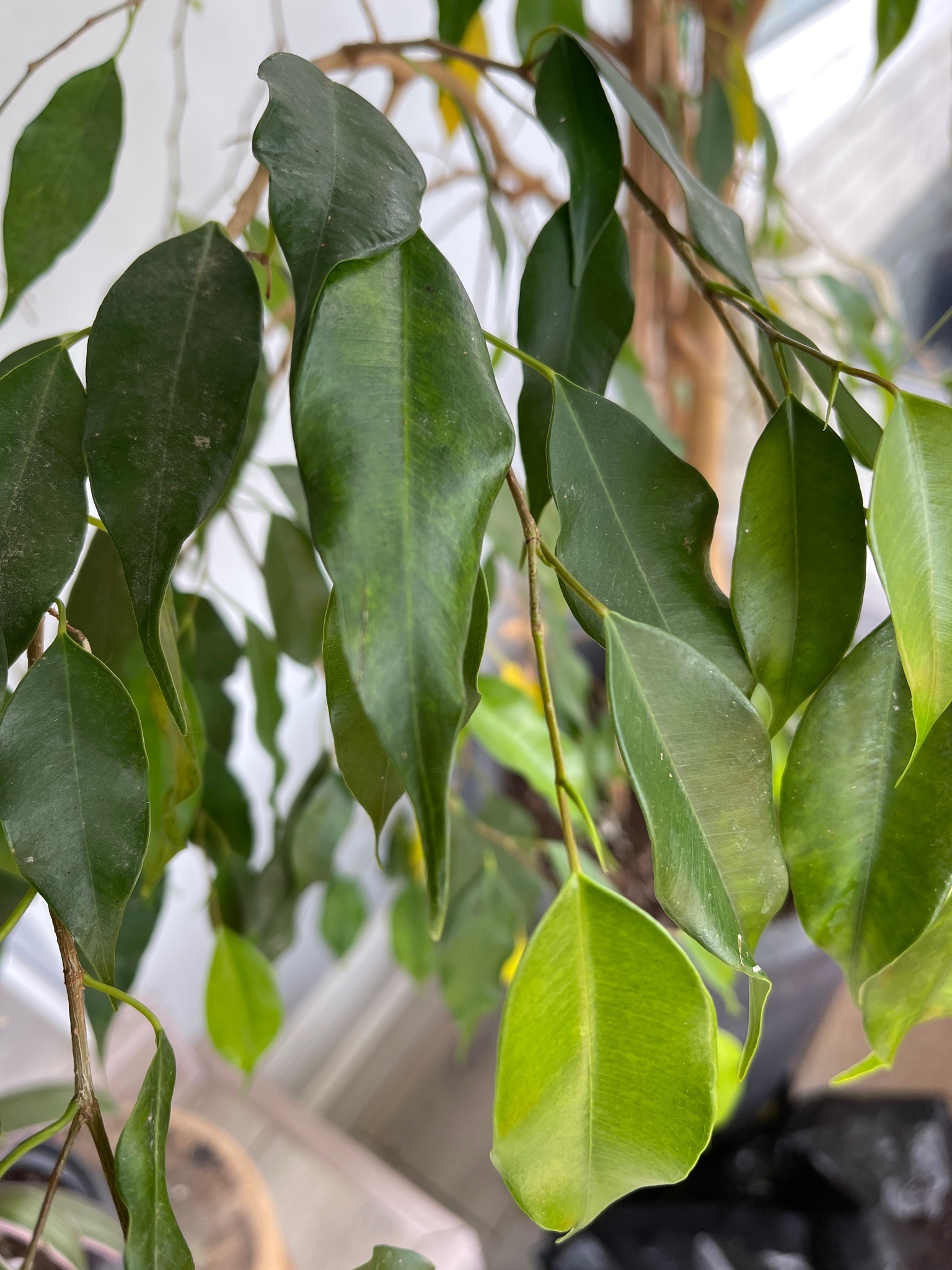
Weeping Fig
Ficus benjamina
An evergreen tree with gracefully drooping branches and glossy, oval-shaped leaves that taper to a point. It is popular for its elegant, arching growth habit.
- Light
- Bright indirect light; can tolerate some partial shade but may experience leaf drop in low light. 6-8 hours of indirect sun is ideal.
- Water
- Water when the top inch of soil feels dry. Sensitive to over-watering which causes yellow leaves, and under-watering which leads to leaf drop.
- Growth
- Perennial evergreen tree; can reach indoors heights of 6-10 feet, while outdoor specimens can grow up to 60 feet. Slow to moderate growth rate.
Care instructions
Thrives in bright indirect light with consistent watering schedules. Prefers a stable environment; dislikes frequent relocation. Regular fertilization during the growing season is recommended.
Growing details
Sunlight
Bright indirect light; can tolerate some partial shade but may experience leaf drop in low light. 6-8 hours of indirect sun is ideal.
Watering
Water when the top inch of soil feels dry. Sensitive to over-watering which causes yellow leaves, and under-watering which leads to leaf drop.
Soil
Well-draining potting mix, ideally rich in organic matter. Prefers a neutral pH range of 6.0 to 7.0.
Hardiness zone
USDA zones 10-12; very sensitive to frost and cold drafts.
Growth habit
Perennial evergreen tree; can reach indoors heights of 6-10 feet, while outdoor specimens can grow up to 60 feet. Slow to moderate growth rate.
Bloom season
Rarely flowers indoors; inconspicuous small green/yellow figs appear on outdoor mature plants in tropical climates.
Propagation
Propagated via stem cuttings or air layering during the spring and summer months when the plant is actively growing.
Common pests & issues
Susceptible to scale insects, mealybugs, and spider mites. Leaf dropping is a common response to stress from temperature changes or over-watering.
Similar species
Ficus elastica (Rubber Plant) which has much larger, thicker leaves, and Ficus nitida which has a more upright, less pendulous habit.