
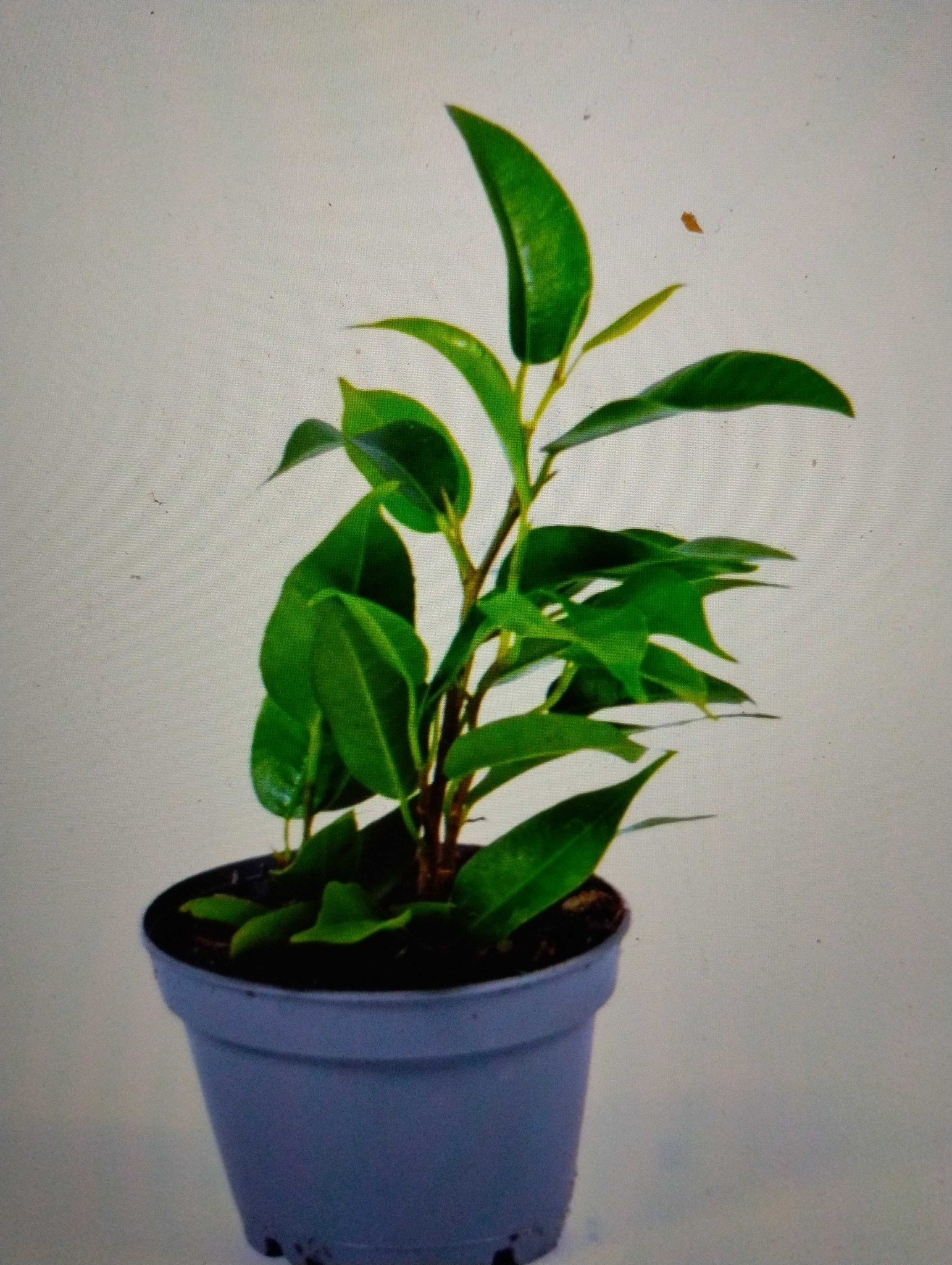
Weeping Fig
Ficus benjamina
A popular indoor tree characterized by glossy, oval-shaped leaves that taper to a slender point. It has a graceful, slightly drooping growth habit.
- Light
- Bright, indirect light; can tolerate some direct morning sun but midday sun may scorch foliage.
- Water
- Water consistently, allowing the top 25% of soil to dry out between waterings. Use lukewarm water and avoid waterlogging.
- Growth
- Perennial evergreen tree; can reach 6-10 feet indoors and much larger in the wild.
Care instructions
Provide bright, indirect light and keep the plant in a stable location as it is sensitive to environmental changes. Water when the top inch of soil is dry and feed during the growing season.
Growing details
Sunlight
Bright, indirect light; can tolerate some direct morning sun but midday sun may scorch foliage.
Watering
Water consistently, allowing the top 25% of soil to dry out between waterings. Use lukewarm water and avoid waterlogging.
Soil
Rich, well-draining potting soil with a slightly acidic to neutral pH (6.0 to 7.0).
Hardiness zone
USDA zones 10-11; very sensitive to cold and drafts.
Growth habit
Perennial evergreen tree; can reach 6-10 feet indoors and much larger in the wild.
Bloom season
Rarely flowers indoors; produces small, inconspicuous figs (syconia) in its natural habitat.
Propagation
Stem tip cuttings or air layering during the spring or summer months.
Common pests & issues
Commonly suffers from leaf drop due to sudden environmental changes, drafts, or overwatering. Pests include scale, mealybugs, and spider mites.
Similar species
Ficus elastica (Rubber Plant) which has much larger, thicker leaves, and Ficus nitida which has more upright, denser foliage.