
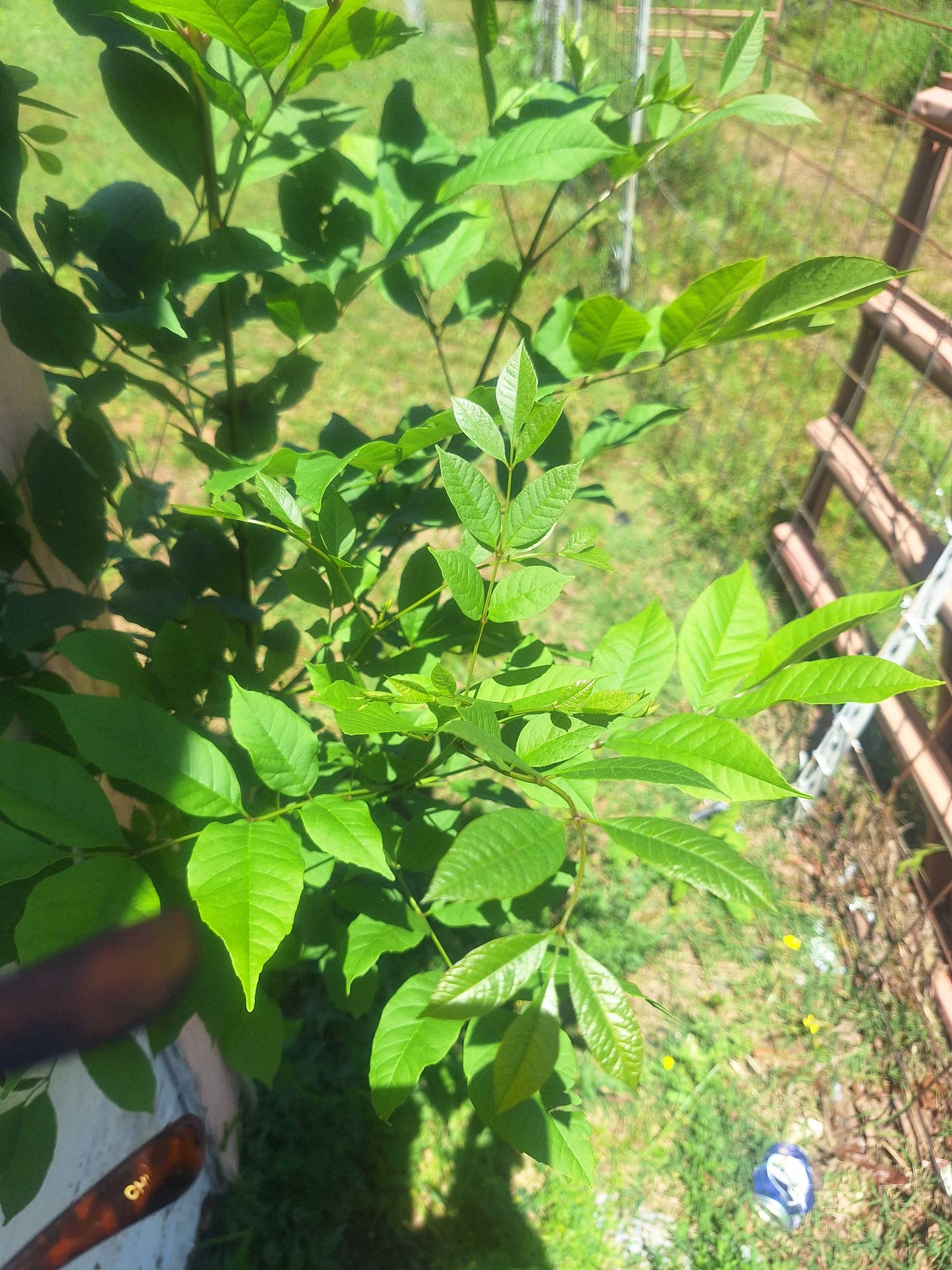
White Ash
Fraxinus americana
A large deciduous tree known for its compound leaves with 5-9 leaflets and its distinctive 'diamond' patterned bark on mature specimens. It is a major component of northern hardwood forests.
- Light
- Full sun (at least 6 hours of direct sunlight per day).
- Water
- Moderate watering needs. Prefers consistently moist soil but can tolerate occasional drought once mature. Young trees need weekly watering during dry spells.
- Growth
- Perennial tree with a pyramidal to upright-oval crown. Can reach 60-80 feet in height with a spread of 40-50 feet. Medium to fast growth rate.
Care instructions
Requires full sun and moist, well-draining soil. It is relatively low maintenance once established but is currently highly susceptible to the Emerald Ash Borer beetle in many regions.
Growing details
Sunlight
Full sun (at least 6 hours of direct sunlight per day).
Watering
Moderate watering needs. Prefers consistently moist soil but can tolerate occasional drought once mature. Young trees need weekly watering during dry spells.
Soil
Deep, fertile, well-drained loamy soils are preferred. Tolerates a range of pH from 5.0 to 7.5.
Hardiness zone
3 to 9
Growth habit
Perennial tree with a pyramidal to upright-oval crown. Can reach 60-80 feet in height with a spread of 40-50 feet. Medium to fast growth rate.
Bloom season
Spring (April-May). Small, inconspicuous purple-green flowers appear before the leaves. It is dioecious (separate male and female trees).
Propagation
Primarily by seed (requires cold stratification) or by grafting. Cuttings are generally difficult to root.
Common pests & issues
Emerald Ash Borer (EAB) is a devastating pest. Also susceptible to ash yellows, anthracnose, and various leaf spots.
Similar species
Green Ash (Fraxinus pennsylvanica) is very similar; Green Ash usually has leaflets that are more serrated and lack the whitish undersides of White Ash. Box Elder (Acer negundo) has similar compound leaves but opposite branching and 'helicopter' seeds (samaras) in pairs.