
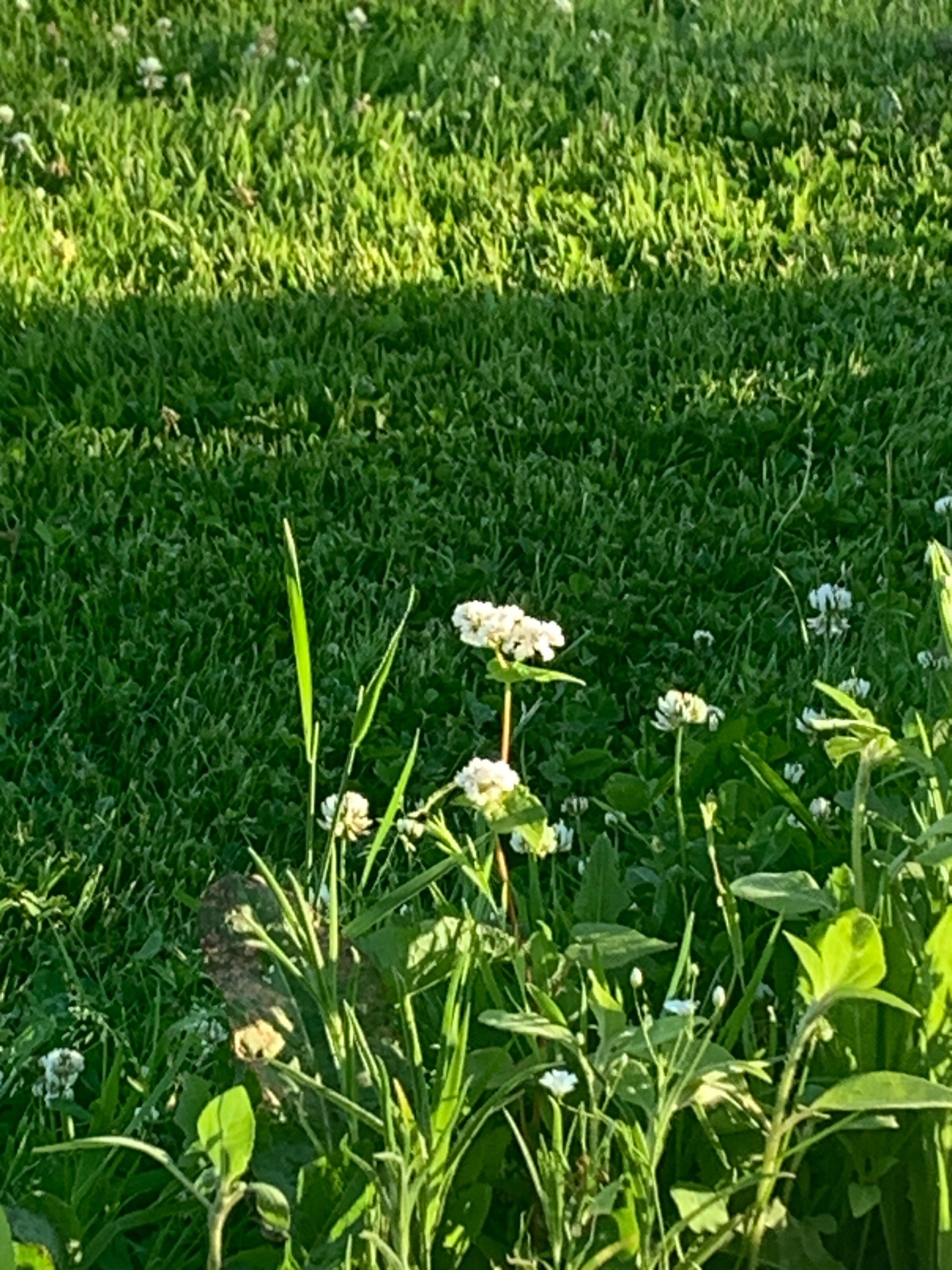
White Clover
Trifolium repens
A low-growing perennial herb with creeping stems (stolons) that root at the nodes. It is easily identified by its trifoliate leaves (three leaflets) often marked with a white 'V' or 'crescent' and its globular white flower heads.
- Light
- Full sun to partial shade (4-6+ hours of sunlight per day)
- Water
- Moderate watering needs. It is somewhat drought-tolerant once established but performs best with consistent moisture. Signs of underwatering include wilting and leaf curling.
- Growth
- Perennial; creeping/prostrate growth form using stolons. Reaches 4-6 inches in height but can spread indefinitely as a groundcover.
Care instructions
Extremely low maintenance. It thrives in sunny spots with regular moisture but can tolerate poor soil due to its nitrogen-fixing capabilities. No fertilizer is usually needed as it provides its own nitrogen.
Growing details
Sunlight
Full sun to partial shade (4-6+ hours of sunlight per day)
Watering
Moderate watering needs. It is somewhat drought-tolerant once established but performs best with consistent moisture. Signs of underwatering include wilting and leaf curling.
Soil
Adaptable to many soil types but prefers moist, well-draining loamy or clay soils with a pH between 6.0 and 7.0.
Hardiness zone
USDA zones 3 through 10
Growth habit
Perennial; creeping/prostrate growth form using stolons. Reaches 4-6 inches in height but can spread indefinitely as a groundcover.
Bloom season
Primarily blooms from late spring through fall; flowers are white or pinkish-tinged globose heads made of many small tubular florets.
Propagation
Propagates easily by seed or by division of the creeping stolons that naturally root in the soil.
Common pests & issues
Generally pest-resistant, but can be affected by slugs, clover mites, or powdery mildew in very humid or wet conditions. Often considered a 'weed' in manicured grass lawns.
Similar species
Red Clover (Trifolium pratense) which is taller with larger pink/purple flowers; Strawberry Clover (Trifolium fragiferum) which has more pinkish, raspberry-like seed heads.