
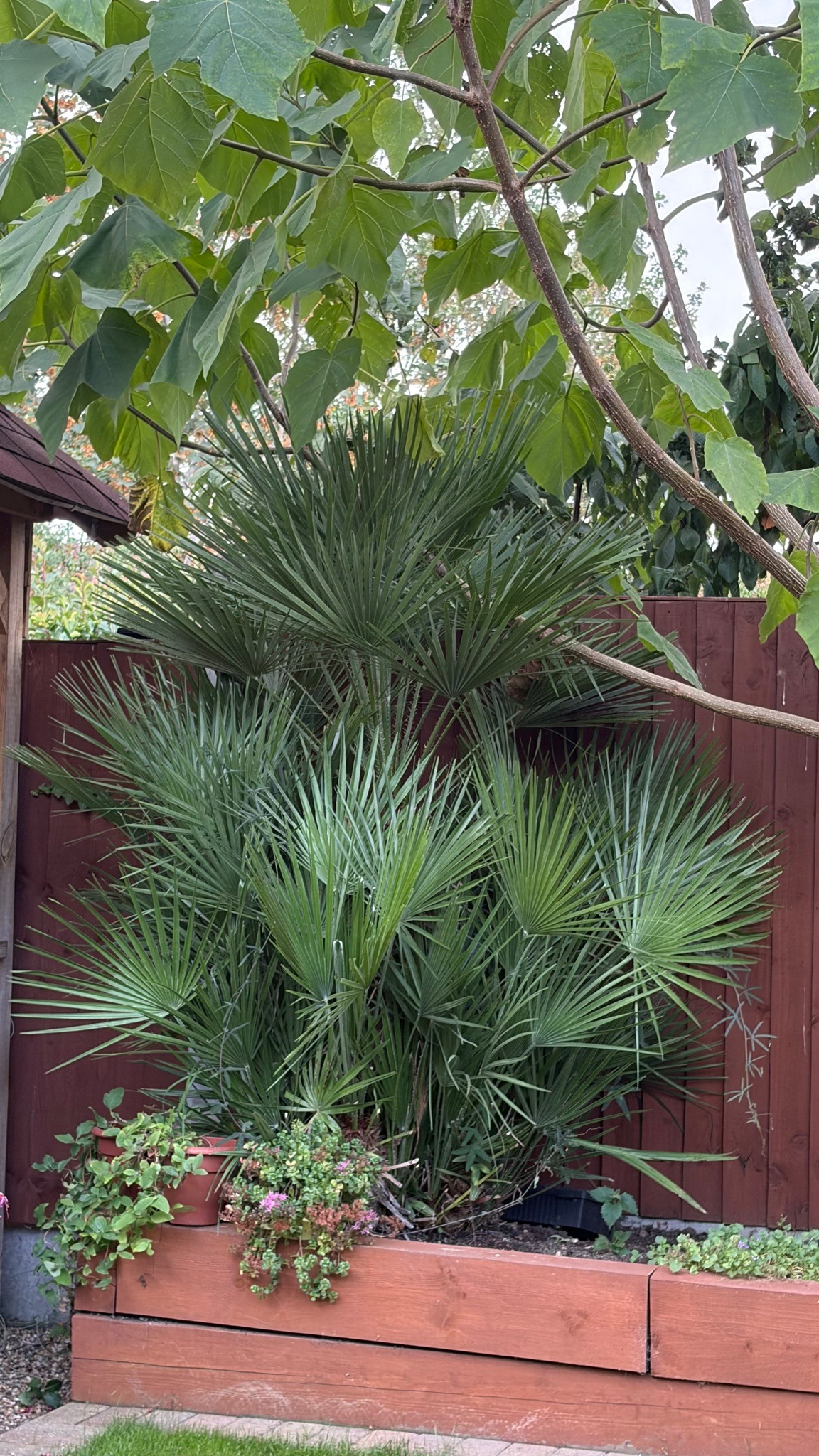
Windmill Palm
Trachycarpus fortunei
A single-stemmed evergreen palm covered in dark, coarse, fibrous hair, featuring fan-shaped dark green leaves that radiate outward on stiff petioles.
- Light
- Full sun to partial shade, approximately 6 hours of direct sunlight per day is ideal.
- Water
- Moderate watering needs. Water deeply when the top few inches of soil feel dry. Mature plants have moderate drought tolerance.
- Growth
- Slow to moderate growing evergreen tree with an upright, single-trunk habit, reaching mature heights of 20 to 40 feet with a spread of 6 to 10 feet.
Care instructions
Provide full sun to partial shade in well-draining soil. Water regularly during the growing season, allowing the top layer of soil to dry out between waterings. Apply a balanced slow-release fertilizer in spring.
Growing details
Sunlight
Full sun to partial shade, approximately 6 hours of direct sunlight per day is ideal.
Watering
Moderate watering needs. Water deeply when the top few inches of soil feel dry. Mature plants have moderate drought tolerance.
Soil
Prefers loamy, sandy, or well-drained clay soils with a neutral to slightly acidic pH range of 6.0 to 7.5.
Hardiness zone
USDA zones 8 through 11, with some established specimens surviving short periods in cooler zones.
Growth habit
Slow to moderate growing evergreen tree with an upright, single-trunk habit, reaching mature heights of 20 to 40 feet with a spread of 6 to 10 feet.
Bloom season
Spring to early summer, producing large clusters of yellow, branching flowers nestled among the leaves, followed by dark blue-black drupes.
Propagation
Propagated primarily from fresh seeds, which can be germinated in warm, moist propagation media.
Common pests & issues
Generally resilient, but susceptible to scale insects and mealybugs. Overly wet soil can lead to root rot.
Similar species
Sabal minor (Dwarf Palmetto), which has smaller, less rigid fan leaves and usually lacks a prominent upright trunk.