Japanese Yew / Buddhist Pine
Scientific Name: Podocarpus macrophyllus
Plant Family: Podocarpaceae
Native Region: Native to southern Japan and southern/eastern China; widely cultivated in subtropical regions globally.
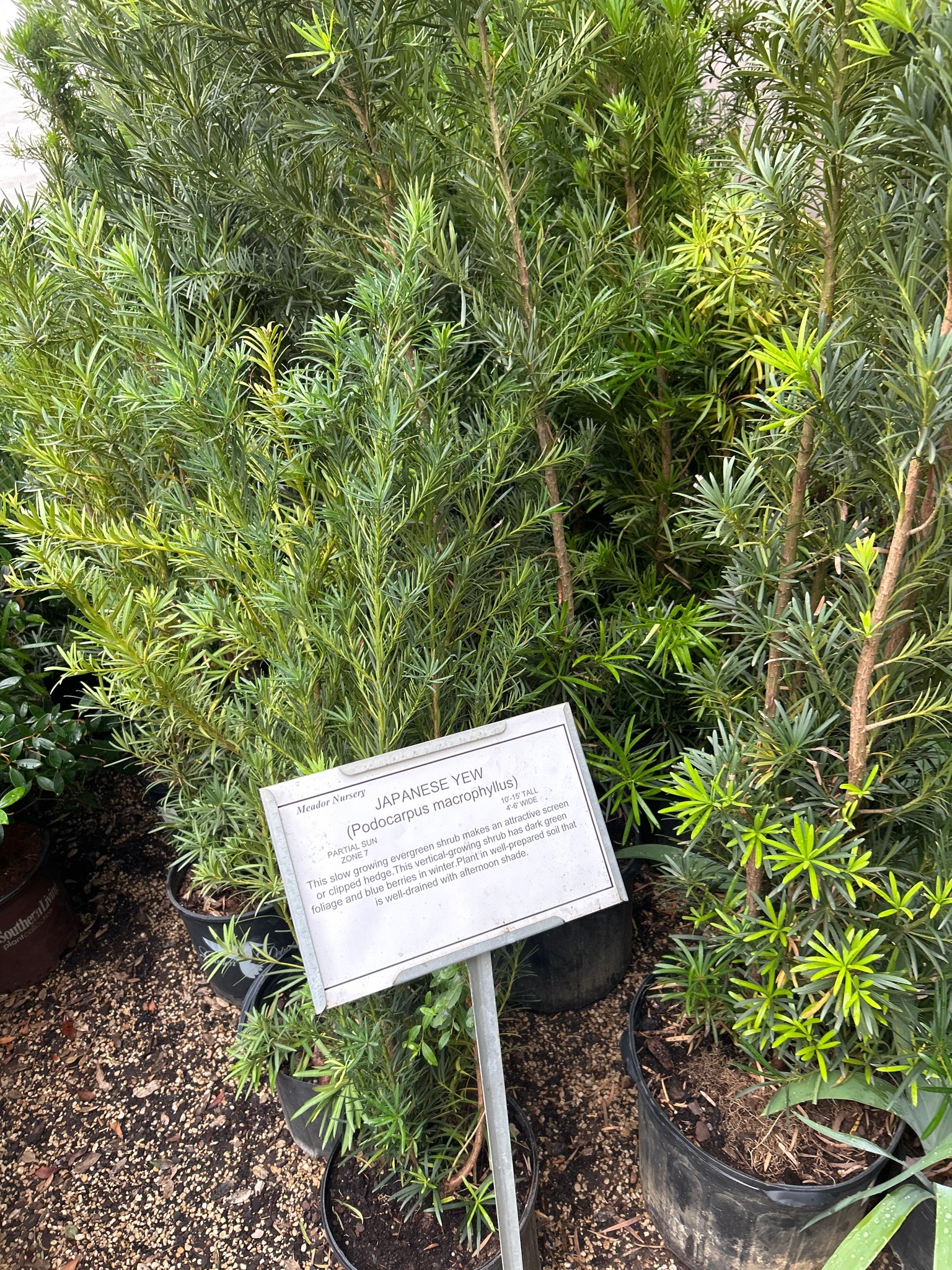
Brief Description
An evergreen conifer with dense, narrow, strap-like dark green leaves arranged spirally. It has a slow-growing, upright habit and is often used for screens or hedges.
Care Instructions
Thrives in partial sun with well-drained, fertile soil. Water regularly until established; fertilize in spring with a balanced evergreen food. Pruning is easily tolerated to maintain shape.
Medicinal Value
We do not currently provide medicinal value for plant identifications.
Sunlight
Full sun to partial shade (4-6+ hours of light). Afternoon shade is beneficial in very hot climates.
Watering
Moderate watering; keep soil moist but not soggy. Once established, it is moderately drought-tolerant. Yellowing leaves can indicate overwatering.
Soil
Rich, slightly acidic, well-draining soil. Does not tolerate highly alkaline soils which may cause chlorosis.
Hardiness Zone
USDA Zones 7 - 11; can tolerate some frost but not prolonged freezing.
Growth Habit
Slow-growing evergreen perennial. In cultivation, it typically reaches 10-15 feet as a shrub, but can grow to 40 feet as a tree in the wild.
Bloom Season
Non-flowering (Gymnosperm). Tiny male cones or female seeds with purple-blue fleshy bases appear in late spring/summer.
Toxicity
Toxic to dogs, cats, and horses. Ingestion of its fruit/seeds or leaves can cause vomiting, diarrhea, and depression.
Propagation
Propagate by semi-hardwood cuttings in summer or by sowing seeds in late winter/early spring.
Common Pests & Issues
Susceptible to aphids, scale, and mealybugs. Root rot can occur in poorly drained soil; magnesium deficiency may cause needle browning.
Similar Species
Taxus cuspidata (True Japanese Yew), which has shorter needles. Cephalotaxus harringtonia (Plum Yew) has broader, softer leaves.
Interesting Facts
Despite the name 'Japanese Yew', it is not a member of the Taxus genus. In Japan, it is known as Kusamaki and is the state tree of Chiba Prefecture.
Created At: 2026-05-19T17:34:31.156894