Stone Pine
Scientific Name: Pinus pinea
Plant Family: Pinaceae
Native Region: Mediterranean region (Southern Europe, North Africa, and the Levant).
Brief Description
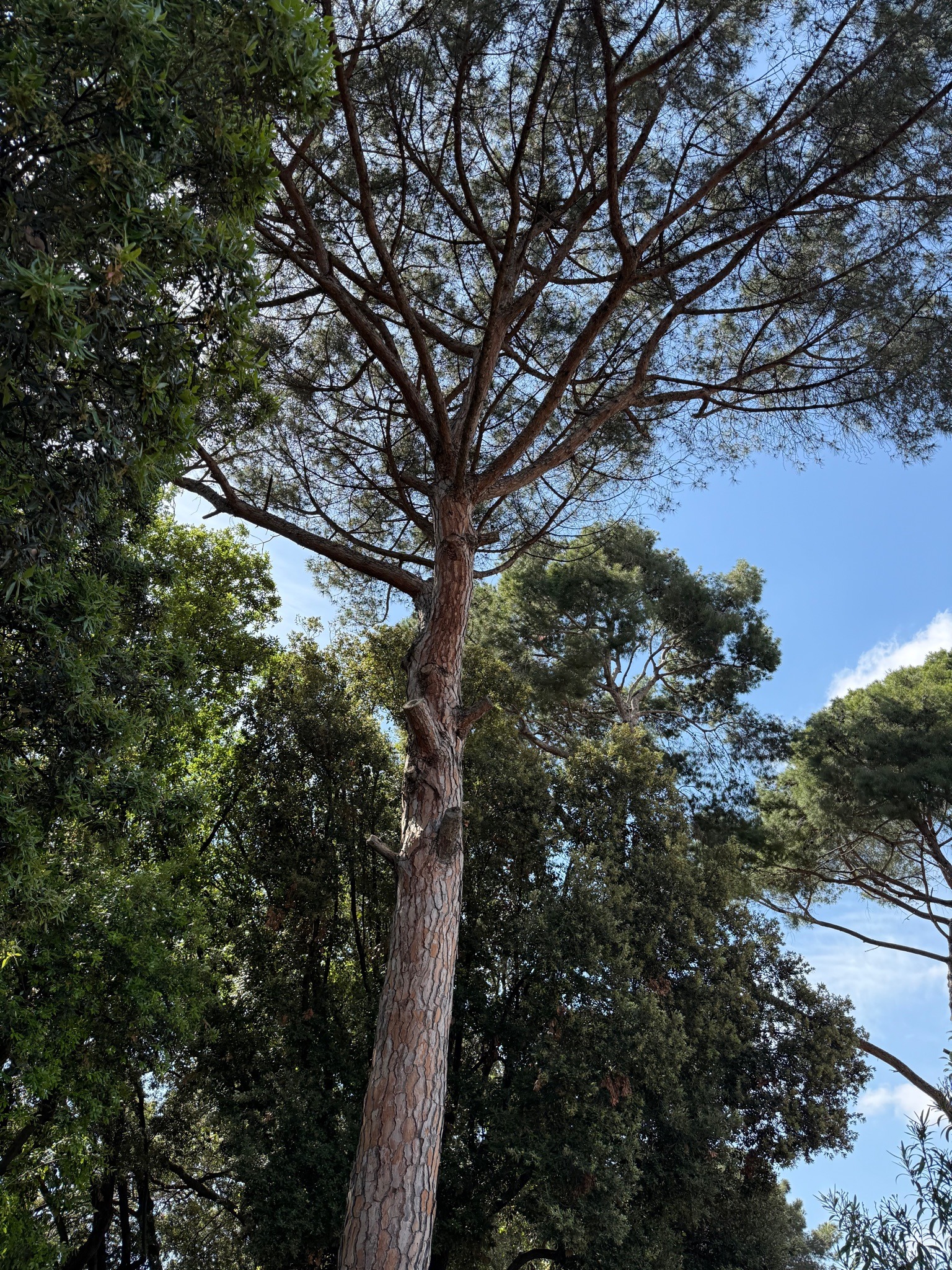
A distinctive evergreen coniferous tree known for its flat-topped, umbrella-like canopy and thick, deeply fissured reddish-brown bark. It has long, stiff bright-green needles in pairs.
Care Instructions
Requires full sun and well-draining soil. It is very drought-tolerant once established and prefers Mediterranean climates with mild winters and hot summers. Minimal feeding is needed once mature.
Medicinal Value
We do not currently provide medicinal value for plant identifications.
Sunlight
Full sun, requiring at least 6 to 8 hours of direct sunlight per day.
Watering
Moderate when young, but highly drought-tolerant when mature. Over-watering in heavy clay soils can lead to root rot.
Soil
Prefers sandy, well-draining acidic or neutral soils. Highly tolerant of maritime conditions and poor soils.
Hardiness Zone
USDA zones 8 through 11.
Growth Habit
Perennial evergreen tree. It typically reaches 35 to 60 feet in height with a wide, spreading umbrella-like crown. Growth rate is moderate.
Bloom Season
Non-flowering; produces cones. Male pollen cones are yellow-brown; female seed cones are large, ovoid, and glossy brown, maturing in their third year.
Toxicity
Generally non-toxic to humans and pets, though pine oils can occasionally cause mild digestive upset in sensitive animals if needles are ingested.
Propagation
Propagated by seeds (pine nuts), which require a period of cold stratification to improve germination rates.
Common Pests & Issues
Susceptible to Pine Processionary Moth caterpillars and Pine Bast Scale. Root rot can occur in poorly drained, waterlogged soils.
Similar Species
Pinus halepensis (Aleppo Pine) which has a more irregular, open crown and smaller cones, and Pinus pinaster (Maritime Pine) which has coarser bark and larger, more pointed cones.
Interesting Facts
The Stone Pine has been cultivated for its edible pignoli (pine nuts) for over 6,000 years. It is an iconic symbol of the Italian landscape, particularly in Rome.
Created At: 2026-05-01T05:04:01.258784