Sabal Palm (Cabbage Palm)
Scientific Name: Sabal palmetto
Plant Family: Arecaceae
Native Region: Southeastern United States (Florida, Carolina, Georgia), Cuba, and the Bahamas.
Brief Description
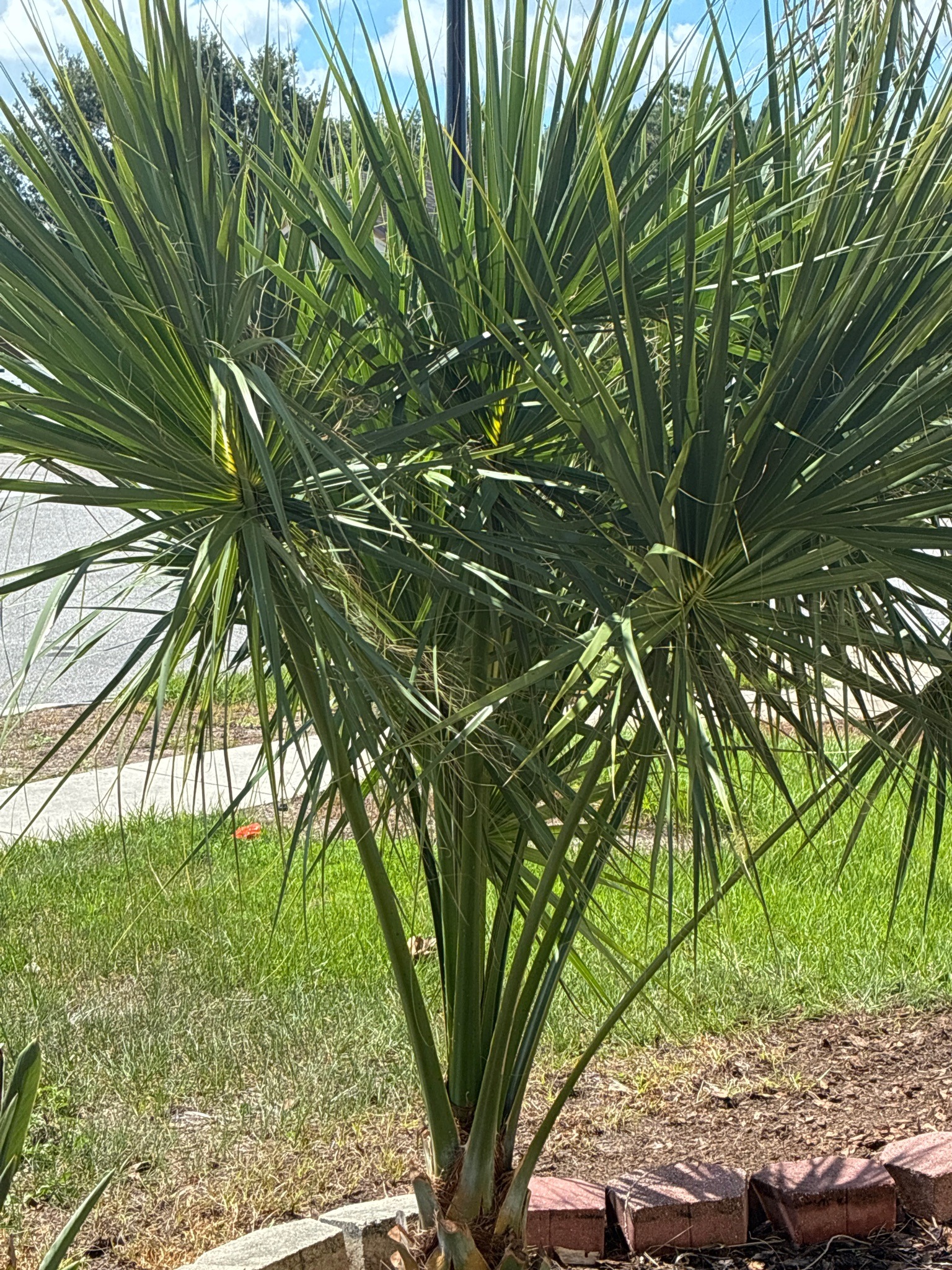
A medium-sized fan palm characterized by large, fan-shaped evergreen fronds with a distinct curved costa (midrib). The trunk is often covered in old leaf bases called 'boots' making a criss-cross pattern.
Care Instructions
Extremely low-maintenance once established. Requires full sun to partial shade. Prefers well-draining soil and regular watering until established, after which it is highly drought-tolerant.
Medicinal Value
We do not currently provide medicinal value for plant identifications.
Sunlight
Full sun to partial shade (4-8 hours of sunlight daily).
Watering
Moderate; water regularly during the first growing season. Once mature, it is very drought-tolerant and only needs water during extreme dry spells.
Soil
Adaptable to various soils including sandy, loamy, or clay. Prefers neutral to alkaline pH and requires good drainage.
Hardiness Zone
8-11
Growth Habit
Perennial evergreen tree; slow growth rate. Can reach 40-65 feet in height with a canopy spread of 10-15 feet.
Bloom Season
Late spring to early summer; produces large, drooping branched clusters of small, creamy-white, fragrant flowers.
Toxicity
Non-toxic to humans, dogs, and cats; however, the leaf tips can be sharp and cause physical injury.
Propagation
Propagated strictly by seeds, as they do not produce suckers and cannot be grown from cuttings.
Common Pests & Issues
Generally pest-resistant, but can be affected by Palmetto Weevils or Ganoderma butt rot. Nutrient deficiencies (potassium/magnesium) can cause yellowing fronds.
Similar Species
Saw Palmetto (Serenoa repens), which is smaller/shrub-like and has saw-toothed petioles. European Fan Palm (Chamaerops humilis), which remains shorter and clumping.
Interesting Facts
It is the state tree of both Florida and South Carolina. It is remarkably salt-tolerant and can survive hurricane-force winds due to its flexible trunk and root system.
Created At: 2026-06-06T14:53:58.656187