Highbush Blueberry
Scientific Name: Vaccinium corymbosum
Plant Family: Ericaceae
Native Region: Eastern and North Central North America, now cultivated globally in temperate regions
Brief Description
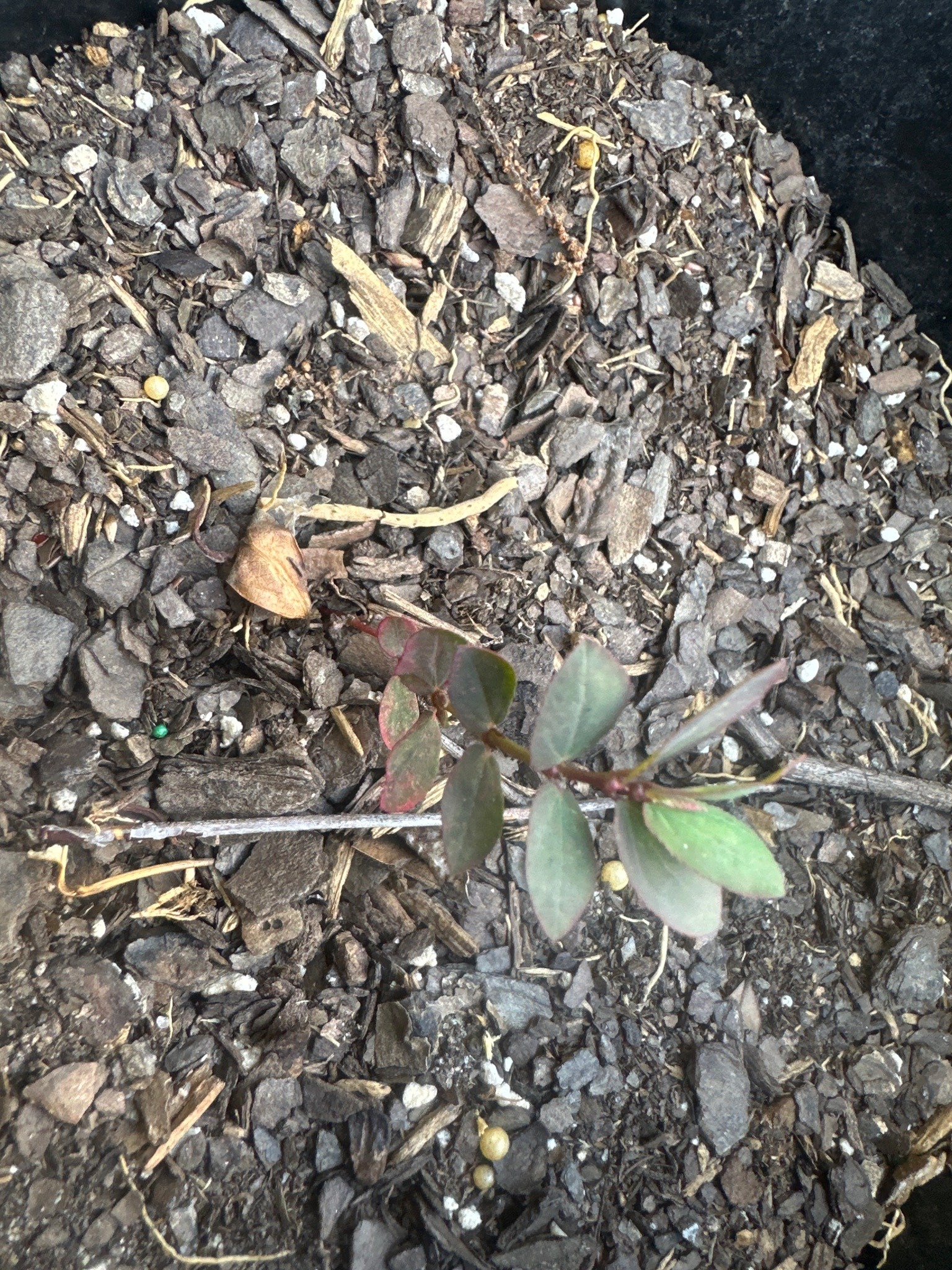
A deciduous shrub with small, oval, glaucous green leaves that turn bright red in autumn. This seedling shows the typical alternate leaf arrangement and reddish-brown stem.
Care Instructions
Requires highly acidic soil (pH 4.5-5.5) and consistent moisture. Apply mulch to protect shallow roots and fertilize with an acid-loving plant formula. Provide full sun for best fruit production.
Medicinal Value
We do not currently provide medicinal value for plant identifications.
Sunlight
Full sun (6-8 hours per day); can tolerate partial shade but at the cost of reduced fruit yield.
Watering
Consistent moisture is critical; needs about 1-2 inches of water per week. Not drought-tolerant due to shallow root systems.
Soil
Well-drained, sandy or loamy organic soil that is highly acidic (pH 4.5 to 5.5).
Hardiness Zone
3-8 (depending on cultivar)
Growth Habit
Perennial deciduous shrub; grows 6-12 feet tall and wide at maturity with an upright, spreading habit.
Bloom Season
Spring; flowers are small, bell-shaped, white to pale pink, hanging in clusters.
Toxicity
Non-toxic to humans, dogs, and cats; the fruit is edible.
Propagation
Softwood cuttings in late spring or hardwood cuttings in winter; can also be grown from seed, though seed-grown plants take years to fruit.
Common Pests & Issues
Birds eating fruit, blueberry maggot, and fungal diseases like mummy berry or powdery mildew. Iron chlorosis occurs if soil pH is too high.
Similar Species
Lowbush blueberry (Vaccinium angustifolium) which is much shorter, and Huckleberry (Gaylussacia), which has resin glands on the leaf undersides.
Interesting Facts
Blueberries are one of the only fruits native to North America that are commercially important. They require 'chill hours' in winter to produce fruit the following year.
Created At: 2026-05-12T21:18:02.557311