Shasta Daisy
Scientific Name: Leucanthemum x superbum
Plant Family: Asteraceae
Native Region: The Shasta daisy is a hybrid of European and Asian species (specifically Leucanthemum maximum and Leucanthemum lacustre) created in California, USA, by Luther Burbank.
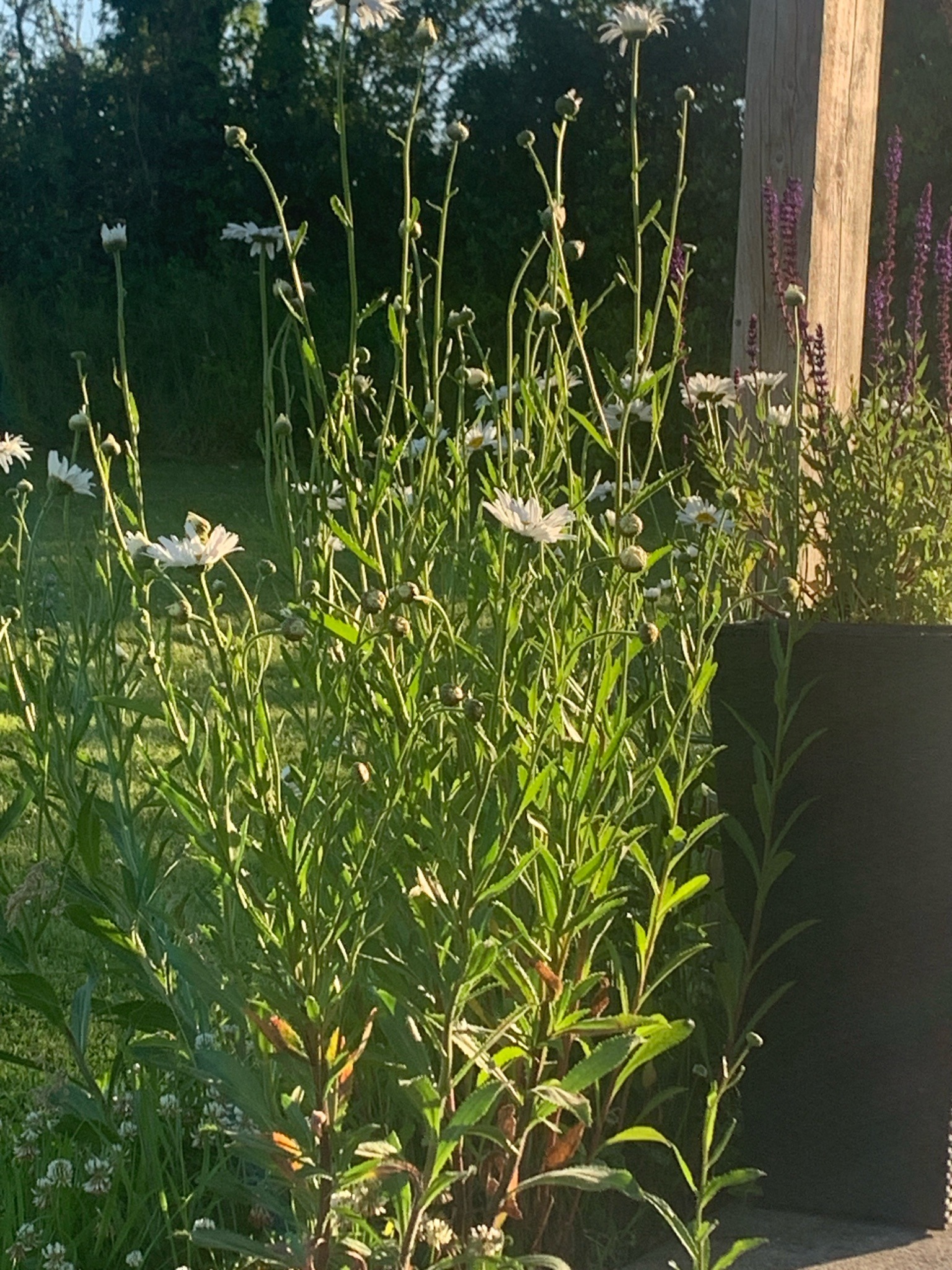
Brief Description
A popular herbaceous perennial known for its bright white ray petals surrounding a central yellow disc. It features dark green, lance-shaped, serrated foliage and grows in sturdy, upright clumps.
Care Instructions
Provide full sun and well-draining soil. Water regularly to establish, then moderately after. Apply an all-purpose balanced fertilizer in spring when new growth appears and deadhead spent blooms to encourage more flowering.
Medicinal Value
We do not currently provide medicinal value for plant identifications.
Sunlight
Full sun (6+ hours per day). Can tolerate partial shade in very hot climates, but stems may become leggy.
Watering
Moderate watering; keep soil moist but not soggy. Once established, they are somewhat drought-tolerant. Wilting is a sign of underwatering, while yellowing leaves can indicate overwatering.
Soil
Well-draining, fertile soil; prefers neutral soil with a pH between 6.0 and 8.0. Cannot tolerate soggy soil in winter.
Hardiness Zone
USDA zones 5-9; cold hardy and heat tolerant within these ranges.
Growth Habit
Clump-forming perennial; typically reaches 2-3 feet in height and 1-2 feet in spread. Fast-growing and tends to spread over time via rhizomes.
Bloom Season
Early summer to early autumn. Showy white flowers with yellow centers on long, sturdy stalks.
Toxicity
Non-toxic to humans, but can cause mild stomach upset if ingested. Mildly toxic to cats, dogs, and horses, potentially causing dermatitis or vomiting if consumed.
Propagation
Propagated by crown division in spring or fall, from stem cuttings, or by seed. Division every 2-3 years is recommended to maintain plant vigor.
Common Pests & Issues
Susceptible to aphids, slugs, and spider mites. Common diseases include powdery mildew, leaf spot, and verticillium wilt, usually caused by poor drainage or low air circulation.
Similar Species
Oxeye Daisy (Leucanthemum vulgare), which is smaller and more invasive; Montauk Daisy (Nipponanthemum nipponicum), which is a woody shrub; and various species of Echinacea.
Interesting Facts
The Shasta Daisy was developed over a period of 17 years by horticulturist Luther Burbank, who named it after Mount Shasta in Northern California because the white petals reminded him of the mountain's snow.
Created At: 2026-06-23T19:07:14.803978