Chiltepin (Wild Chile)
Scientific Name: Capsicum annuum var. glabriusculum
Plant Family: Solanaceae (Nightshade family)
Native Region: Southern North America (Texas, Arizona, Florida), Mexico, Central America, and South America
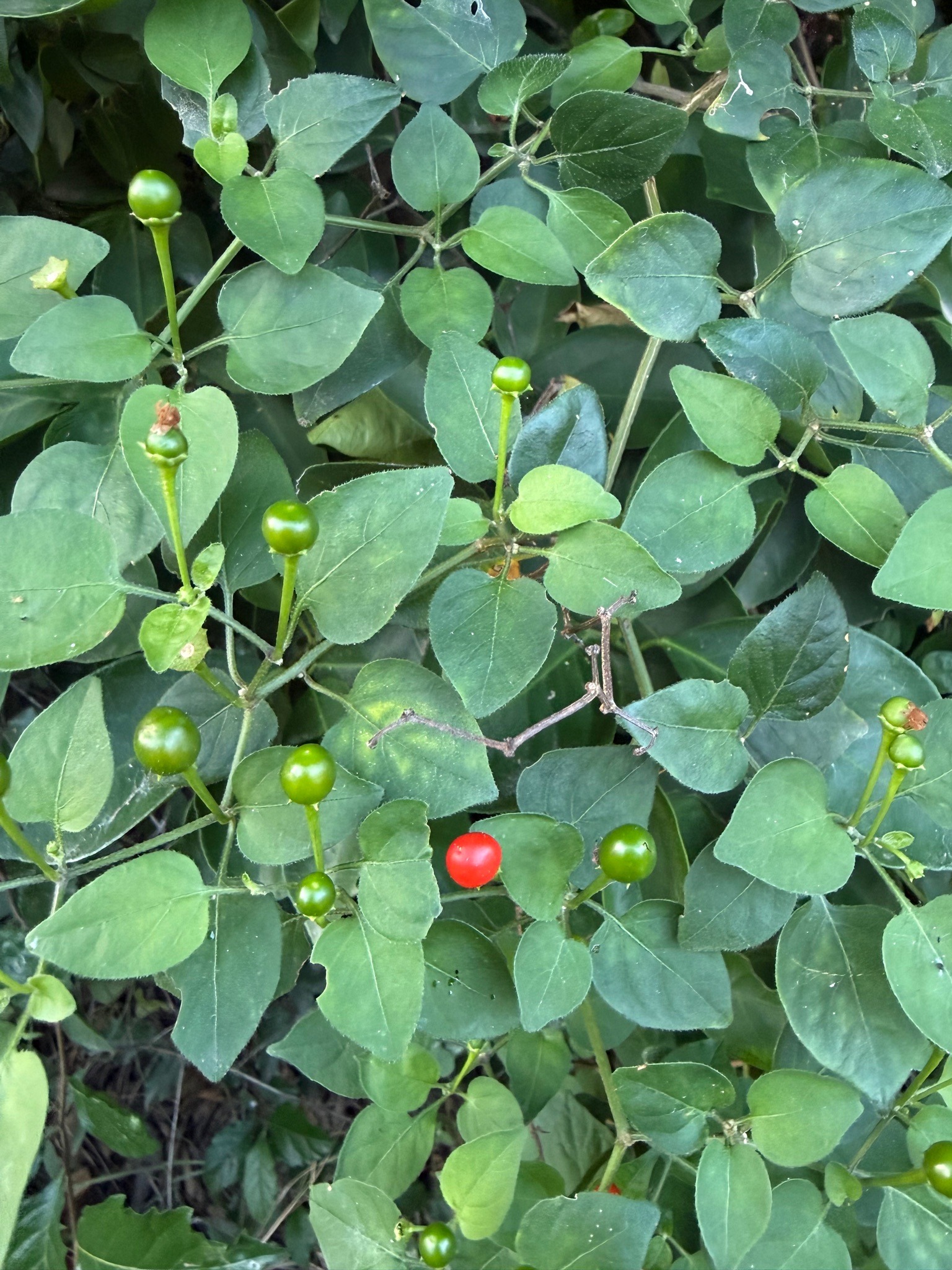
Brief Description
A perennial shrub featuring small, oval to heart-shaped green leaves and tiny, round berry-like fruits that turn from green to bright red when ripe. It is known as the 'mother of all peppers.'
Care Instructions
Thrives in warm environments with dappled sunlight. Provide well-draining soil and water when the top inch of soil feels dry. Fertilize sparingly during the growing season with a balanced fertilizer. Prune to maintain shape and encourage bushier growth.
Medicinal Value
We do not currently provide medicinal value for plant identifications.
Sunlight
Partial shade to full sun; prefers 6-8 hours of light but benefits from afternoon shade in very hot climates.
Watering
Moderate watering. Water consistently but allow the soil to dry out slightly between waterings. Highly drought-tolerant once established but fruit production decreases without water.
Soil
Well-draining, sandy or loamy soil with a neutral to slightly acidic pH (6.0-7.0).
Hardiness Zone
USDA zones 8-11 (can be grown as an annual in colder zones).
Growth Habit
Perennial shrub with a sprawling or upright growth habit. Can reach 3-4 feet in height and width.
Bloom Season
Small, white star-shaped flowers appear throughout the summer and fall, followed by small round fruits.
Toxicity
The fruit is non-toxic but extremely hot/pungent, which can cause severe irritation to eyes or skin. Leaves and stems of the nightshade family can be mildly toxic if ingested in large quantities by pets.
Propagation
Propagated primarily by seed. Birds play a major role in wild dispersal as they are unaffected by the heat (capsaicin). Can also be grown from stem cuttings.
Common Pests & Issues
Whiteflies, aphids, and spider mites. Overwatering can lead to root rot. Generally more resistant to pests than domesticated pepper varieties.
Similar Species
Bird's Eye Chili (Capsicum frutescens), which has more elongated fruit and a different growth habit; and Solanum nigrum (Black Nightshade), which has similar berries that turn black and is toxic if unripe.
Interesting Facts
The Chiltepin is the only wild chili pepper native to the United States and was named the official state native pepper of Texas in 1997. It is often referred to as 'bird pepper' because birds love to eat the spicy fruit.
Created At: 2026-06-22T01:19:36.718619