Autumn Sage
Scientific Name: Salvia greggii
Plant Family: Lamiaceae (Mint Family)
Native Region: Southwestern United States (Texas) and Mexico
Brief Description
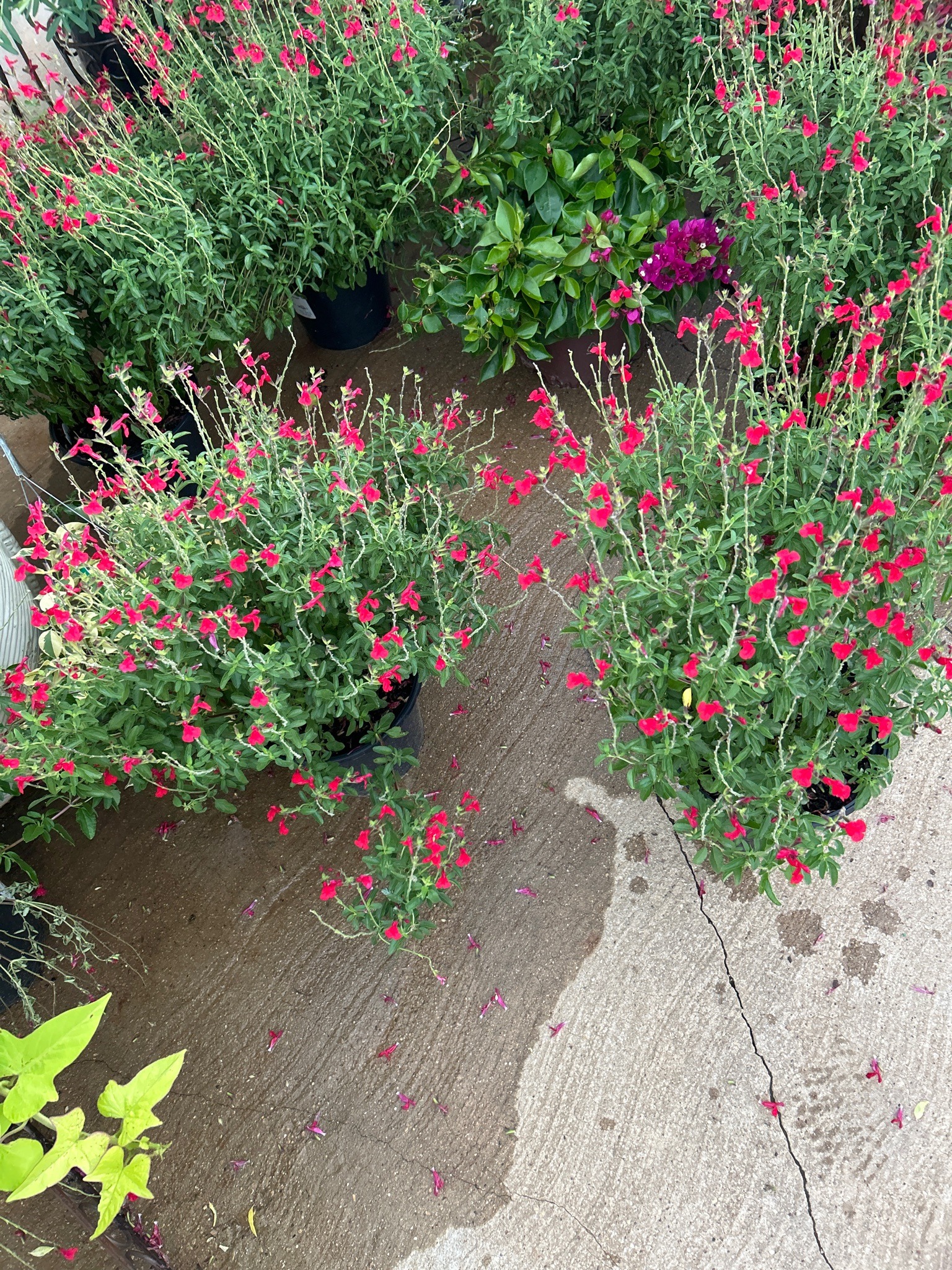
A popular, semi-evergreen shrubby perennial known for its small, aromatic, ovate green leaves and a profusion of two-lipped flowers in shades of red, pink, or purple on long spikes.
Care Instructions
Plant in a sunny location with very well-draining soil. Provide regular water during the first growing season to establish roots, but avoid overwatering once mature. Prune by one-third in late winter or early spring to maintain a bushy shape and encourage new blooms.
Medicinal Value
We do not currently provide medicinal value for plant identifications.
Sunlight
Full sun (at least 6 hours of direct sunlight per day); can tolerate light afternoon shade in extremely hot climates.
Watering
Low to moderate watering needs. It is drought-tolerant once established. Water when the top inch of soil feels dry, but ensure the pot or ground has excellent drainage.
Soil
Well-draining, sandy, or rocky soil. Prefers a neutral to slightly alkaline pH (6.6 to 8.5).
Hardiness Zone
USDA Zones 7-9
Growth Habit
Small woody-based perennial or sub-shrub; typically grows 2-3 feet tall and wide at a moderate to fast rate.
Bloom Season
Spring through autumn, often with a peak in late summer/fall. Flowers are hooded and tubular, attracting hummingbirds and butterflies.
Toxicity
Generally considered non-toxic to humans, dogs, cats, and horses.
Propagation
Easily propagated through softwood cuttings taken in late spring or summer, or via seed sown in spring.
Common Pests & Issues
Relatively pest-free but can suffer from root rot if soil is too wet or heavy. Spider mites may occur in very dry, dusty conditions.
Similar Species
Salvia microphylla (Mountain Sage), which has larger, more serrated leaves and different venation. The hybrid Salvia x jamensis is also very similar and often confused with S. greggii.
Interesting Facts
The specific epithet 'greggii' honors Josiah Gregg, an American merchant and naturalist who collected the plant in Mexico in the 1840s. It is one of the most popular garden salvias because of its long bloom period.
Created At: 2026-05-19T17:57:55.259089