Citronella Geranium
Scientific Name: Pelargonium graveolens
Plant Family: Geraniaceae
Native Region: South Africa; cultivated worldwide
Brief Description
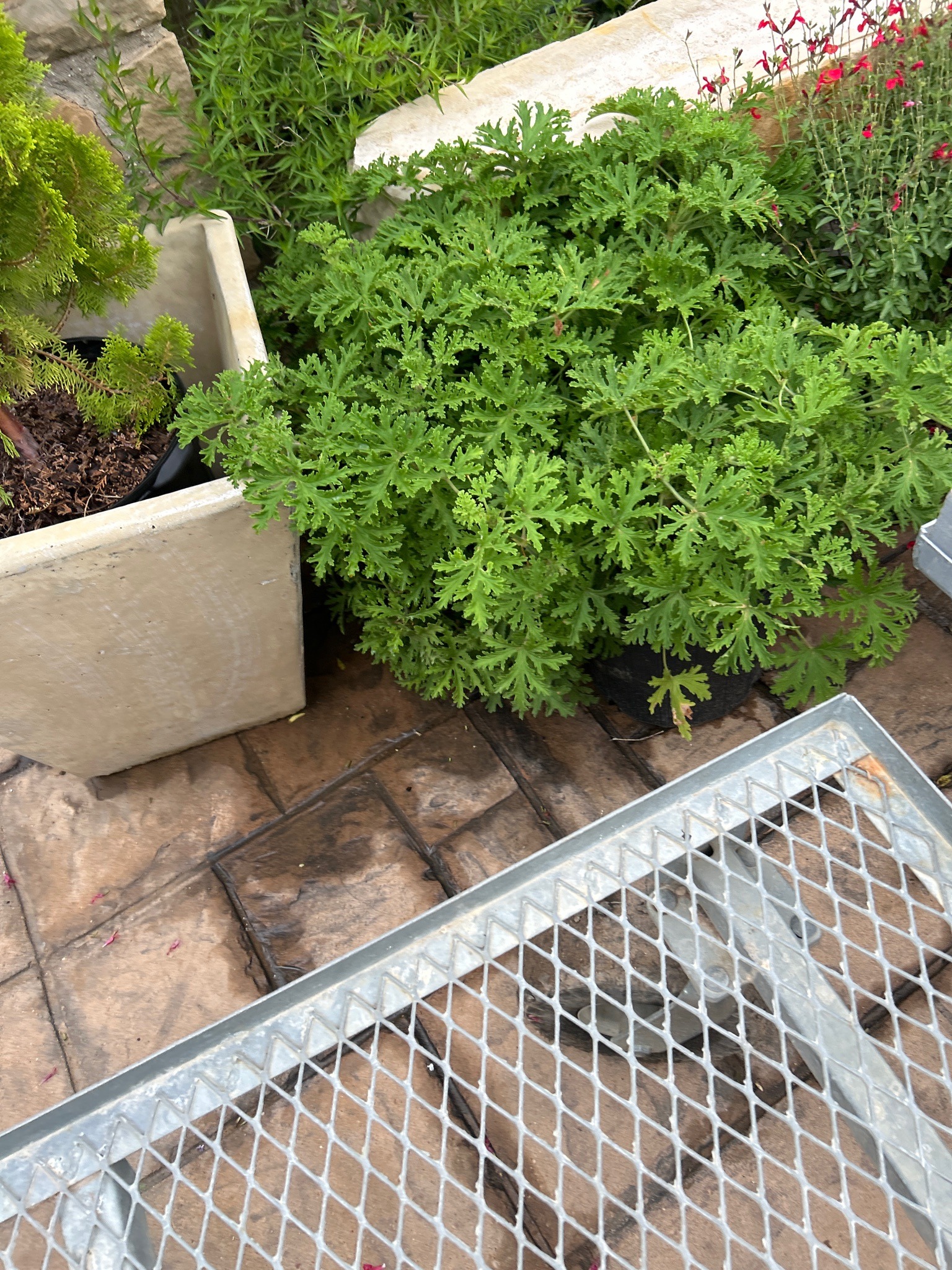
A bushy perennial with deeply lobed, lace-like green leaves that possess a strong lemony scent when crushed or brushed against.
Care Instructions
Provide full sun and well-draining soil. Water when the top inch of soil feels dry, but avoid over-saturation. Feed with a balanced liquid fertilizer every 2-4 weeks during the growing season.
Medicinal Value
We do not currently provide medicinal value for plant identifications.
Sunlight
Full sun to partial shade; at least 6 hours of direct sunlight per day is ideal.
Watering
Moderate watering. Allow the soil to dry out between waterings. Drought-tolerant once established but prone to root rot if overwatered.
Soil
Well-drained, sandy or loamy soil with a neutral to slightly acidic pH (6.0-7.0).
Hardiness Zone
USDA Zones 9-11; grown as an annual or houseplant in colder climates.
Growth Habit
Upright, shrubby perennial. Grows 2-3 feet tall and wide at a moderate to fast growth rate.
Bloom Season
Spring and Summer; produces small, inconspicuous lavender or pink flowers with five petals.
Toxicity
Toxic to dogs, cats, and horses if ingested due to essential oils like citronellol and geraniol, which can cause vomiting or skin irritation.
Propagation
Most easily propagated by stem cuttings in spring or summer. Can also be grown from seed, though germination is more difficult.
Common Pests & Issues
Susceptible to aphids, whiteflies, and spider mites. Bacterial leaf spot or root rot can occur in overly humid or wet conditions.
Similar Species
Often confused with other Scented Geraniums or the Citronella Grass (Cymbopogon nardus), which is the true source of citronella oil.
Interesting Facts
The scent comes from oil glands on the underside of the leaves; rubbing the leaves releases the citrus-like aroma that gives the plant its name.
Created At: 2026-05-19T18:07:58.149630