How to Care for African Tulip Tree
Grow the African Tulip Tree (Spathodea campanulata), a bold tropical tree crowned with flame-orange, tulip-shaped flowers.
Read the full African Tulip Tree encyclopedia entry →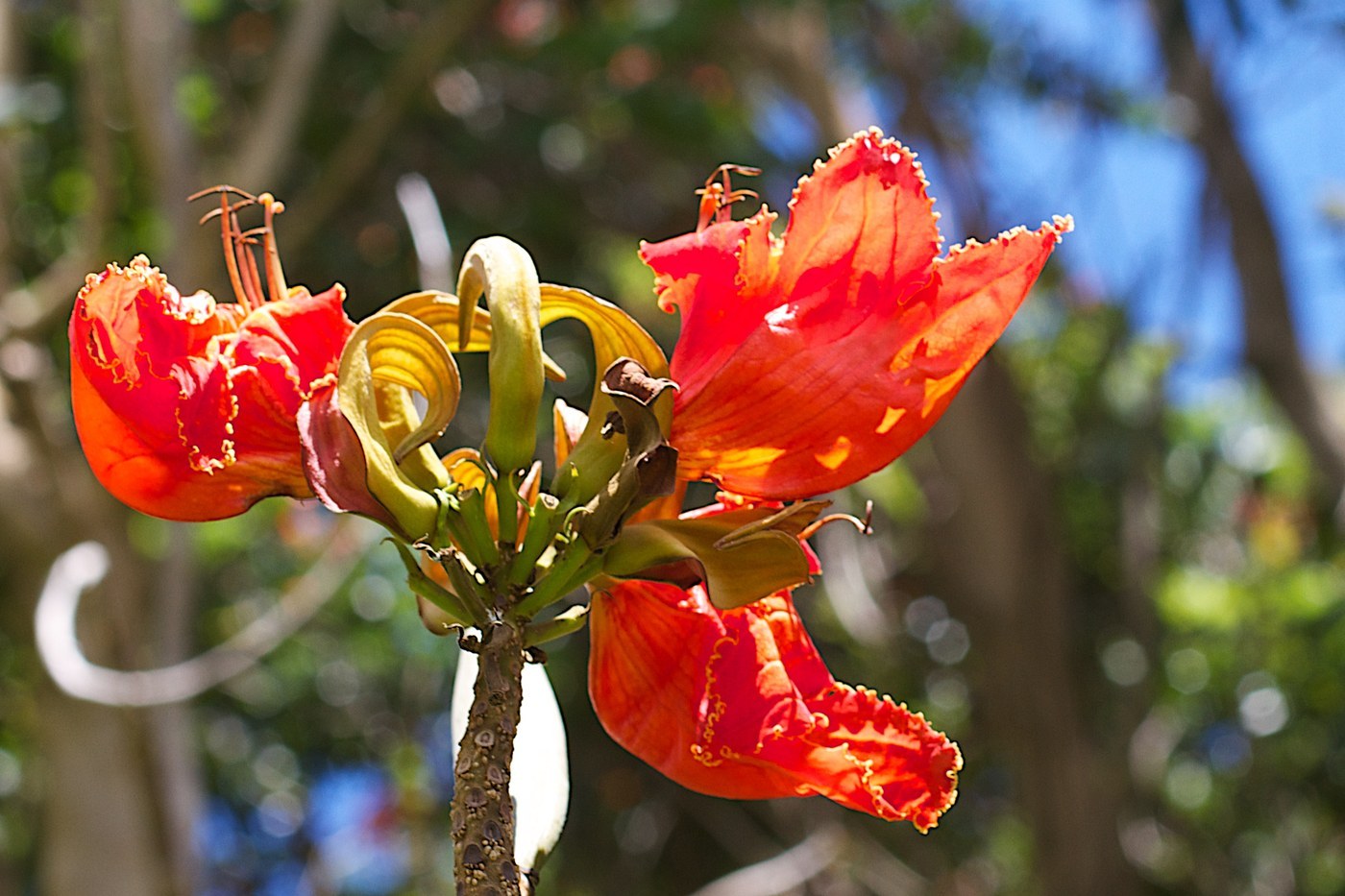
The African Tulip Tree (Spathodea campanulata) is a fast-growing tropical tree famous for its dramatic clusters of flame-orange to scarlet, tulip-shaped flowers set against glossy compound leaves. It makes a spectacular flowering specimen or shade tree in warm, frost-free landscapes.
Light
Grow in full sun for the best flowering and a dense, well-shaped crown. Young trees tolerate light shade, but abundant bloom and sturdy growth depend on plenty of direct light. Choose an open site where the broad canopy has room to spread.
Water
Provide moderate to ample water, especially while young and during the growing and flowering seasons. This tropical tree likes consistent moisture in well-drained soil and grows fastest when not allowed to dry out for long. Established trees show good resilience but bloom and grow better with regular irrigation during dry weather. Avoid permanently waterlogged sites.
Soil & Potting
Plant in deep, fertile, well-drained soil. It adapts to loam, sandy, and clay soils as long as drainage is adequate and the site is not chronically soggy. A slightly acidic to neutral pH suits it well. Enrich the planting hole with compost and mulch the root zone to conserve moisture and feed the soil, keeping mulch away from the trunk.
Humidity & Temperature
This is a strictly tropical to subtropical tree that needs warm temperatures year-round and enjoys high humidity. It is very frost-sensitive; even a light freeze damages foliage and young wood, and hard frost can kill it. Grow it only in reliably frost-free climates, or in a large heated conservatory where space allows.
Feeding
Feed young trees with a balanced fertilizer during the warm growing season to support their rapid growth. Mature trees benefit from an annual spring feeding of a balanced or bloom-supporting fertilizer, or a generous topdressing of compost. Steady moisture and nutrients keep flowering heavy through the season.
Propagation
Propagate from seed, which germinates readily when fresh and sown warm; the winged seeds are produced in abundance in boat-shaped pods. It also grows easily from stem and root cuttings and from suckers, which is one reason it establishes so quickly. Cutting-grown plants can flower sooner than seedlings.
Repotting / Pruning
As a large landscape tree it is not typically containerized long-term, though young plants can be potted until planting out. Prune after flowering to shape the crown, remove weak or crossing limbs, and control size, since the wood is somewhat brittle and prone to breakage. Remove suckers if you want a clean single trunk.
Common Problems & Pests
The African Tulip Tree is generally vigorous but has brittle wood that can split or drop limbs in storms, so structural pruning while young pays off. Roots are aggressive and can lift pavement, so site it away from paths and foundations. Watch for scale, mealybugs, and occasional caterpillars, and for root rot in poorly drained soil. Overall it is robust once established in a suitable climate.
Seasonal Care Tips
Plant at the start of the warm, wet season. During active growth, water and feed regularly to fuel fast development and heavy bloom. Prune after the main flowering flush to manage shape and structure. In cooler subtropical margins, protect young trees from any cold snaps and site them in the warmest, most sheltered spot. In the tropics it may flower on and off much of the year with peaks in the warm season.
Frequently asked questions
How fast does the African Tulip Tree grow?
Very fast. In warm, moist conditions with full sun it can add several feet per year, quickly forming a broad canopy, which is why structural pruning while young is worthwhile.
Can the African Tulip Tree tolerate frost?
No. It is highly frost-sensitive, and even light freezes damage the foliage and young wood. Grow it only in frost-free tropical or subtropical climates.
Why isn't my African Tulip Tree flowering?
Insufficient sunlight and youth are the common reasons. It needs full sun and time to mature; ensure it gets plenty of direct light and regular feeding and water during the warm season.
Where should I plant an African Tulip Tree?
Give it an open, sunny, frost-free site with deep, well-drained soil and plenty of room. Keep it away from pavement, drains, and foundations because the roots are vigorous and the wood is brittle.
African Tulip Tree identified by the community
Recent African Tulip Tree specimens identified with Plant Identifier.