African Tulip Tree
Spathodea campanulata
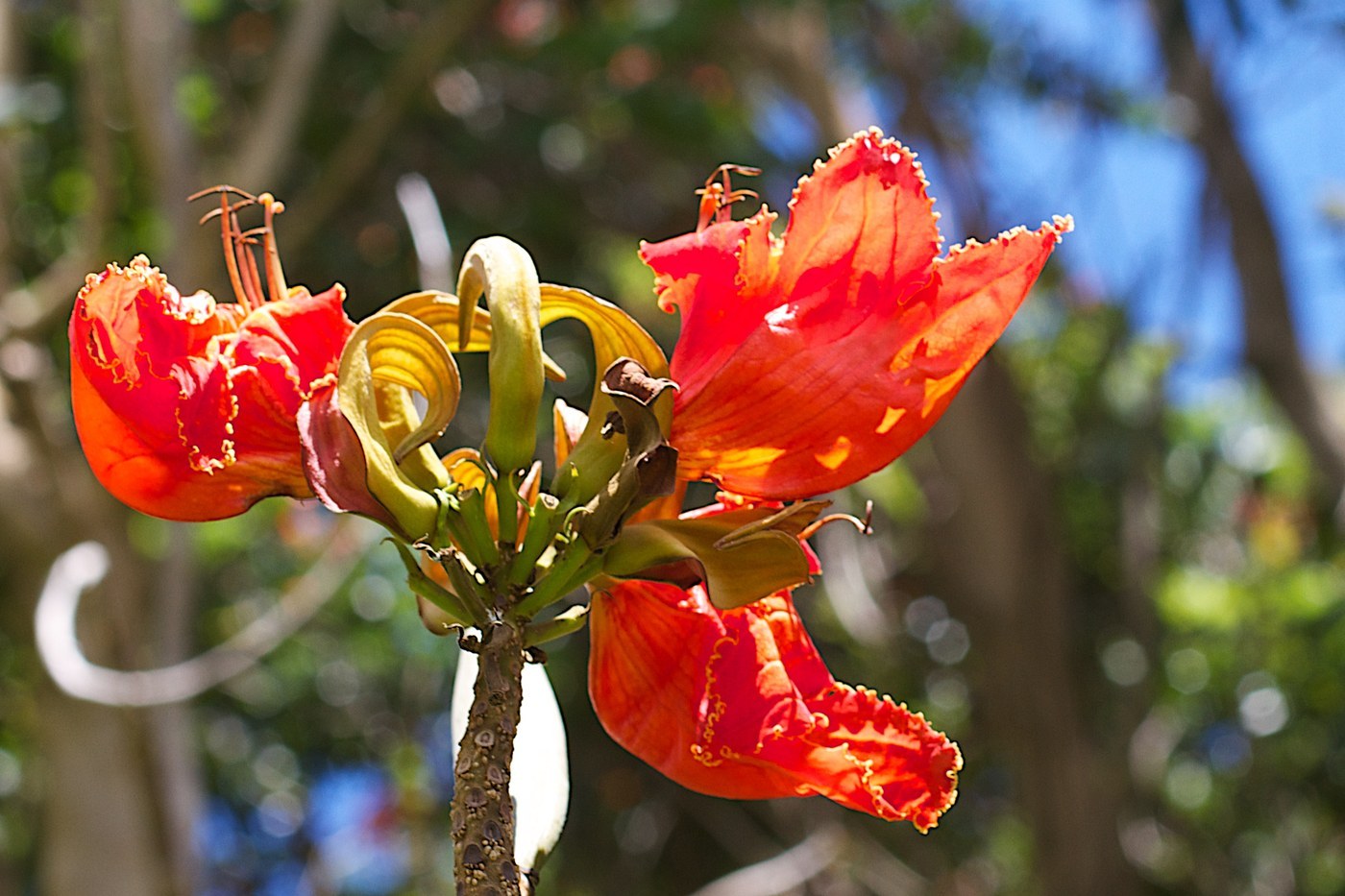
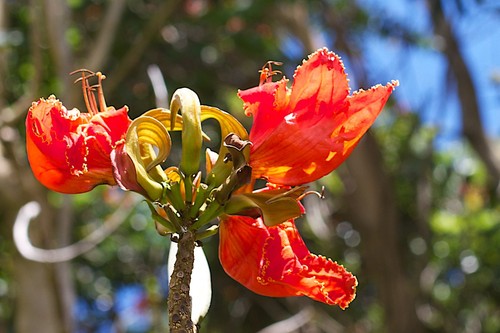
The African tulip tree is a fast-growing tropical tree topped with vivid orange-red, tulip-shaped flowers held above glossy foliage. Its showy blooms make it a popular ornamental, though it is invasive in many tropical regions.
- Light
- Full sun
- Water
- Moderate to ample
- Difficulty
- Moderate
Got a plant like this?
Identify any plant from a photo, free.
Overview
Spathodea campanulata is a large evergreen tropical tree native to equatorial Africa, prized worldwide for its brilliant cup-shaped scarlet-orange flowers that crown the canopy for much of the year.
The unopened buds hold water and are sometimes used as natural squirt toys, earning the name fountain tree. Its rapid growth and dazzling color make it a favorite street and park tree in the tropics.
However, that same vigor makes it a serious invasive weed on many Pacific islands and other tropical regions, where it readily escapes cultivation.
How to identify it
A large, fast-growing evergreen tree reaching 15-25 m with a dense, rounded crown.
- Leaves: large, compound (pinnate), glossy dark green, with 7-17 oval leaflets
- Flowers: showy, bell- or tulip-shaped, orange to scarlet-red with frilly yellow margins, in dense terminal clusters
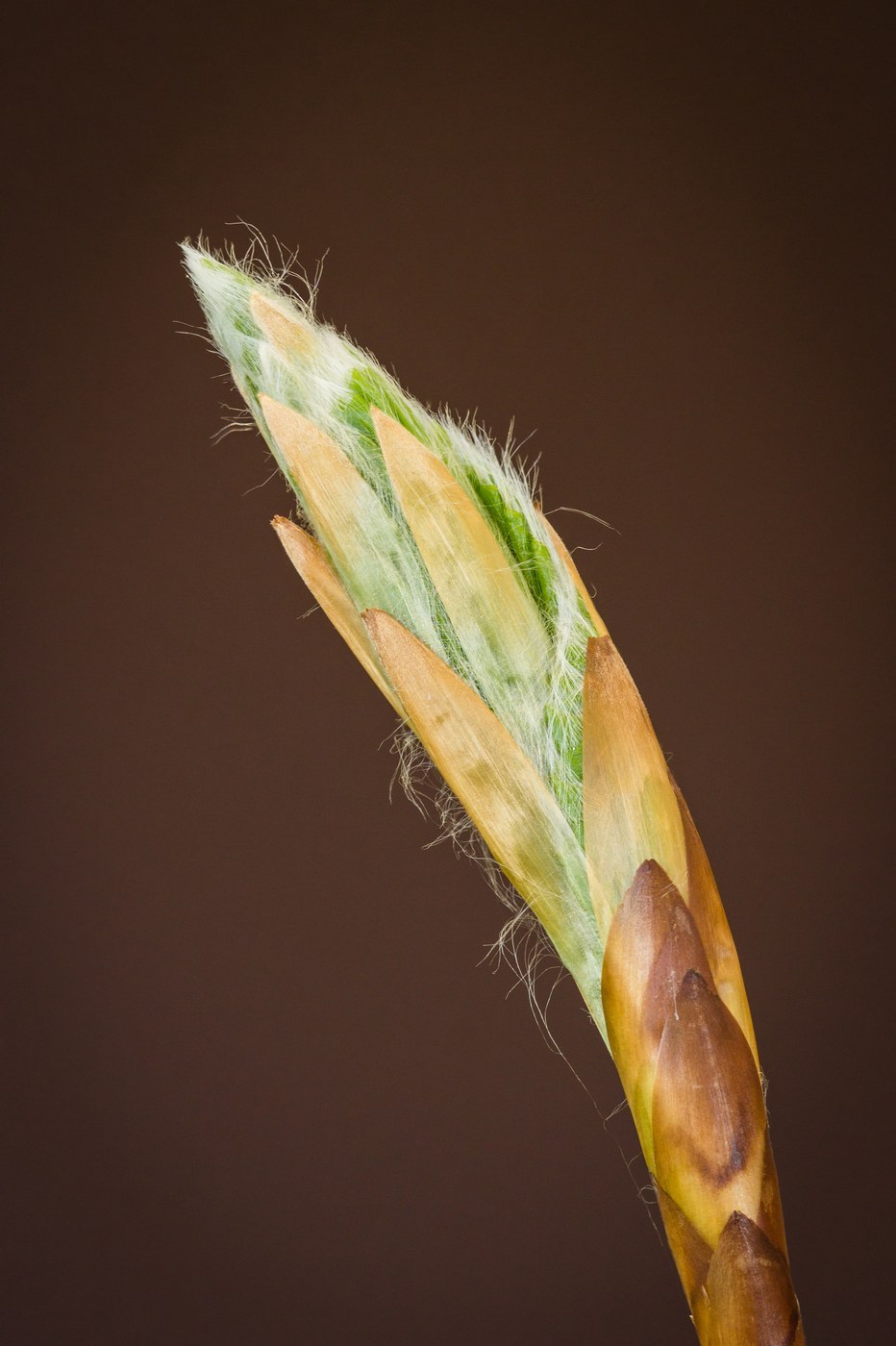
- Buds: curved, brown, water-filled, surrounding the open central blooms
- Fruit: long, boat-shaped woody capsules splitting to release many papery winged seeds
- Bark: pale grey-brown, smooth to slightly fissured
Care & growing
A vigorous tree for frost-free tropical and subtropical climates.
- Light: full sun for best flowering
- Water: prefers regular moisture; tolerates seasonal dryness once established
- Soil: deep, fertile, well-drained soil; adaptable but grows fastest in rich ground
- Temperature: strictly tropical; damaged below about 5°C, thrives in zones 10-12
- Feeding: benefits from occasional feeding when young; usually self-sufficient after
- Propagation: by seed, cuttings, or root suckers, all of which root easily
Habitat & origin
Native to the tropical forests of West and Central Africa, where it grows in moist lowland and montane forest.
Now planted throughout the tropics as an ornamental and naturalized in Hawaii, the Pacific Islands, Australia, the Caribbean, and Southeast Asia. It is officially listed among the world's worst invasive species in several of these areas.
Frequently asked questions
Why is it called the fountain tree?
The closed flower buds hold water, and when squeezed they squirt it out like a fountain, a feature children often play with.
Is the African tulip tree invasive?
Yes, in many tropical regions, especially Pacific islands and Hawaii, it spreads aggressively and is considered a harmful invasive species.
How fast does it grow?
Very fast; it can grow more than a meter per year in good tropical conditions and flower within a few years of planting.
Can it tolerate cold?
No, it is strictly tropical and is damaged or killed by frost, thriving only in zones 10-12.
African Tulip Tree guides
In-depth guides for identifying, growing, and caring for African Tulip Tree.
How to Care for African Tulip Tree
Grow the African Tulip Tree (Spathodea campanulata), a bold tropical tree crowned with flame-orange, tulip-shaped flowers.
African Tulip Tree Identification Guide
How to identify the African Tulip Tree by its flame-orange tulip-shaped flowers, velvety brown buds, and large pinnate glossy leaves.