Weeping Birch
Betula pendula
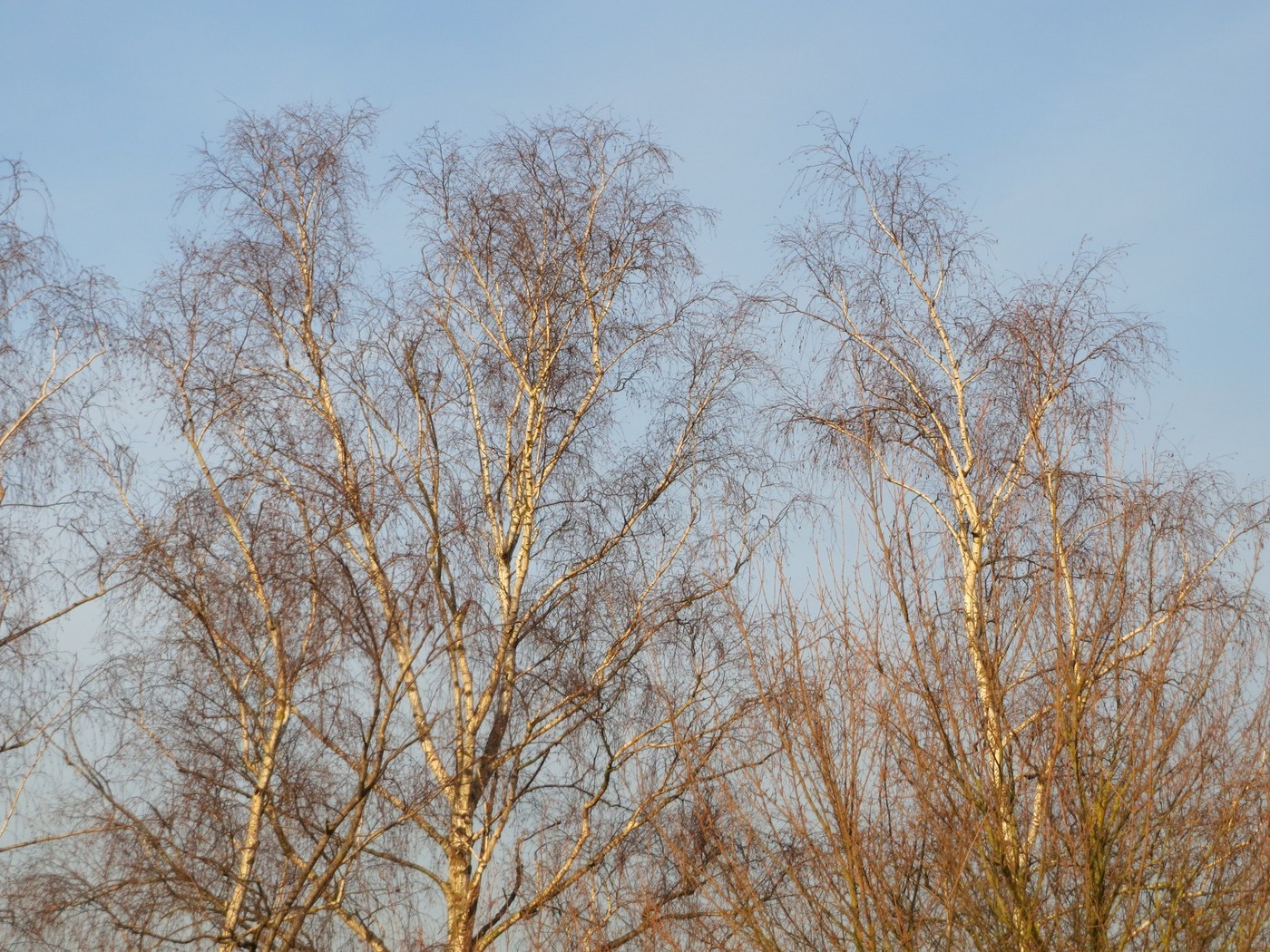
Weeping birch is the European white or silver birch, prized for its chalky white peeling bark and slender pendulous branchlets that sway in the breeze. Cultivars like 'Youngii' form a strongly weeping dome.
- Light
- Full sun
- Water
- Keep moist; dislikes drought
- Difficulty
- Moderate
Got a plant like this?
Identify any plant from a photo, free.
Overview
Weeping birch is Betula pendula, the silver or European white birch, whose drooping branch tips give it a soft, weeping silhouette. The cultivar 'Youngii' (Young's weeping birch) is fully pendulous and grown as a small mushroom-shaped specimen.
The defining feature is the bright white bark that peels in papery sheets, marked with dark diamond-shaped fissures on older trunks. Fine, diamond-shaped leaves flutter on thin twigs.
It is a fast-growing, graceful tree for lawns and small gardens, though it is comparatively short-lived and sensitive to heat and drought.
How to identify it
- Bark: smooth and bright white, peeling in thin horizontal strips, developing black diamond fissures with age
- Leaves: small, triangular to diamond-shaped, double-toothed margins, bright green turning clear yellow in fall
- Branches: slender with markedly drooping, almost pendulous tips ('Youngii' weeps to the ground)
- Catkins: yellow-brown drooping male catkins in spring; small winged seeds released in cone-like female catkins
- Size: species reaches 40-50 ft; weeping cultivars stay 15-25 ft
Care & growing
Light: full sun for best bark color and form.
Water: keep the soil consistently moist; birches are shallow-rooted and suffer in drought and heat. Mulch the root zone and water deeply in dry spells.
Soil: moist, well-drained, slightly acidic soil is ideal; tolerates a range but not prolonged drought.
Feeding: light spring feeding; avoid stressing the tree, which invites bronze birch borer.
Pruning: prune in summer or fall, never in spring when birches bleed sap heavily.
Propagation: species from seed; weeping cultivars are grafted.
Habitat & origin
Betula pendula is native across Europe and into Siberia and Asia Minor, growing in woodlands, heaths and on poor sandy or rocky soils as a pioneer species.
It is widely planted as an ornamental in cool temperate regions (USDA zones 2-7) but struggles in hot, dry climates where heat and the bronze birch borer shorten its life.
Frequently asked questions
Why are the leaves on my birch turning yellow and dropping in summer?
This is usually drought or heat stress, or an early sign of bronze birch borer. Keep the roots cool and moist with mulch and deep watering.
When should I prune a birch?
Prune in late summer or autumn. Birches bleed copious sap if cut in late winter or spring.
Why is the white bark turning black?
Older silver birches naturally develop black diamond-shaped fissures at the base; it is a normal part of maturing bark, not disease.
Are weeping birch roots a problem?
Roots are shallow and spreading, so avoid planting close to foundations or paving, and don't expect grass to thrive in the dry shade beneath.
Weeping Birch guides
In-depth guides for identifying, growing, and caring for Weeping Birch.
How to Care for Weeping Birch
Grow a graceful Weeping Birch (Betula pendula) with silvery bark and cascading branches: full sun, consistently moist soil, and cool roots.
Weeping Birch Identification Guide
Identify the weeping form of silver birch (Betula pendula) by its white peeling bark, drooping branchlets, and diamond-shaped serrated leaves.