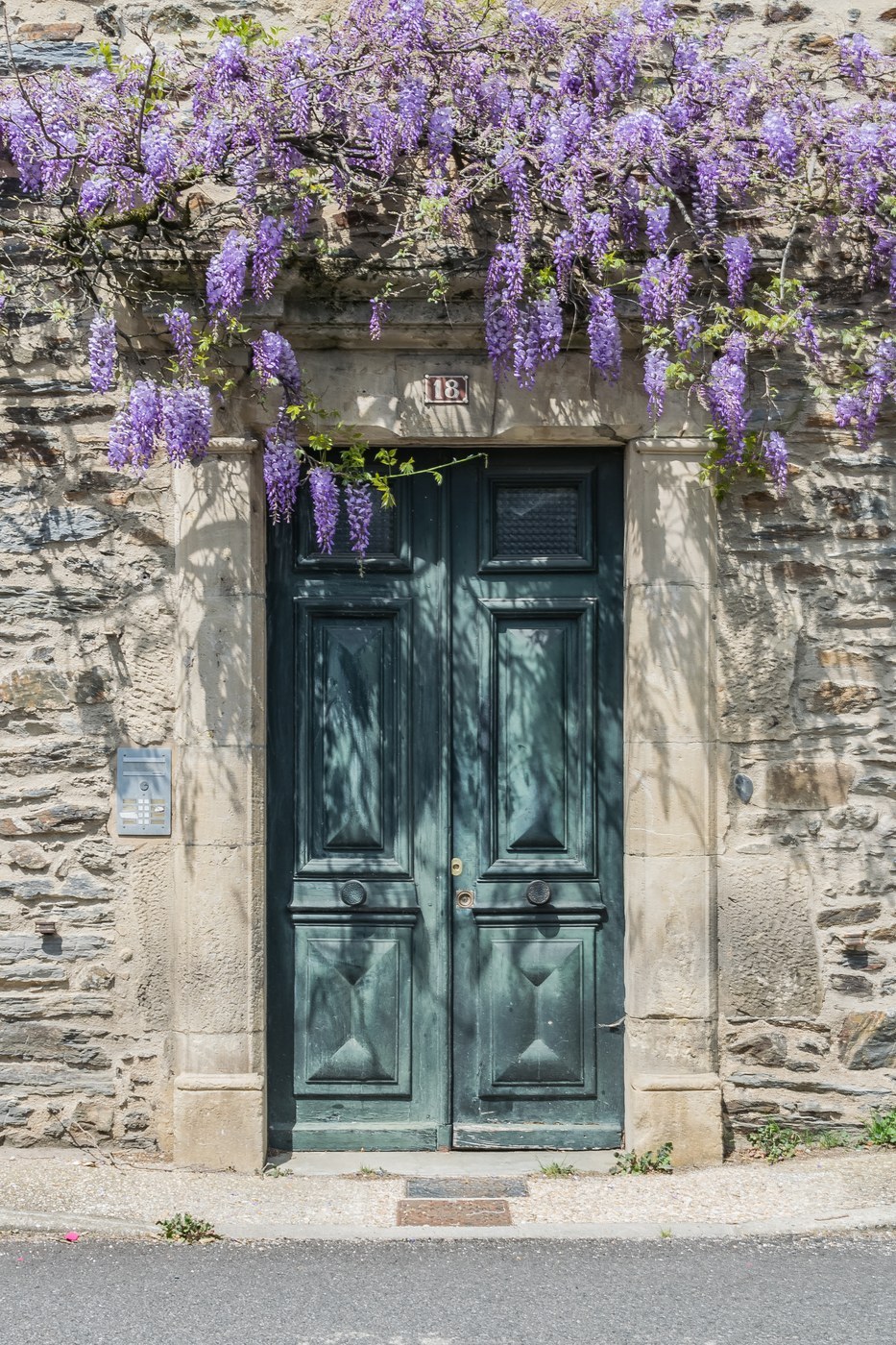
Wisteria Tree
Wisteria sinensis
A wisteria tree is a wisteria vine trained and pruned into a small free-standing tree form, prized for cascading clusters of fragrant purple-blue spring flowers. It is vigorous and requires regular pruning.
- Light
- Full sun
- Water
- Moderate; regular water, well-drained
- Difficulty
- Moderate
Got a plant like this?
Identify any plant from a photo, free.
Overview
A "wisteria tree" is not a distinct species but a wisteria vine trained into a tree-like standard — typically Chinese wisteria (Wisteria sinensis) or Japanese wisteria (W. floribunda) — grown on a single sturdy trunk with a weeping, umbrella-shaped crown.
In spring it produces spectacular, dangling clusters (racemes) of fragrant lavender, purple-blue, pink, or white flowers that drape from the canopy. The result is a dramatic ornamental focal point.
Because wisteria is naturally a vigorous, twining woody vine, maintaining the tree form requires staking when young and consistent pruning throughout its life.
How to identify it
- Flowers: Long, pendulous clusters of pea-like, fragrant flowers in lilac-purple, blue-violet, pink, or white, blooming in mid-to-late spring.
- Leaves: Alternate, pinnately compound with 7–13 (Chinese) or 13–19 (Japanese) leaflets; bright green, turning yellow in fall.
- Form: A single thick, often twisting trunk supporting a rounded or weeping crown — clearly a trained standard, not a natural tree.
- Fruit: Velvety, bean-like seed pods that persist into winter.
- Size: Usually kept 6–10 ft tall as a standard.
Care & growing
Wisteria trees need full sun (at least 6 hours) for good flowering.
- Water: Water regularly, especially when young; established plants are fairly drought tolerant but bloom best with consistent moisture.
- Soil: Fertile, moist, well-drained soil; avoid overly rich nitrogen, which promotes leaves over flowers.
- Temperature: Hardy in USDA zones 5–9 (Chinese) or 4–9 (Japanese).
- Feeding: Use low-nitrogen, higher-phosphorus fertilizer; excess nitrogen reduces blooming.
- Propagation: By cuttings, layering, or grafting; seed-grown plants take many years to flower.
- Pruning: Essential — prune twice yearly (summer and winter) and stake the trunk to maintain the tree form. Note that Asian wisterias can be invasive in some regions.
Habitat & origin
Chinese wisteria is native to China and Japanese wisteria to Japan, where they grow as climbing woody vines in forests and along streams.
As ornamentals they are grown worldwide in temperate gardens, trained over pergolas, walls, and — in standard form — as free-standing specimen trees. Both Asian species have escaped cultivation and become invasive in parts of the southeastern United States, so native American wisteria (W. frutescens) is a less aggressive alternative.
Frequently asked questions
Is a wisteria tree a real species of tree?
No. It is a wisteria vine trained and pruned onto a single trunk to grow as a small free-standing standard tree.
Why won't my wisteria tree bloom?
Common causes are too much nitrogen fertilizer, insufficient sun, improper or missed pruning, or a young seed-grown plant that hasn't reached blooming age.
How much pruning does a wisteria tree need?
A lot. To keep its tree form and encourage flowering, prune roughly twice a year, in summer and again in winter, and keep the trunk staked while young.
Wisteria Tree guides
In-depth guides for identifying, growing, and caring for Wisteria Tree.
How to Care for Wisteria Tree
Grow a Wisteria Tree with full sun, sturdy staking, and hard summer pruning to trigger those famous cascading purple blooms.
Wisteria Tree Identification Guide
How to identify a Wisteria 'tree' (Wisteria trained as a standard) by its cascading purple pea-flower racemes, pinnately compound leaves, and velvety seed pods.