
Wisteria Tree Identification Guide
How to identify a Wisteria 'tree' (Wisteria trained as a standard) by its cascading purple pea-flower racemes, pinnately compound leaves, and velvety seed pods.
Read the full Wisteria Tree encyclopedia entry →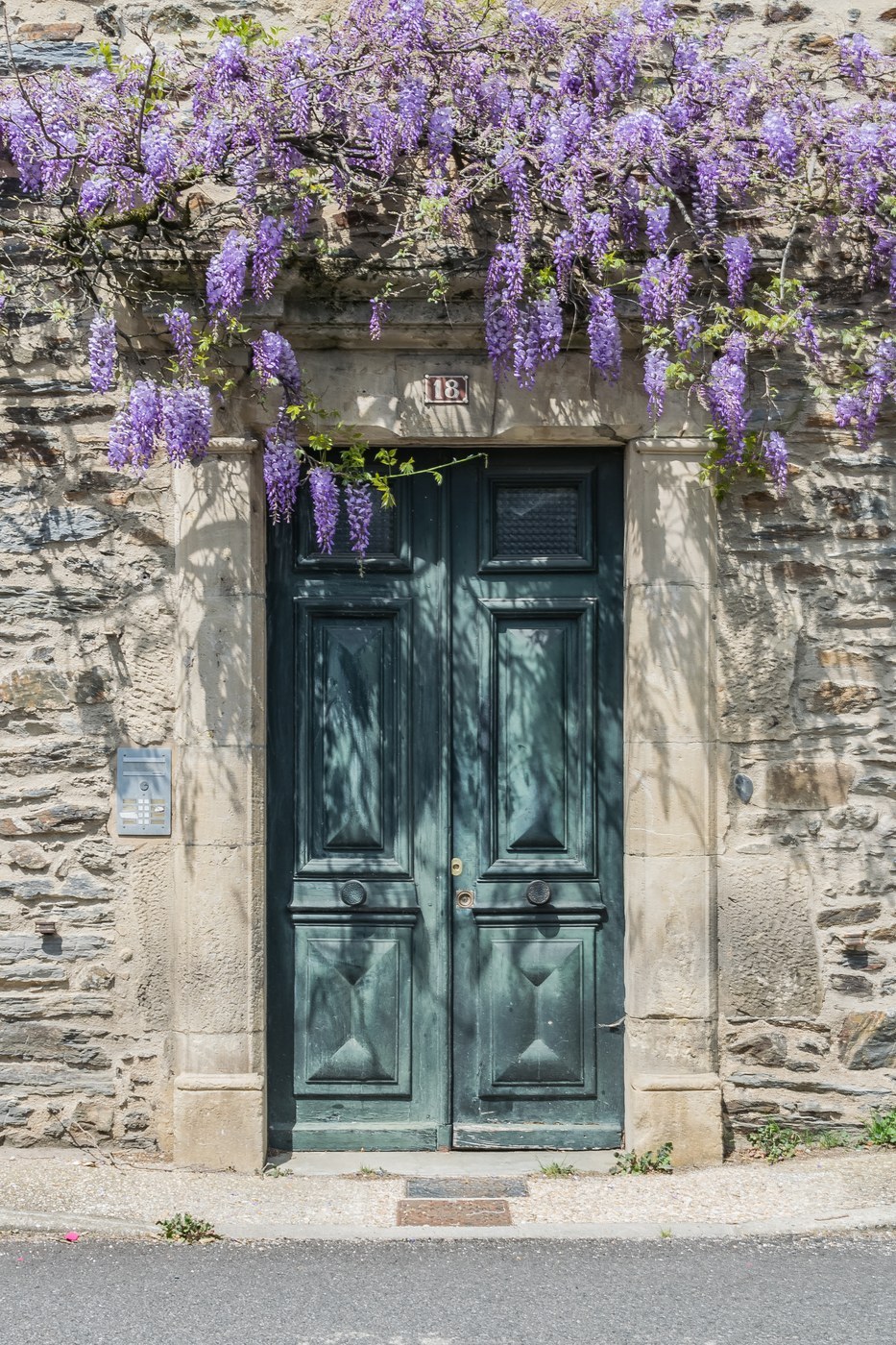
Key Identifying Features
A "Wisteria Tree" is not a separate species but a wisteria vine (Wisteria spp.) trained as a single-trunk standard (tree form) — typically Chinese wisteria (Wisteria sinensis), Japanese wisteria (Wisteria floribunda), or the native American wisteria (Wisteria frutescens). The unmistakable feature is the spring display of long, drooping clusters (racemes) of fragrant, pea-like purple to violet (sometimes white or pink) flowers cascading from a gnarled, twisting woody trunk and crown.
- Hanging racemes of pea-shaped purple/violet flowers
- Pinnately compound leaves with many leaflets
- Twisting, woody, twining stems (trained into a trunk)
- Velvety, bean-like seed pods
Leaves & Stems
Leaves are alternate, pinnately compound, 6-14 inches long, with 7-19 leaflets (Japanese wisteria tends to have more, ~13-19; Chinese ~7-13; American ~9-15). Leaflets are oval, pointed, with smooth wavy margins; young foliage is often softly downy. The plant's natural growth is a vigorous twining vine — stems wrap around supports, and in the tree form the trunk is repeatedly pruned and staked to stand alone, retaining a characteristically gnarled, spiraled look.
Twigs are flexible and woody. Twining direction helps separate species: Japanese wisteria twines clockwise, Chinese wisteria twines counterclockwise.
Flowers & Fruit
Flowers appear in mid-to-late spring, usually before or as the leaves emerge (Chinese) or with the leaves (Japanese). Each raceme dangles 6-20+ inches long, packed with fragrant pea-family (papilionaceous) blossoms. Chinese wisteria flowers tend to open nearly all at once from the base; Japanese racemes are longer and open progressively from base to tip. Fruits are flattened, velvety green to brown bean-like pods 3-6 inches long.
How to Tell It Apart from Look-Alikes
- American wisteria (Wisteria frutescens): shorter, more compact racemes that bloom after the leaves are out (early summer), smoother pods, less aggressive — the native, less invasive choice.
- Black locust / Laburnum (golden chain tree): also pea-flowered, but Laburnum flowers are yellow and locust flowers white; wisteria is purple/violet with long pendant racemes.
- Chinese vs Japanese wisteria: leaflet count, twining direction, and bloom timing distinguish the two non-native species.
Long, pendulous purple pea-flower clusters on a gnarled trunk with compound leaves are diagnostic.
Where You'll Find It
Wisteria standards are cultivated ornamentals in gardens, courtyards, and along walls and arbors across temperate regions. Chinese and Japanese wisteria are native to East Asia and are invasive in parts of the southeastern United States, where they escape into woodlands and smother trees. American wisteria is native to the southeastern U.S. wetland margins and bottomlands.
Quick ID Checklist
- Drooping racemes of fragrant purple/violet pea flowers in spring
- Pinnately compound leaves, 7-19 leaflets
- Twining woody stems trained into a gnarled trunk
- Velvety bean-like pods
- Twining direction & raceme length separate Chinese vs Japanese
- Cultivated ornamental; Asian species invasive in the U.S. Southeast
Frequently asked questions
Is a wisteria tree a real tree species?
No. It is a wisteria vine trained and pruned into a single-trunk 'standard' so it stands like a small tree. Left alone, wisteria is a vigorous twining climber.
How do I tell Chinese from Japanese wisteria?
Japanese wisteria has more leaflets (about 13-19), longer racemes that open gradually from base to tip, and twines clockwise; Chinese wisteria has fewer leaflets, shorter racemes that open all at once, and twines counterclockwise.
Which wisteria is least invasive?
American wisteria (Wisteria frutescens), the native species, is far less aggressive than the invasive Chinese and Japanese wisterias and blooms after its leaves emerge.
When does a wisteria tree bloom?
Wisteria standards bloom in mid-to-late spring, producing long, drooping racemes of fragrant pea-shaped purple to violet flowers, often before or as the leaves emerge.