
How to Care for Weeping Birch
Grow a graceful Weeping Birch (Betula pendula) with silvery bark and cascading branches: full sun, consistently moist soil, and cool roots.
Read the full Weeping Birch encyclopedia entry →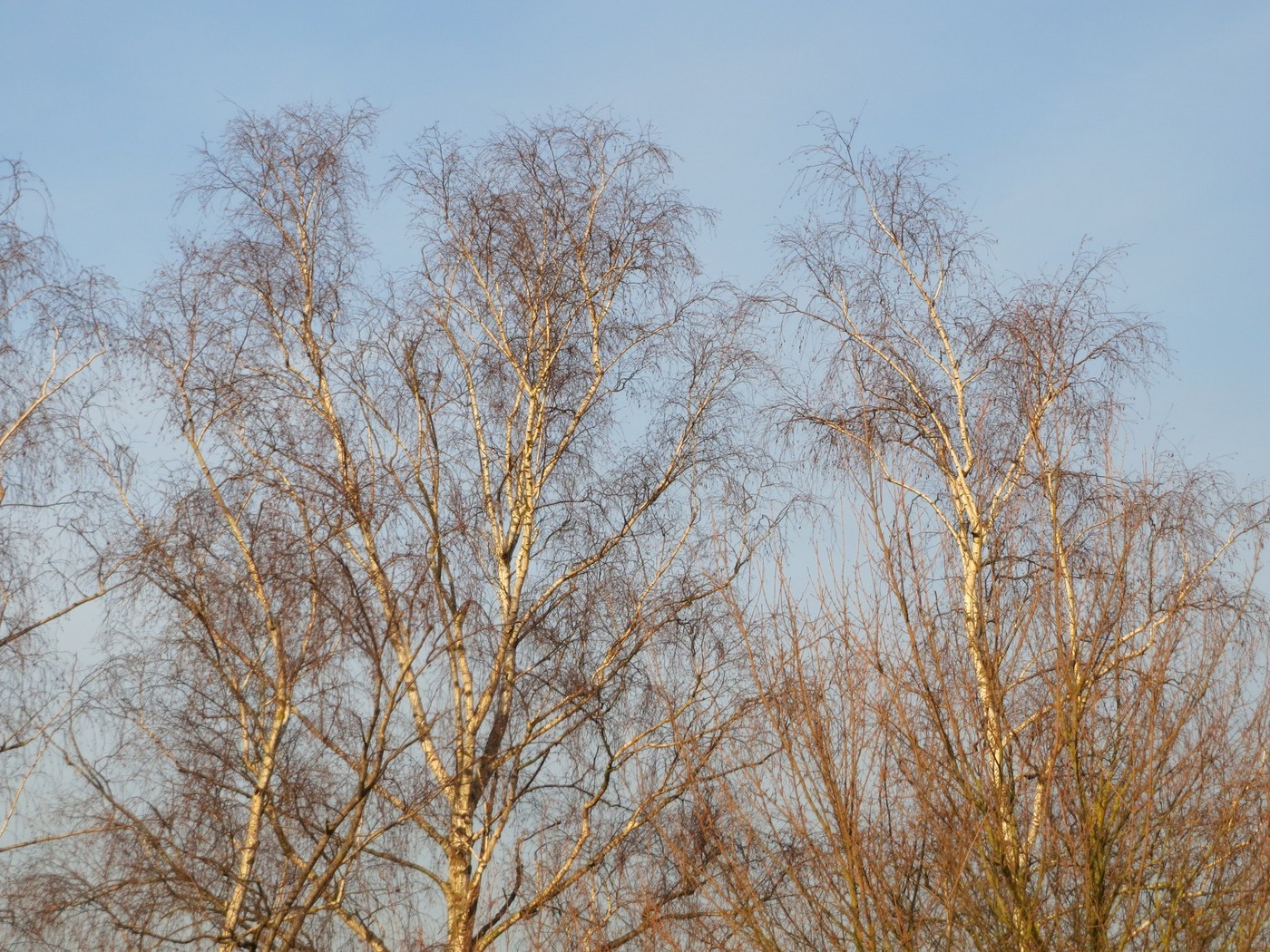
The Weeping Birch (Betula pendula) is an elegant, fast-growing deciduous tree prized for its chalk-white peeling bark and slender, pendulous branchlets that sway in the slightest breeze. It is a moderate-care landscape tree that rewards attention to moisture and root coolness with a striking silhouette.
Light
Give Weeping Birch full sun for the strongest form, densest canopy, and whitest bark. It will tolerate very light dappling but grows thin and leans toward the light in too much shade. An open position with good air movement also reduces foliar disease.
Water
This species dislikes drought and prefers soil that stays evenly moist. Water deeply and regularly, especially during the first three to four years while roots establish and in any prolonged dry spell. A slow, deep soak that wets the entire root zone is far better than frequent shallow watering. Mature trees still appreciate irrigation during summer heat, as birches are shallow-rooted and stress quickly when the topsoil dries.
Soil & Potting
Birch thrives in moist, well-drained, slightly acidic to neutral loam but adapts to a wide range of soils. It resents heavy, compacted, or waterlogged ground as well as chalky, highly alkaline sites, where leaves may yellow between the veins. Improve poor soil with organic matter at planting and keep the native soil loose. A generous mulch ring is the single most valuable thing you can do for a birch.
Humidity & Temperature
Weeping Birch is a cold-hardy temperate tree that performs best where summers are cool to moderate. It struggles in hot, arid climates and in regions with prolonged high heat. Keeping the root zone cool and moist is the key to helping it cope with warm spells. It has no special humidity needs outdoors.
Feeding
Birches are not heavy feeders. Apply a balanced, slow-release tree fertilizer in early spring if growth is weak or foliage is pale. On alkaline soils, a fertilizer formulated for acid-loving plants, or a chelated iron supplement, helps green up chlorotic leaves. Avoid heavy nitrogen, which forces soft growth prone to pests.
Propagation
Weeping Birch is most reliably grown from seed sown in autumn or after cold stratification; seedlings grow quickly. Named weeping cultivars are usually grafted, so they do not come true from seed. Softwood cuttings are difficult and rarely successful for home growers.
Repotting / Pruning
Prune birch only in summer or early autumn. Never cut it in late winter or spring, as birches bleed sap heavily from fresh wounds during that period. Limit pruning to removing dead, crossing, or crowded branches and shaping the young tree; the natural weeping form needs little intervention. Container-grown young trees can be potted on into larger containers in spring before planting out.
Common Problems & Pests
The most serious threat is the bronze birch borer, which attacks stressed, drought-weakened, or heat-stressed trees, causing dieback in the upper crown. Keeping the tree vigorous and well-watered is the best defense. Aphids can cause sticky honeydew and sooty mold, and leaf miners may blotch the foliage. Fungal leaf spots and rusts appear in damp, crowded conditions but rarely threaten established trees.
Seasonal Care Tips
Plant in autumn or early spring while dormant. Refresh mulch each spring, keeping it clear of the trunk. Water deeply through summer, the season of greatest stress. Enjoy the golden autumn color, then let the tree rest over winter. Save any pruning for mid to late summer.
Frequently asked questions
Why are my Weeping Birch leaves turning yellow in summer?
Summer yellowing usually signals drought stress or heat, since birches are shallow-rooted and dislike dry soil. Deep, regular watering and a thick mulch ring to cool the roots typically restore healthy green foliage.
When is the safe time to prune a Weeping Birch?
Prune only in summer or early autumn. Cutting in late winter or spring causes heavy sap bleeding from the wounds, so avoid that window entirely.
How fast does a Weeping Birch grow?
It is a fast-growing tree, often adding one to two feet or more per year when young in moist, sunny conditions, though growth slows as it matures.
Why is the bark of my birch not turning white?
The characteristic white, peeling bark develops as the tree ages; young trees start out brownish. Full sun and good health speed the transition to the bright silvery-white color.