
How to Care for Agrimony
Grow Agrimonia eupatoria as an easy hardy perennial with tall spikes of small yellow flowers for sunny borders and wild gardens.
Read the full Agrimony encyclopedia entry →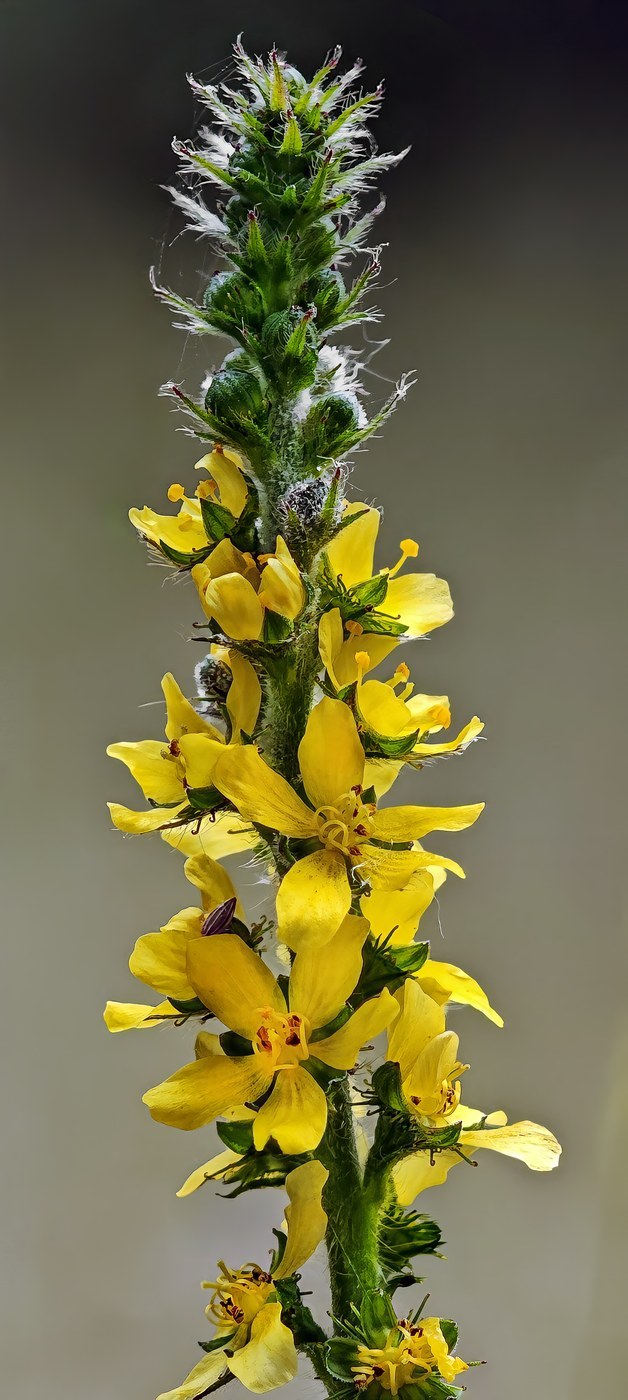
Agrimony (Agrimonia eupatoria) is a hardy herbaceous perennial that sends up slender spikes of small, star-shaped yellow flowers above soft, divided foliage. It is an undemanding plant for cottage borders, meadow plantings, and wildlife gardens, thriving in ordinary conditions with little care.
Light
Agrimony grows best in full sun to part shade. It flowers most freely and stands upright in an open, sunny position, but it will tolerate light dappled shade at the edge of woodland or in a mixed border. In deep shade it becomes lax and flowers sparingly.
Water
Give moderate watering, keeping the soil evenly moist while young plants establish. Once settled, agrimony is fairly drought tolerant and needs watering only during extended dry spells. It prefers well-drained ground and dislikes soils that stay waterlogged over winter.
Soil & Potting
This adaptable perennial grows in most ordinary garden soils, including poorer ones, as long as drainage is good. It favors a neutral to slightly alkaline pH and does well on chalky or loamy ground. If grown in a container, use a free-draining loam-based potting mix.
Humidity & Temperature
Agrimony is fully cold hardy and dies back to a rootstock over winter, re-emerging in spring. It is unfussy about atmospheric humidity and copes with typical temperate conditions. No special protection is needed in most climates.
Feeding
Feeding is rarely necessary. Agrimony grows happily in lean soils, and a single spring topdressing of compost or a light application of balanced fertilizer is more than enough. Excess feeding encourages floppy, leafy growth at the expense of the flower spikes.
Propagation
Easily raised from seed sown in autumn or spring; the seed benefits from a cold period to germinate well. Established clumps can also be divided in spring or autumn. Self-sown seedlings often appear around the parent plant and can be transplanted while small.
Repotting / Pruning
Cut back the spent flower spikes after blooming to keep the plant tidy and to limit self-seeding if desired. In late autumn or early spring, remove the old foliage as it dies down. Divide congested clumps every few years to maintain vigor. Container plants can be repotted in spring.
Common Problems & Pests
Agrimony is robust and largely pest free. In damp, crowded conditions it may show powdery mildew or rust on the leaves; improve air circulation and avoid overhead watering. Slugs may nibble young spring growth. Overly rich or wet soil leads to weak, floppy stems.
Seasonal Care Tips
Expect the tall flower spikes through summer. Deadhead to prolong tidiness and control spread. Allow some seed heads to remain if you want self-sown plants or wildlife interest. Cut back in autumn or leave stems for winter structure, then clear old growth before new shoots emerge in spring.
Frequently asked questions
Does agrimony spread aggressively?
It self-seeds modestly rather than running. Deadhead the spikes after flowering if you want to limit seedlings, or leave a few heads to naturalize.
Will agrimony grow in poor soil?
Yes. It tolerates lean, well-drained soils and even chalky ground, and generally needs little feeding to thrive.
How do I propagate agrimony?
Sow seed in autumn or spring, or divide established clumps in spring or autumn. Self-sown seedlings transplant easily while small.
Why is my agrimony flopping over?
Too much shade or overly rich, wet soil produces weak stems. Give it a sunnier, well-drained spot and go easy on fertilizer.