
Allium Identification Guide
Identify ornamental allium by its globe-shaped flower clusters atop leafless stalks and its unmistakable onion smell.
Read the full Allium encyclopedia entry →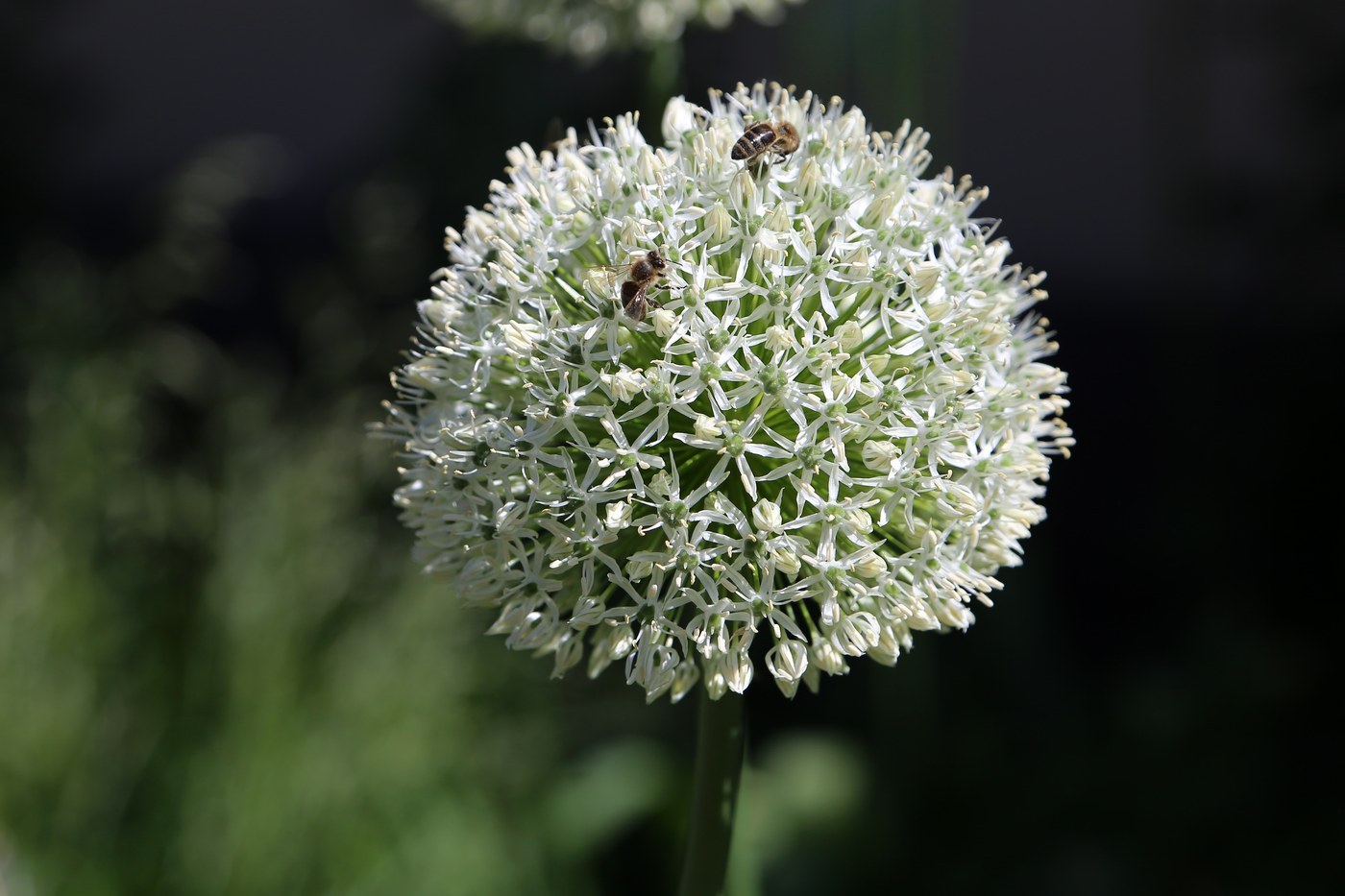
Key Identifying Features
Allium — the ornamental onions — are recognized by their spherical or domed flower heads made of dozens of tiny star-shaped florets, perched atop a single leafless stalk (scape). The clinching test: any crushed leaf or stem releases a strong onion or garlic smell.
- Globe-shaped flower cluster (umbel) on a bare stalk
- Dozens of small six-petaled star florets per head
- Onion/garlic odor when crushed
- Grows from an underground bulb
Leaves & Stems
Leaves are basal, strap-like to cylindrical or grass-like, often hollow or channeled, and rise directly from the bulb. In many large ornamental species the leaves wither as the flowers open, so a blooming allium may appear to have a naked stalk. The flower stem (scape) is smooth, upright, and unbranched, leafless, holding the single round head aloft — from 15 cm in small species to over 1 m in giants like Allium giganteum. The bulb and all parts smell of onion.
Flowers & Fruit
The flower head is an umbel — many flower stalks of equal length radiating from one point to form a sphere or hemisphere. Each tiny floret has six tepals (petal-like parts) in a star, usually purple, violet, pink, white, blue, or yellow. Bloom is late spring to summer. After flowering, the head dries into an attractive straw-colored seed sphere that persists for weeks, and small black seeds form in three-parted capsules. Some species instead form bulbils (tiny bulbs) in the head.
How to Tell It Apart from Look-Alikes
- Agapanthus (lily of the Nile): Also has a rounded umbel on a leafless stalk, but flowers are larger funnels, leaves are strap-like and evergreen, and there is no onion smell.
- Globe thistle (Echinops): Spherical blue head too, but it's a spiny thistle with prickly leaves, not smooth florets.
- Chives / wild garlic: These ARE alliums (smaller ones) — same onion smell and umbel, just smaller.
The onion smell + globe umbel of six-tepal stars on a leafless scape is diagnostic for allium.
Where You'll Find It
Ornamental alliums are popular in borders, gravel gardens, and cut-flower beds, prized for their architectural globes. Wild alliums — ramsons/wild garlic, chives, wild onion — grow in woodlands, meadows, and rocky slopes across the Northern Hemisphere. Most prefer full sun and well-drained soil and naturalize from bulbs.
Quick ID Checklist
- Round or domed flower head (umbel)
- Many tiny six-petaled star florets
- Borne on a smooth, leafless stalk
- Onion or garlic smell when crushed
- Strap-like or hollow basal leaves from a bulb
- Dried seed-head sphere persists after bloom
Frequently asked questions
What's the foolproof test for an allium?
Crush a leaf or stem and smell it. All alliums — ornamental onions, chives, garlic, leeks — release a distinct onion or garlic odor, which instantly separates them from look-alikes like agapanthus or globe thistle.
Why does my allium have a bare stalk with no leaves?
In many large ornamental alliums the strap-like basal leaves wither and yellow just as the flower globe opens, leaving an apparently leafless stalk topped by the round flower head.
How is allium different from agapanthus?
Both form a rounded flower cluster on a leafless stem, but agapanthus has larger funnel-shaped flowers, evergreen strap leaves, and no onion smell, while allium has tiny star florets and the telltale onion scent.
Are chives and wild garlic really alliums?
Yes. Chives, wild garlic (ramsons), leeks, and onions are all Allium species. They share the umbel flower head and onion smell; ornamental alliums are simply selected for showier, larger flower globes.