Aloe Vera Identification Guide
Identify true aloe vera (Aloe barbadensis) by its thick, gel-filled, toothed rosette leaves and tubular yellow flowers, and separate it from look-alike agaves and haworthias.
Read the full Aloe Vera encyclopedia entry →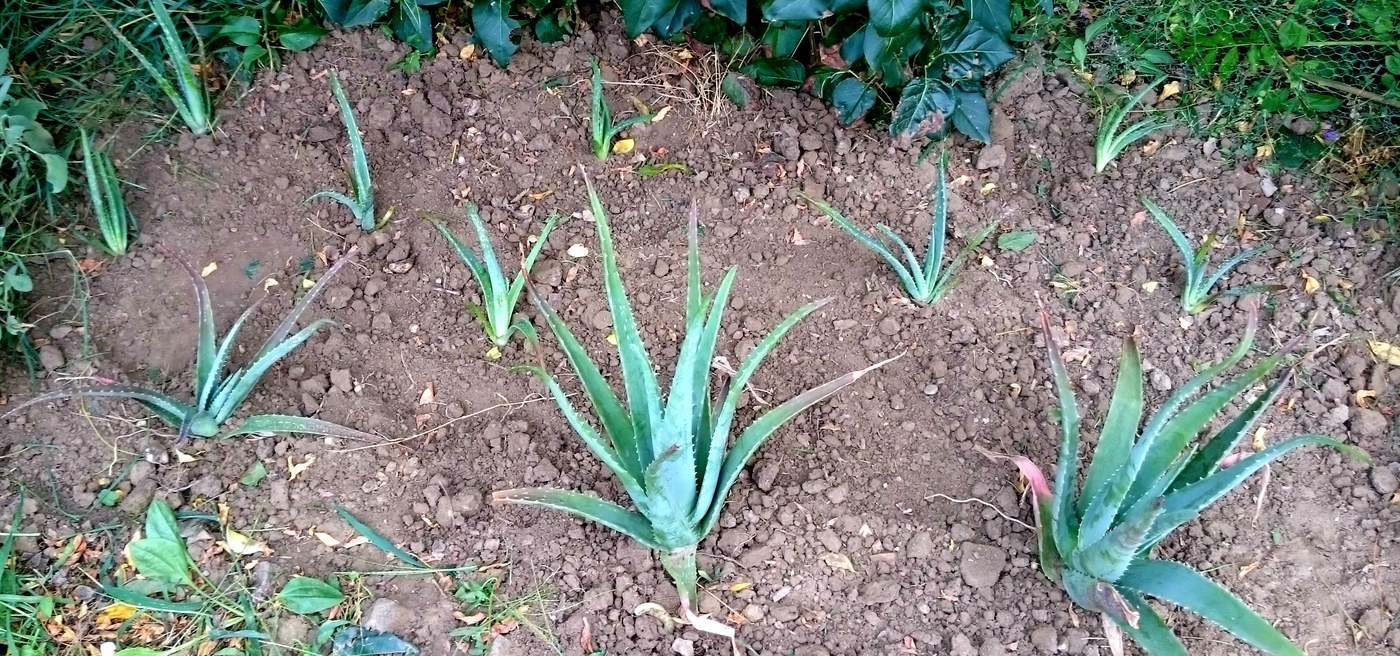
Key Identifying Features
Aloe vera (Aloe vera, syn. Aloe barbadensis) is a stemless succulent identified by:
- A rosette of thick, fleshy, lance-shaped leaves that taper to a point.
- Leaves filled with clear gel when cut.
- Soft, whitish teeth along the leaf margins (not rigid spines).
- A gray-green to blue-green color, often with pale speckles on young plants.
Leaves & Stems
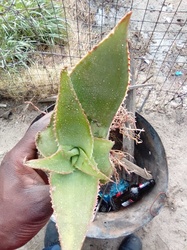
Mature leaves are succulent and triangular in cross-section, 30–60 cm (12–24 in) long, growing upward and outward from a central base with little or no visible stem. The flesh is plump and water-storing; slicing a leaf reveals the famous clear, slimy inner gel surrounded by a thin layer of yellow latex just under the skin.
Leaf margins carry small, pinkish-white, pliable teeth spaced evenly along the edge. Young plants frequently show white spots/flecks that fade with age. The plant readily produces offsets ("pups") at the base, forming clusters.
Flowers & Fruit
Mature plants send up a tall, unbranched flower stalk (inflorescence) bearing a dense spike of pendulous, tubular yellow to orange flowers, typically in winter to spring. The flowers are rich in nectar and attractive to birds and bees. Fruit is a dry capsule. The yellow tubular flower spike is a strong confirming feature distinguishing aloes from agaves.
How to Tell It Apart from Look-Alikes
- Agave: agave leaves are fibrous and tough, not gel-filled, usually end in a hard terminal spine, and the plant flowers once then dies. Aloe leaves are soft, juicy, and the plant flowers repeatedly.
- Haworthia: much smaller rosettes, often with translucent leaf "windows" or white raised bands; lacks the large gel reserve.
- Gasteria: tongue-shaped, often distichous (two-ranked) leaves, smooth margins.
- Other Aloe species: many exist; true aloe vera has fairly upright, lightly toothed, plain green leaves without the bold stripes or spots of ornamental aloes.
The deciding test: soft marginal teeth + clear gel inside + repeated yellow flowering = aloe vera.
Where You'll Find It
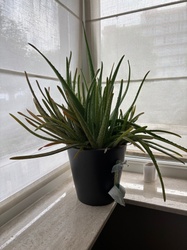
Of likely Arabian Peninsula origin, aloe vera is now grown worldwide as an ornamental and a popular houseplant. It thrives outdoors in warm, arid, frost-free climates (USDA zones 9–11) and is a popular sunny windowsill succulent everywhere else.
Quick ID Checklist
- Rosette of thick, fleshy, tapering leaves
- Clear gel inside when cut (yellow latex under skin)
- Soft white teeth along margins (no terminal spine)
- Gray-green leaves, often speckled when young
- Produces basal pups; tall yellow tubular flower spike
A gel-filled, soft-toothed succulent rosette that pups freely and throws up yellow tubular flowers is true aloe vera.
Frequently asked questions
How can I tell aloe vera from an agave?
Cut a leaf: aloe vera is filled with clear gel and has soft, pliable marginal teeth, while agave is fibrous with no gel, usually ends in a sharp terminal spine, and flowers only once before dying.
Why does my young aloe have white spots?
Speckling is normal on juvenile aloe vera and typically fades as the plant matures into plain gray-green leaves. Persistent bold stripes or spots may indicate a different ornamental Aloe species.
What is the yellow liquid under the skin?
That yellow layer is aloe latex (aloin), found just beneath the leaf skin and separate from the clear inner gel. It is an identifying feature of true aloes.
Are the small plants at the base seedlings?
No, those are offsets or 'pups' that grow from the parent's base. Pupping freely into clumps is a characteristic of aloe vera and an easy way to propagate it.
Aloe Vera identified by the community
Recent Aloe Vera specimens identified with Plant Identifier.