
American Beech Identification Guide
How to identify American beech (Fagus grandifolia) by its smooth gray bark, sharply toothed leaves, and long pointed buds.
Read the full American Beech encyclopedia entry →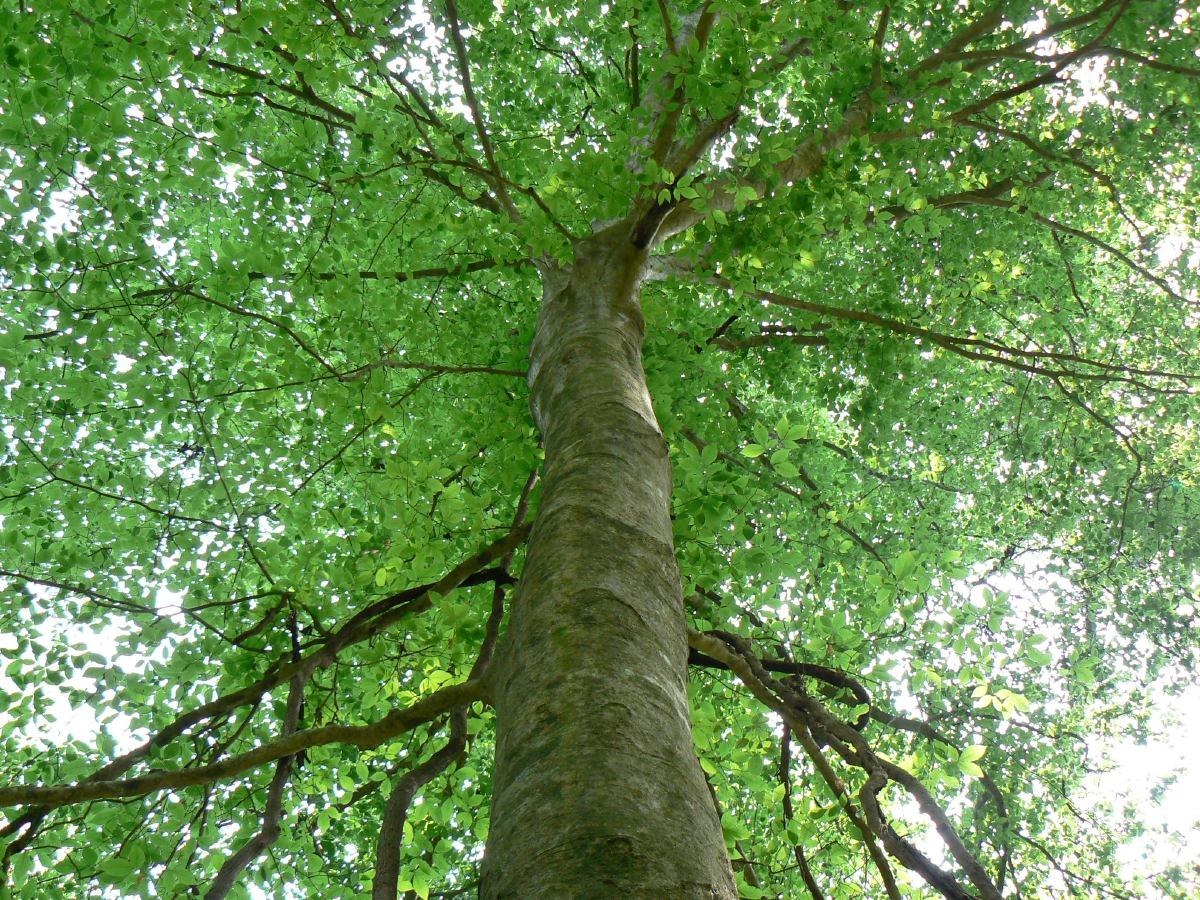
Key Identifying Features
American beech (Fagus grandifolia) is a large, slow-growing deciduous tree of eastern forests, unmistakable for its smooth, silvery-gray bark, long cigar-shaped buds, and marcescent leaves that cling tan through winter. It grows 50–80 feet tall with a broad, rounded, often low-branching crown.
- Smooth, light gray ("elephant-skin") bark that stays smooth even on old trunks
- Glossy, sharply toothed, oval leaves with parallel veins
- Long, slender, sharp-pointed, cigar-like buds
- Tan dead leaves that persist on young trees and lower branches in winter
Leaves & Stems
The leaves are 2.5–6 inches long, oval to elliptical, with a clear pointed tip and prominent straight, parallel side veins, each ending in a sharp tooth on the margin. They are glossy dark green above, turning golden-bronze in fall, then bleaching to pale tan and clinging through winter (marcescence), especially on saplings. The winter buds are the best year-round clue: very long, narrow, sharply pointed, and coppery, resembling tiny cigars. The bark is the other hallmark — thin, tight, smooth, and pale gray, often carved with initials because it never roughens.
Flowers & Fruit
Beech is monoecious. In spring, male flowers hang in small round, fuzzy clusters on slender stalks, while female flowers are inconspicuous. The fruit is a small, spiny, four-lobed husk (bur) that splits open in fall to release two triangular beechnuts. Good nut crops occur irregularly, and the nuts are an important wildlife food.
How to Tell It Apart from Look-Alikes
The smooth gray bark plus long cigar-buds is diagnostic. Hornbeam (musclewood) also has smooth gray bark but a fluted, sinewy trunk and smaller leaves. Birches have papery, peeling bark, not tight smooth bark. Chestnut and oak leaves can resemble beech but have different bark and lack the long pointed buds. The persistent pale winter leaves on a smooth-barked sapling are a near-certain beech sign.
Where You'll Find It
Native to eastern North America from Nova Scotia to Florida and west to the Mississippi, American beech is a dominant tree of mature, moist, well-drained hardwood forests, often on slopes and in cool, shaded sites. It is shade-tolerant, long-lived, and frequently forms groves through root sprouting.
Quick ID Checklist
- Bark: smooth, tight, silvery-gray at all ages
- Buds: long, slender, sharp, cigar-shaped, coppery
- Leaves: glossy, sharply toothed, parallel-veined; tan and persistent in winter
- Fruit: spiny bur with two triangular beechnuts
- Habitat: mature moist hardwood forests of eastern North America
A smooth gray-barked tree with long pointed buds and clinging tan winter leaves is American beech.
Frequently asked questions
What is the most reliable way to identify beech in winter?
Look at the buds and bark: American beech has very long, slender, sharply pointed coppery buds like tiny cigars, plus smooth gray bark. Young trees also keep pale tan dead leaves through winter.
Why does beech keep its dead leaves all winter?
This trait is called marcescence. Young beech trees and lower branches retain bleached tan leaves into winter, possibly to deter browsing or protect buds, and it is a handy identification clue.
How do I tell beech from musclewood (hornbeam), which also has smooth gray bark?
Musclewood has a fluted, sinewy, muscle-like trunk and smaller leaves, while American beech has a smooth, rounded trunk and long cigar-shaped buds.
Where does American beech grow?
It is a dominant tree of mature, moist, well-drained hardwood forests across eastern North America, often on slopes and in cool, shaded sites, and it spreads into groves by root sprouting.