
How to Care for American Holly
American Holly is a stately evergreen tree with glossy spined leaves and bright winter berries, easy to grow in moist, well-drained soil.
Read the full American Holly encyclopedia entry →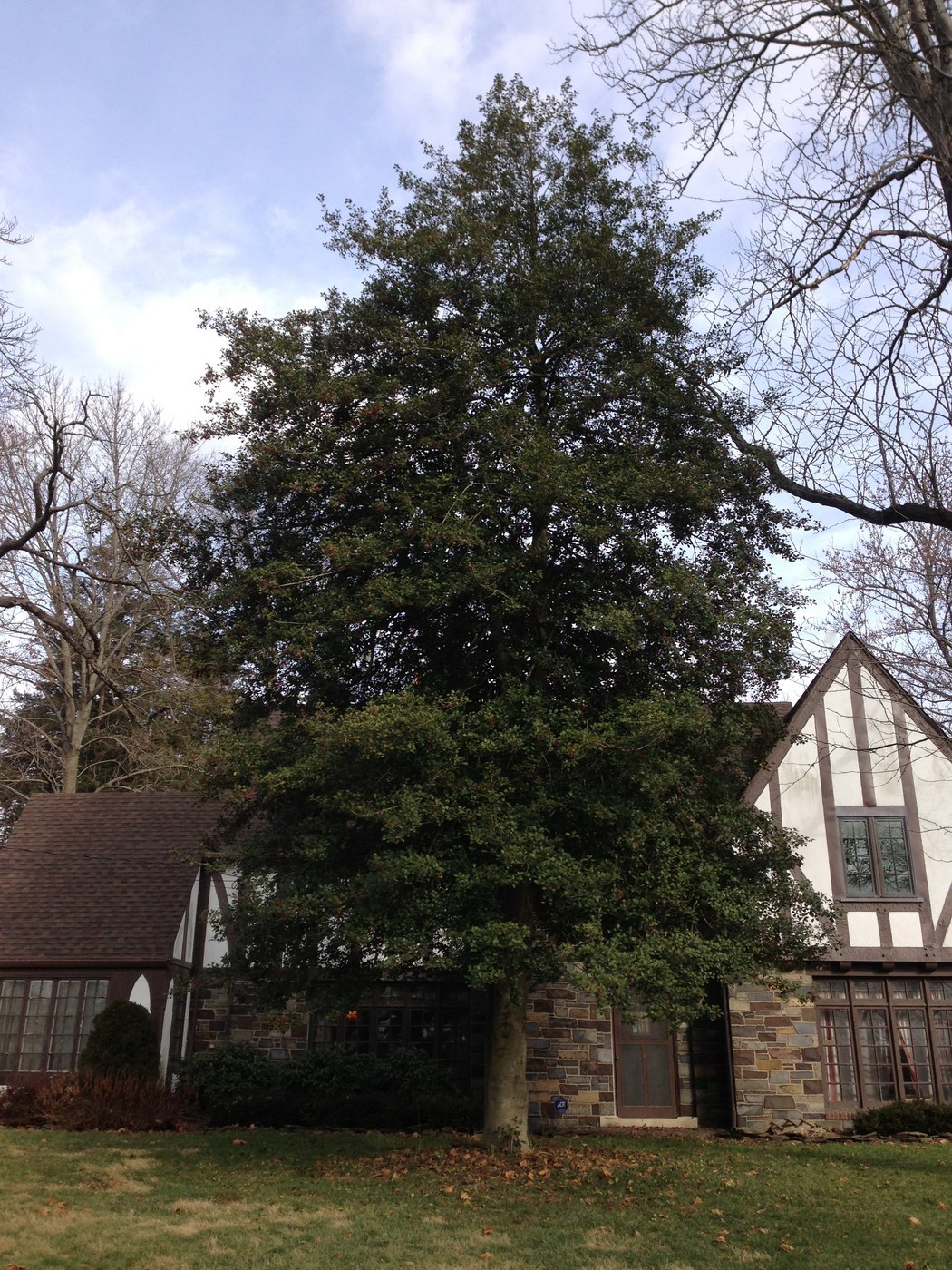
American Holly (Ilex opaca) is a broadleaf evergreen tree treasured for its dense pyramidal form, glossy spine-tipped leaves, and the bright red berries that persist through winter on female plants. Slow-growing but long-lived, it makes a handsome specimen, screen, or wildlife hedge.
Light
American holly grows well in full sun to part shade. In full sun it develops the densest, most symmetrical growth and the heaviest berry set, while in part shade it takes on a looser, more open form. It tolerates more shade than many broadleaf evergreens, making it valuable as an understory tree at woodland edges.
Water
Keep the soil evenly moist, particularly for the first few years after planting while the root system develops. Established trees have moderate water needs and appreciate deep watering during prolonged drought to prevent leaf drop and dull foliage. Mulch over the root zone helps conserve moisture and keep roots cool.
Soil & Potting
Holly prefers a moist but well-drained, acidic soil rich in organic matter. It resents heavy, waterlogged clay and struggles in strongly alkaline ground, where leaves may yellow between the veins. Amend planting holes with compost or leaf mold, and maintain an acidic mulch such as pine needles or bark to support healthy dark-green foliage.
Humidity & Temperature
An adaptable eastern North American native, American holly is cold-hardy and handles humid summers well. It withstands winter cold that would damage many broadleaf evergreens, though harsh, drying winter winds can brown the leaf margins, so a sheltered site is best in exposed regions.
Feeding
Feed in early spring with a fertilizer formulated for acid-loving plants to maintain deep leaf color and steady growth. Avoid heavy late-season feeding, which pushes tender growth vulnerable to winter damage. A yearly topdressing of compost supplements the mineral feed and improves soil structure.
Propagation
American holly is propagated from semi-hardwood cuttings taken in late summer to autumn, rooted under humidity with rooting hormone, though rooting is slow. Seed is possible but germinates erratically over one to three years after cold stratification. Because berries only form on female trees, a male pollinator must grow nearby for fruit set.
Repotting / Pruning
Holly needs little pruning beyond shaping. Prune in late winter to maintain a tidy pyramidal outline and remove dead or crossing branches; the trimmings are the classic winter greenery. It tolerates hard renovation pruning and can be sheared as a formal hedge. Young container-grown trees should be planted out into the ground rather than kept potted long-term.
Common Problems & Pests
American holly is fairly resilient but can suffer from leaf miner, which tunnels tan trails through the leaves, as well as scale insects and spider mites in dry conditions. Overly alkaline or waterlogged soil causes yellowing chlorosis and leaf drop. Tar spot and other leaf fungi appear in wet seasons; good airflow and raking fallen leaves reduce them.
Seasonal Care Tips
Plant in spring or early autumn so roots establish before extremes. Feed with acid fertilizer in early spring and mulch to lock in moisture. Water deeply through summer droughts. Prune lightly in late winter to shape, and shelter young trees from cold drying winds so the evergreen foliage and winter berries stay at their best.
Frequently asked questions
Why doesn't my American holly have berries?
Holly plants are either male or female, and only females produce berries. A female tree needs a male holly nearby to pollinate it, and the plant must also be mature enough to flower.
Why are my holly leaves turning yellow?
Yellowing between the veins usually signals soil that is too alkaline or poorly drained. Holly needs moist, well-drained, acidic soil, so amend with organic matter and use an acidifying fertilizer.
How much sun does American holly need?
It grows in full sun to part shade. Full sun gives the densest form and most berries, while part shade produces a looser tree that still performs well as an understory plant.
When should I prune American holly?
Prune in late winter to shape the tree and remove dead or crossing branches. It tolerates shearing well and even hard renovation cuts if needed.