
How to Care for American Sycamore
Grow the majestic American Sycamore: a fast, massive shade tree that loves full sun and moist-to-wet soil along streams and lawns.
Read the full American Sycamore encyclopedia entry →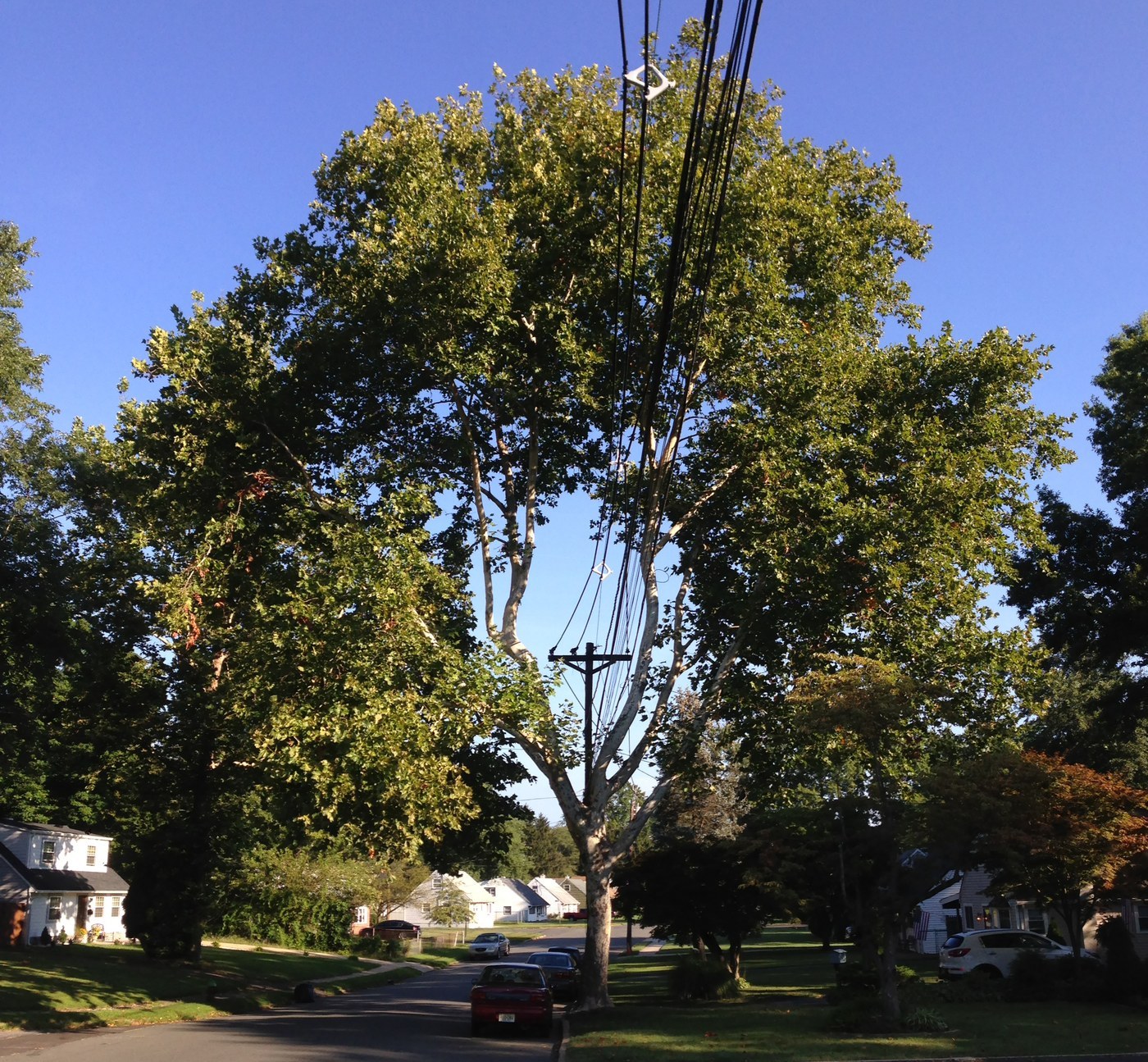
The American Sycamore (Platanus occidentalis) is one of the largest deciduous trees of eastern North America, prized for its enormous canopy, broad maple-like leaves, and striking mottled bark that flakes to reveal a creamy white underlayer. It is a fast grower and an easy, forgiving tree given room to spread.
Light
Plant in full sun for the strongest growth and best form. American Sycamore demands at least six hours of direct light daily and will grow leggy and thin in shade. Choose an open site with plenty of overhead and lateral room, as mature trees can exceed 75 feet tall with a comparably wide crown.
Water
This is a moisture-loving tree that thrives with high water and tolerates wet, poorly drained soil better than almost any other large shade tree. It is naturally found along riverbanks and floodplains. Water young trees deeply and regularly for the first two to three years to establish the root system. Established trees appreciate consistent moisture and may show leaf scorch or early defoliation during prolonged drought.
Soil & Potting
Adaptable to a wide range of soils, from heavy clay to sandy loam, and tolerant of periodic flooding. It prefers deep, rich, moist soil with a slightly acidic to neutral pH but handles alkaline conditions. Because of its immense root system and size, it is a landscape tree only, not suited to containers beyond the seedling stage.
Humidity & Temperature
Hardy across USDA zones 4 through 9, American Sycamore withstands both cold winters and hot, humid summers. It has no special humidity needs and performs well in the naturally humid climates of its native range.
Feeding
Established sycamores rarely need fertilizer in decent soil. For young trees in poor ground, apply a balanced slow-release tree fertilizer in early spring. A yearly layer of organic mulch or leaf compost over the root zone supplies steady nutrients and conserves moisture.
Propagation
Propagate from seed collected from the spherical seed balls in fall, cold-stratified over winter and sown in spring. Hardwood cuttings taken in late winter can also root under the right conditions. Seedlings grow quickly once established.
Repotting / Pruning
Prune in late winter while dormant to remove dead, crossing, or weak branches and to establish a strong central leader when young. Given its ultimate size, structural pruning early in life prevents weak crotches later. Keep large trees away from structures and utility lines, as they need substantial clearance.
Common Problems & Pests
Anthracnose is the most common issue, causing leaf browning and twig dieback in cool, wet springs; rake and dispose of fallen leaves to reduce reinfection. Powdery mildew, lace bugs, and scale may appear but rarely cause lasting harm to established trees. The tree also drops abundant leaves, seed balls, and bark, so plan for cleanup. The related London plane hybrid offers improved anthracnose resistance.
Seasonal Care Tips
In spring, watch for anthracnose during cool wet weather and mulch the root zone. Water deeply through summer heat, especially for young trees. In fall, expect a heavy leaf drop and collect debris to limit disease. Winter is the ideal time for structural pruning while the tree is leafless and dormant.
Frequently asked questions
How fast does an American Sycamore grow?
Very fast; young trees commonly add two feet or more of height per year in moist, sunny sites, quickly becoming a large shade tree.
Can American Sycamore tolerate wet soil?
Yes. It is one of the best large shade trees for wet, poorly drained, or periodically flooded ground, reflecting its native riverbank habitat.
Why are the leaves turning brown in spring?
This is usually anthracnose, a fungal disease favored by cool, wet spring weather. Rake up fallen leaves and the tree typically pushes out healthy new foliage.
How much space does an American Sycamore need?
A lot. Mature trees can reach 75 to 100 feet tall with a wide crown and aggressive roots, so plant well away from buildings, pavement, and utility lines.