
Annual Phlox Identification Guide
Identify annual phlox by its flat-faced, five-lobed flowers in dense clusters atop sticky, hairy stems. This guide highlights leaf, flower and habit clues.
Read the full Annual Phlox encyclopedia entry →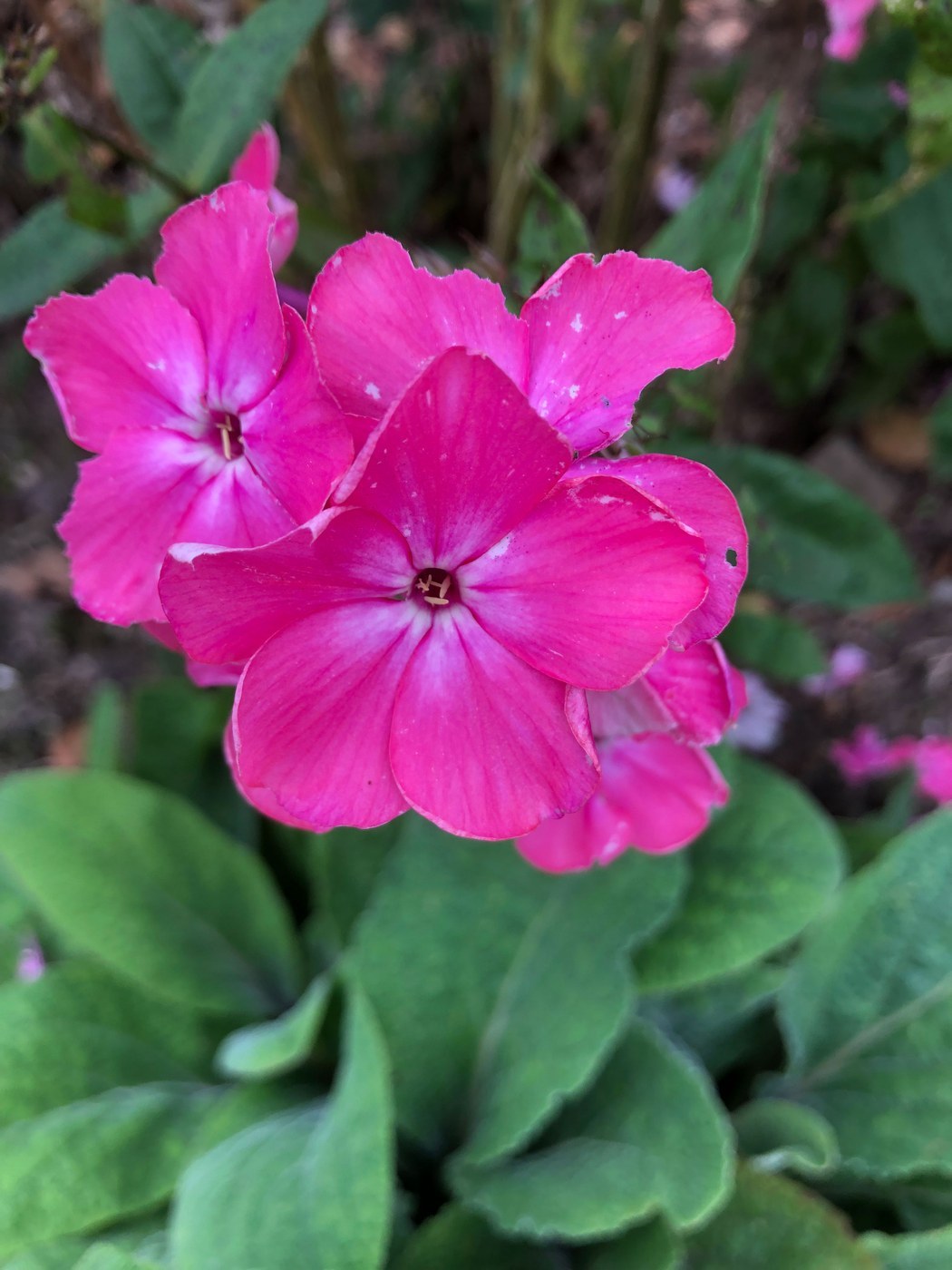
Key Identifying Features
Annual phlox (Phlox drummondii), also called Drummond's phlox or annual pink, is a low, bushy bedding annual native to Texas and grown worldwide.
- Flowers: five flat, rounded petal-lobes fused into a slender tube, forming a salverform (flat-faced) bloom about 2-3 cm across
- Color range: pink, red, magenta, purple, white, salmon and bicolors, often with a contrasting eye
- Clusters: dense, rounded terminal heads (cymes)
- Stems: sticky-hairy (glandular), branching from the base
- Height: usually 15-45 cm
Leaves & Stems
Leaves are simple, untoothed (entire) and soft, lance-shaped to oblong, and clothed in sticky glandular hairs that make the plant feel tacky. The lower leaves are opposite, while upper leaves often become alternate and clasp the stem. Stems are slender, much-branched and somewhat sprawling, giving a mounded bushy form rather than the upright clumps of perennial garden phlox.
Flowers & Fruit
The defining floral trait is the long narrow corolla tube flaring abruptly into five spreading lobes that sit in one flat plane, like a small pinwheel. The five sepals are joined and glandular-hairy. Some cultivated strains have pointed or star-cut petal lobes. After bloom, small dry capsules form, splitting to release a few seeds. Flowering runs from late spring through summer and into autumn in cool climates.
How to Tell It Apart from Look-Alikes
- Perennial garden phlox (Phlox paniculata): tall (up to 1.2 m), upright, with large pyramidal flower panicles and lance leaves, returning each year
- Moss phlox (Phlox subulata): a creeping evergreen mat with needle-like leaves
- Catchfly / campions (Silene): also sticky, but have inflated calyces and notched petals, not a flat five-lobed face
- Sweet William (Dianthus barbatus): fringed petals and grassy leaves, not fused tube flowers
The combination of flat five-lobed salverform flowers + opposite soft entire leaves + sticky stems + bushy annual habit identifies annual phlox.
Where You'll Find It
Native to sandy soils of Texas, annual phlox is now a popular garden bedding and container plant and is naturalized in parts of the southern and eastern United States along roadsides and old fields. It prefers full sun and well-drained soil.
Quick ID Checklist
- Flat-faced flowers with five rounded lobes and a narrow tube
- Dense rounded clusters at stem tips
- Wide color range, often with contrasting eye
- Soft, untoothed, lance-shaped leaves (lower ones opposite)
- Sticky glandular hairs on stems and calyx
- Low, bushy, branching annual habit
Frequently asked questions
How is annual phlox different from perennial phlox?
Annual phlox (Phlox drummondii) is low and bushy with sticky stems and dies after one season, while perennial garden phlox is tall and upright with large pyramidal flower heads and returns each year.
Why does the plant feel sticky?
Annual phlox is covered in glandular hairs on its stems and sepals that secrete a tacky substance, a useful field clue when distinguishing it from non-sticky look-alikes.
What shape are the flowers?
Each flower has a long narrow tube that opens abruptly into five flat, rounded lobes lying in one plane, giving a pinwheel or flat-faced appearance.
Are the leaves opposite or alternate?
Lower leaves are arranged in opposite pairs, but upper leaves often become alternate and may clasp the stem.