
How to Care for Anthurium Clarinervium
Grow the velvety-leaved Anthurium clarinervium with bright indirect light, a chunky airy mix, and steady warm humidity.
Read the full Anthurium Clarinervium encyclopedia entry →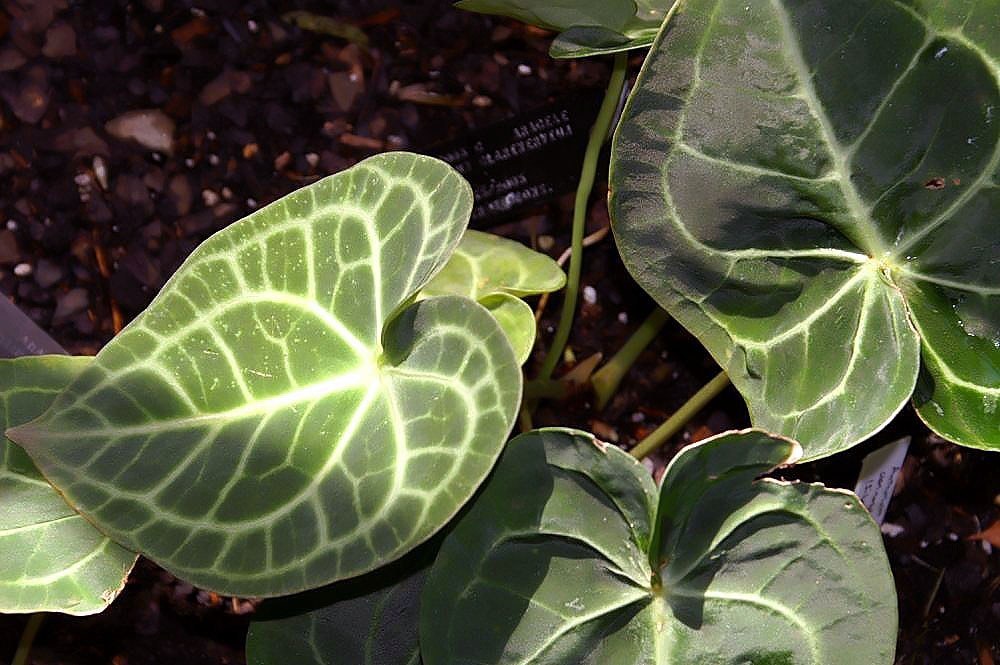
Anthurium clarinervium is a Mexican velvet-leaf anthurium prized for its dark, heart-shaped foliage dramatically veined in silvery-white. It is an epiphytic aroid that grows on limestone outcrops in the wild, so its care revolves around bright but gentle light, an airy root run, and consistent warmth and humidity.
Light
Give bright indirect light, ideally near an east window or a few feet back from a south or west window filtered through a sheer curtain. The velvety texture that gives the leaves their sheen scorches easily, so keep it out of harsh midday sun. Too little light produces small leaves with weak, muddy veining and long, leggy petioles. Rotate the pot a quarter turn each week so growth stays symmetrical.
Water
Water when the top few centimeters of the mix feel dry, then water thoroughly until it drains freely from the base. Because the plant is grown in a very fast-draining mix, it can handle regular watering without staying soggy, but it resents both bone-dry roots and standing water. Let excess drain fully and never leave the pot sitting in a saucer of water. Use room-temperature water; cold water can shock the roots.
Soil & Potting
Use a chunky, aroid-style mix rather than plain potting soil. A blend of orchid bark, perlite, coarse coco chips or coco husk, and a little worm castings or peat works well, with optional horticultural charcoal. The goal is a mix that holds some moisture but drains almost instantly and stays airy so the thick roots get oxygen. Always plant in a pot with drainage holes; a slightly snug pot suits this species.
Humidity & Temperature
This is a warmth-and-humidity lover. Aim for 60 percent relative humidity or higher; below about 50 percent the newest leaves may emerge deformed or with crispy edges. A humidifier, a pebble tray, or grouping with other plants all help. Keep temperatures between roughly 18 and 27 C (65-80 F) and protect it from cold drafts, heating vents, and air conditioning blasts. It is not frost tolerant.
Feeding
Feed with a balanced, diluted liquid fertilizer (about quarter to half strength) every two to four weeks during the active growing season in spring and summer. Anthuriums are sensitive to fertilizer salt buildup, so flush the mix with plain water every month or two and cut feeding back sharply in autumn and winter when growth slows.
Propagation
Propagate by division when repotting a mature, multi-crowned plant: gently tease apart a section that has its own roots and growth point and pot it up separately. It can also be grown from fresh seed, though this is slow and uncommon for home growers. Keep divisions warm and humid until they establish new roots.
Repotting / Pruning
Repot every two to three years, or when roots crowd the pot, moving up just one pot size. Spring is the best time. Pruning is minimal: simply trim away old, yellowing, or damaged leaves at the base with clean scissors. Wipe the velvety leaves gently with a soft, dry or barely damp cloth to keep dust from dulling their appearance.
Common Problems & Pests
Watch for browning leaf edges (low humidity), yellowing lower leaves (usually overwatering or old age), and pale new growth (too little light or nutrients). Common pests include spider mites in dry air, plus mealybugs, scale, and thrips. Inspect the undersides of leaves regularly and treat early with insecticidal soap or by wiping the pests away. Root rot from a heavy, wet mix is the most serious risk, so prioritize drainage.
Seasonal Care Tips
In spring and summer, expect active growth: water more often, feed lightly, and maintain high humidity. In autumn and winter, reduce watering frequency, stop or greatly reduce feeding, and keep the plant away from cold windows and dry heater air. Indoor heating in winter is the biggest threat to leaf quality, so run a humidifier during those months.
Frequently asked questions
Why do my new leaves come out small or deformed?
This usually points to low humidity or insufficient light. Raise humidity toward 60 percent or more with a humidifier, and move the plant to a brighter indirect spot. New leaves need warmth and moisture in the air to expand fully.
What soil mix is best for Anthurium clarinervium?
A chunky aroid mix: orchid bark, perlite, coarse coco chips, and a little worm castings or peat, with optional charcoal. It should drain almost instantly while staying airy so the thick roots can breathe.
How often should I water it?
Water when the top few centimeters of mix feel dry, then soak thoroughly and let it drain completely. Because the mix is so fast-draining, this may be roughly weekly, but always go by dryness rather than a fixed schedule.
Why are the leaf edges turning brown and crispy?
Crispy edges are typically caused by dry air or letting the mix dry out too much. Increase humidity, keep watering consistent, and move the plant away from heating vents and cold drafts.