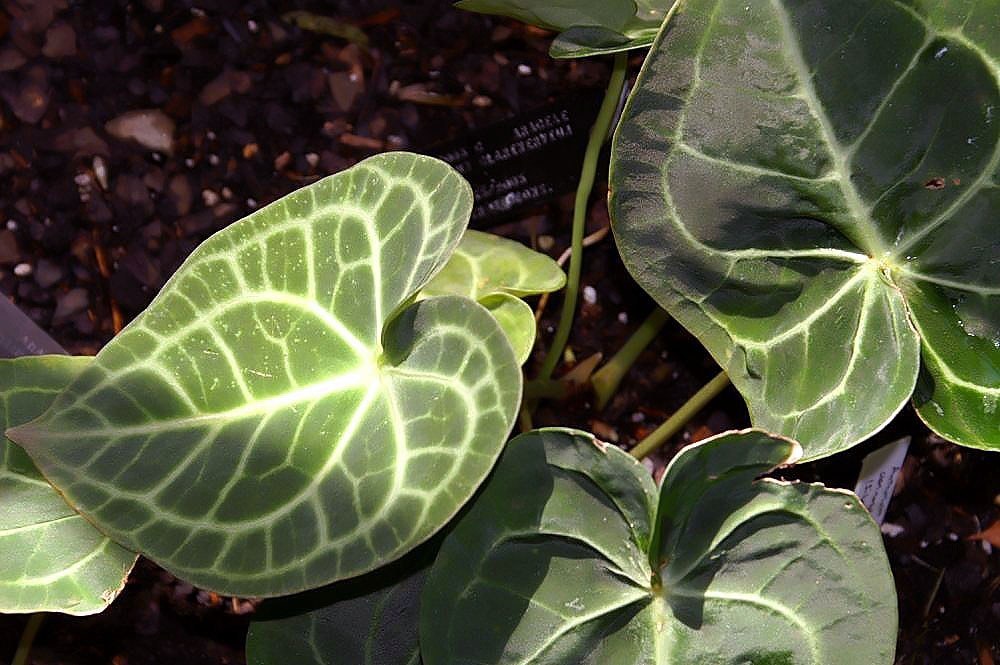
Anthurium Clarinervium
Anthurium clarinervium
Anthurium Clarinervium is a striking foliage aroid with large, heart-shaped, velvety dark green leaves dramatically veined in contrasting silvery-white. Native to Mexican limestone forests, it is grown for its bold, textured foliage rather than flowers.
- Light
- Bright indirect light
- Water
- Water when top few cm dry
- Difficulty
- Moderate
Got a plant like this?
Identify any plant from a photo, free.
Overview
Anthurium Clarinervium is a foliage-type anthurium native to limestone outcrops in southern Mexico. Unlike flowering anthuriums, it is grown for its spectacular heart-shaped leaves.
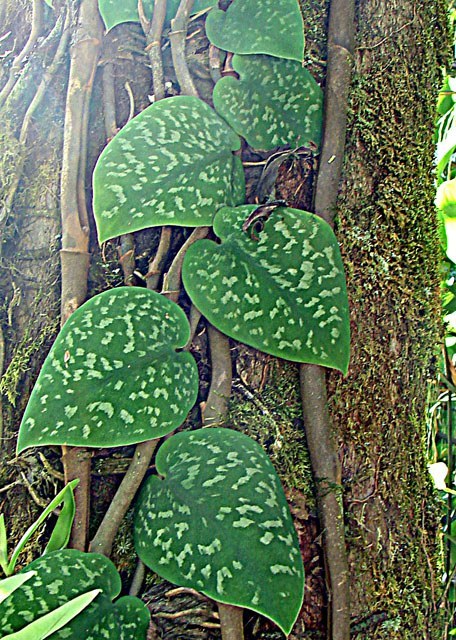
The thick, stiff, velvety leaves are deep emerald green and overlaid with a bold network of silvery-white veins, giving a dramatic, almost embroidered appearance.
It is an epiphytic to lithophytic plant that naturally clings to rocks and trees, so it appreciates a chunky, airy mix and good humidity. Compact and slow-growing, it is a favorite among aroid collectors.
How to identify it
Key features:
- Large, heart-shaped (cordate) leaves with a thick, leathery, velvety texture
- Dark green leaf surface crossed by striking silvery-white veins
- Compact, clumping habit; leaves typically 15 to 25 cm (6 to 10 in) long
- New leaves emerge bronzy and harden to deep green
- Inconspicuous green-to-purple spadix flowers, secondary to the foliage
Care & growing
Treat it like the epiphyte it is.
- Light: Bright indirect light; never direct sun, which scorches the velvety leaves
- Water: Water when the top few centimeters dry out; keep lightly moist, never soggy
- Soil: Very airy, chunky mix of orchid bark, perlite, and charcoal; excellent drainage is essential
- Temperature: Warm, 18 to 27 C (65 to 80 F), with high humidity (60%+)
- Feeding: Dilute balanced fertilizer monthly in the growing season
- Propagation: By division of clumps or seed; grows slowly
Habitat & origin
Native to southern Mexico, particularly Chiapas, where it grows on shaded limestone rocks and cliffs (lithophytic) and sometimes on trees.
Its natural habitat is humid, shaded tropical forest with excellent drainage. In cultivation it is grown indoors or in greenhouses and terrariums by collectors who can provide warmth and humidity.
Frequently asked questions
Why are the leaves so stiff and velvety?
Anthurium Clarinervium is sometimes called the velvet cardboard anthurium because its thick, sturdy leaves have a velvety surface, an adaptation to its rocky native habitat.
What soil does it need?
A very chunky, fast-draining mix of orchid bark, perlite, and charcoal. As a lithophyte it hates dense, water-retentive soil that can rot its roots.
Does it need high humidity?
Yes. It thrives at 60% humidity or more. In dry air the leaf edges can brown, so a humidifier or terrarium helps.
How big do its leaves get?
The heart-shaped leaves typically reach 15 to 25 cm (6 to 10 in) long on a compact, slow-growing, clumping plant.
Anthurium Clarinervium guides
In-depth guides for identifying, growing, and caring for Anthurium Clarinervium.
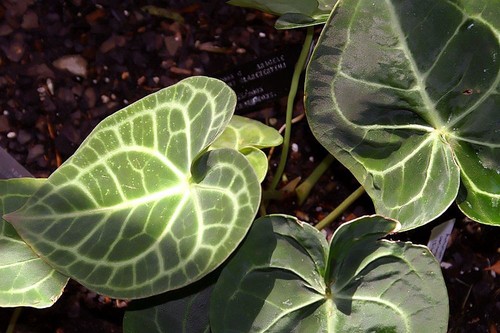
How to Care for Anthurium Clarinervium
Grow the velvety-leaved Anthurium clarinervium with bright indirect light, a chunky airy mix, and steady warm humidity.
Anthurium Clarinervium Identification Guide
Identify Anthurium clarinervium by its velvety dark-green heart-shaped leaves with bold silvery-white vein networks.