Venus Flytrap
Dionaea muscipula
The iconic carnivorous plant whose hinged, toothed leaf traps snap shut on insects in a fraction of a second. Native only to a small region of the Carolinas, it needs sun, pure water, and a winter dormancy.
- Light
- Full sun to bright light
- Water
- Keep moist with rain or distilled water
- Difficulty
- Hard
Got a plant like this?
Identify any plant from a photo, free.
Overview
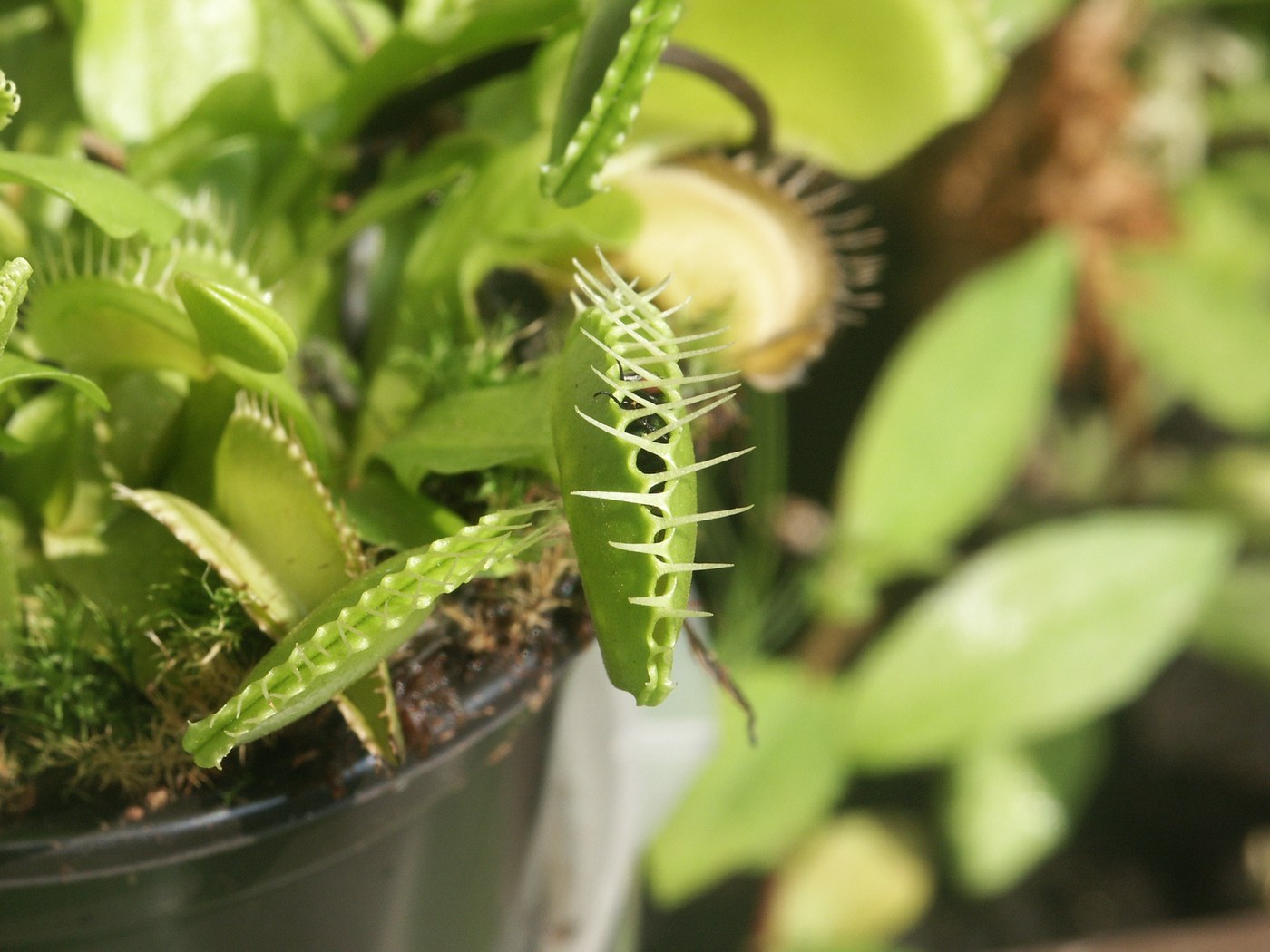
The Venus Flytrap, Dionaea muscipula, is the world's most famous carnivorous plant, instantly recognizable by its hinged traps fringed with spiky teeth that snap shut on unsuspecting insects.
Each trap has tiny trigger hairs; when an insect touches them twice in quick succession, the trap closes in under a second, then slowly digests the prey. Despite its exotic reputation, it is native to a tiny area of the southeastern United States and has specific care needs, including a true winter dormancy.
How to identify it
- Traps: Hinged, clam-shell leaf traps edged with stiff teeth (cilia)
- Trigger hairs: Tiny sensitive hairs inside each trap that detect prey
- Color: Green traps that flush deep red inside in strong light
- Habit: Low-growing rosette, typically under 5 in across
- Movement: Traps snap shut rapidly when triggered twice
Care & growing
Light: Lots of direct light — full sun outdoors or a very bright window; strong light deepens red trap color.
Water: Keep moist at all times using only rainwater, distilled, or reverse-osmosis water; tap minerals are deadly. Stand the pot in a shallow tray.
Soil: Nutrient-poor mix of sphagnum peat and perlite/silica sand; never use fertilized potting soil.
Temp & dormancy: Needs a cool winter dormancy (around 35–50°F) for several months to survive long-term.
Feeding: It catches its own bugs; don't fertilize and don't trigger traps for fun, which wastes energy.
Propagation: Division, leaf pullings, or seed.
Habitat & origin
The Venus flytrap is native to a very small region of the coastal Carolinas (North and South Carolina) in the United States, where it grows in nutrient-poor, acidic, boggy soils in full sun.
Its native habitat is threatened, and wild plants are protected. It is widely propagated and grown worldwide as a novelty carnivorous houseplant.
Frequently asked questions
Why is my Venus flytrap turning black?
Individual traps blacken and die naturally after catching prey or with age, which is normal. Widespread blackening can signal tap-water minerals or poor light.
Should I trigger the traps to watch them close?
Avoid it. Each closure costs the plant energy, and traps that snap repeatedly without food will weaken and die back.
Does it need a winter rest?
Yes. It requires a cool dormancy of a few months each winter; kept warm year-round it usually weakens and dies.
How does it catch insects?
Tiny trigger hairs inside each trap detect movement; when touched twice in quick succession the trap snaps shut in under a second, holding the insect inside.
Venus Flytrap guides
In-depth guides for identifying, growing, and caring for Venus Flytrap.
Venus Flytrap identified by the community
Real specimens identified with Plant Identifier.