Watermelon Peperomia
Peperomia argyreia
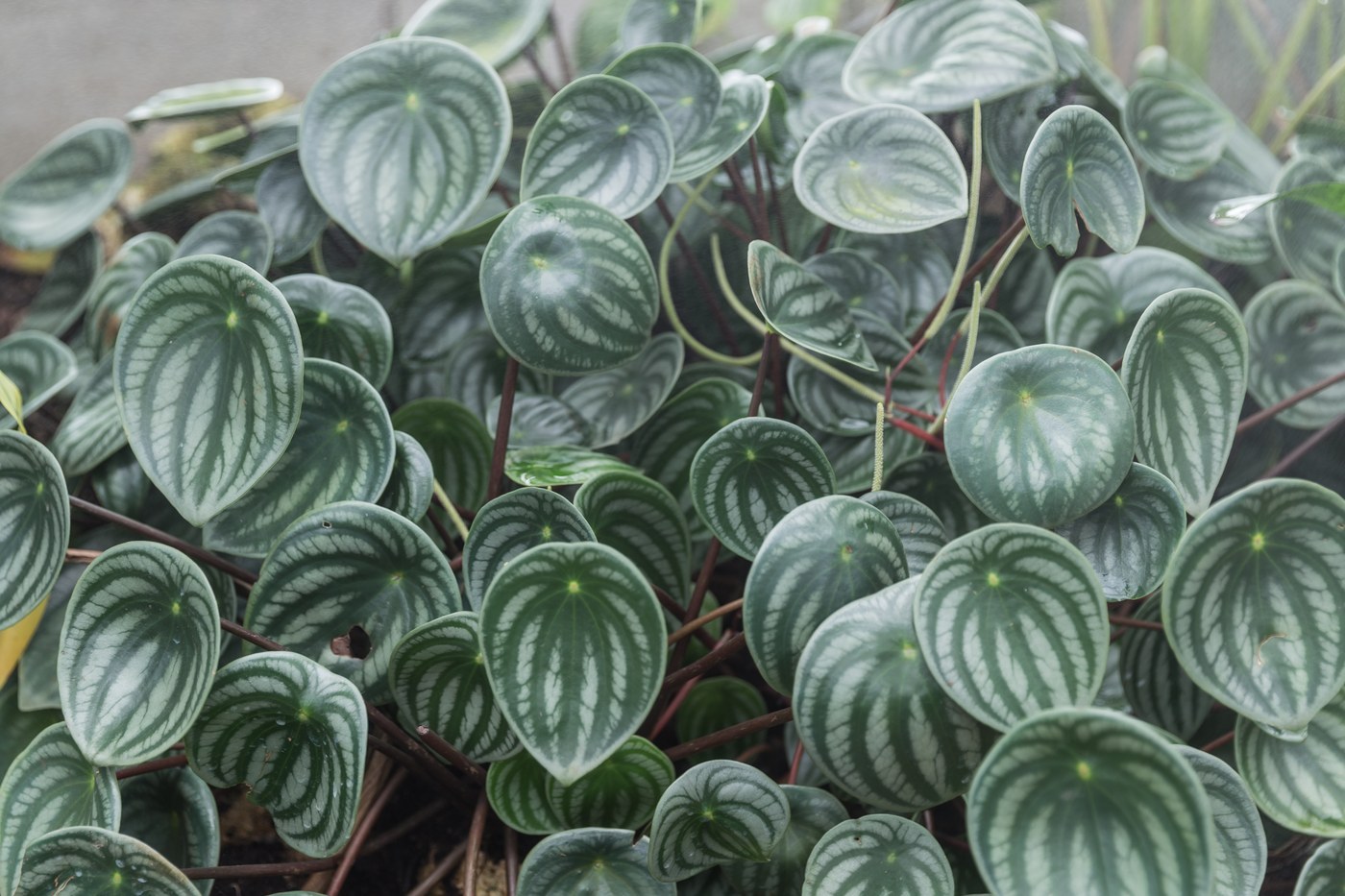
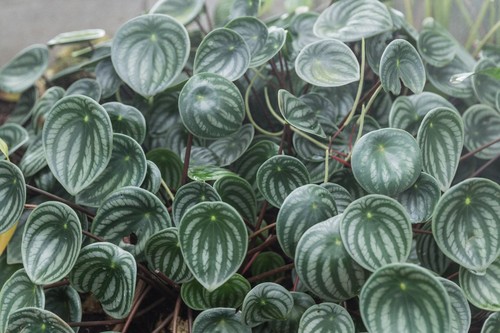
A compact houseplant with rounded leaves striped in silver and dark green that mimic watermelon rind, held on slender red stems. Tidy and easy to grow.
- Light
- Bright indirect light
- Water
- Let topsoil dry between waterings
- Difficulty
- Easy
Got a plant like this?
Identify any plant from a photo, free.
Overview
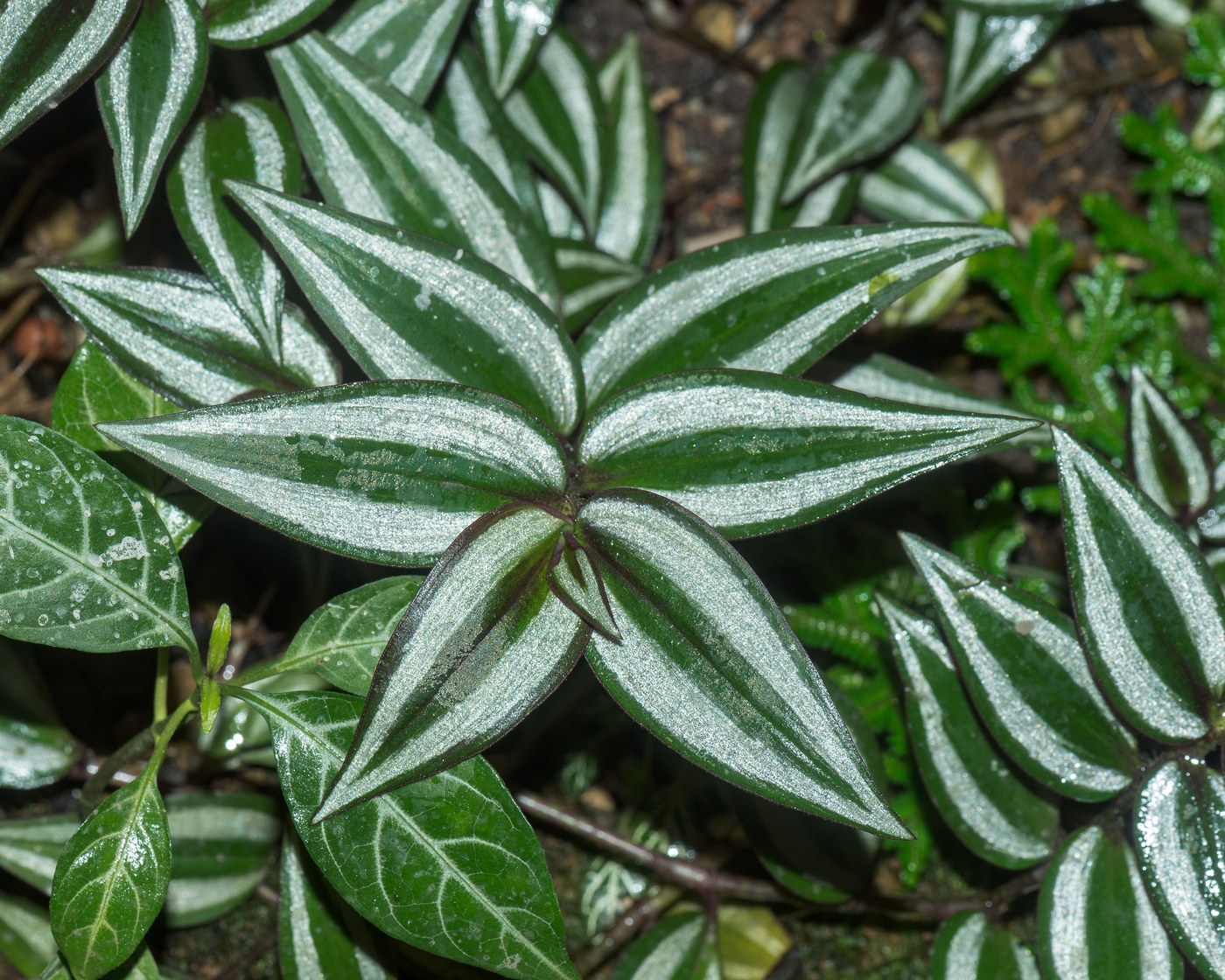
Watermelon Peperomia is a small, clump-forming houseplant named for the striking resemblance of its leaves to a watermelon's rind. Each rounded leaf is patterned with alternating silver and dark green stripes radiating from the center.
The semi-succulent leaves rise on thin reddish stems, forming a neat mound around 8-12 in tall. It is compact, slow to moderate growing, and forgiving, making it a popular and tidy desk or shelf plant.
How to identify it
Recognize it by:
- Leaves: rounded to teardrop-shaped, glossy, with curved silver and dark green stripes like watermelon skin
- Texture: slightly thick and semi-succulent
- Stems: slender, upright, reddish to maroon, attaching near the leaf center
- Size: compact mound, usually 8-12 in tall and wide
- Flowers: thin, erect greenish flower spikes (typical of peperomias), not showy
Care & growing
Light: Bright indirect light; avoid direct sun, which fades the markings and scorches leaves.
Water: Let the top inch of soil dry between waterings. The thick leaves store water, so it tolerates occasional dryness better than overwatering.
Soil: Light, airy, well-draining mix; avoid heavy soils that stay wet.
Temperature: 65-80F (18-27C); enjoys moderate humidity.
Feeding: Light, diluted fertilizer monthly in spring and summer.
Propagation: Easy from leaf cuttings (including the petiole) or division.
Habitat & origin
Native to South America, particularly Brazil, where it grows as a small understory plant in humid, shaded tropical forest, often in leaf litter and on the forest floor.
It is grown worldwide as a compact indoor foliage plant and thrives on bright windowsills, desks, and in terrariums.
Frequently asked questions
Why are my Watermelon Peperomia leaves curling or drooping?
Most often a watering issue. Drooping can come from both over- and under-watering, so check that the top inch dries between waterings and the pot drains freely.
How do I propagate Watermelon Peperomia?
Take a leaf with part of its stem, let it callus briefly, then root it in moist soil or water. New plantlets sprout from the cut base.
Why are the leaf stems so red?
The reddish to maroon petioles are a natural feature of the plant, not a sign of stress.
Watermelon Peperomia guides
In-depth guides for identifying, growing, and caring for Watermelon Peperomia.
How to Care for Watermelon Peperomia
Grow lush Watermelon Peperomia with its striped, teardrop leaves: bright indirect light, careful watering, and easy leaf propagation.
Watermelon Peperomia Identification Guide
Recognize Peperomia argyreia by its round, fleshy leaves striped silver and dark green like a watermelon rind, held on bright red stalks.