
How to Care for Watermelon Peperomia
Grow lush Watermelon Peperomia with its striped, teardrop leaves: bright indirect light, careful watering, and easy leaf propagation.
Read the full Watermelon Peperomia encyclopedia entry →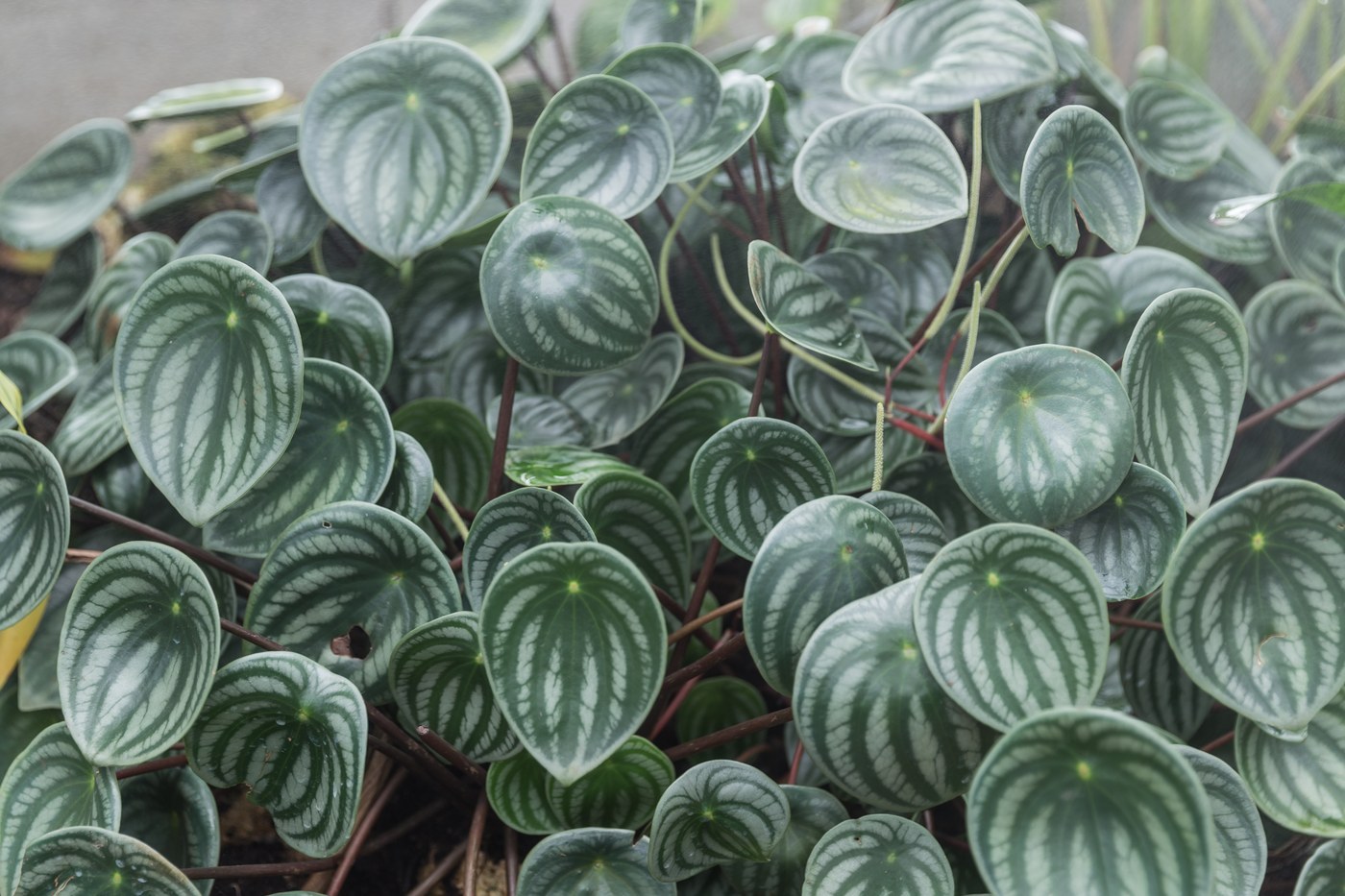
Watermelon Peperomia (Peperomia argyreia) is a compact, tidy houseplant prized for its rounded, teardrop leaves striped in silver and dark green, held on slender red stems. It is an easy, forgiving plant that stays small and looks great on a desk, shelf, or windowsill.
Light
Give it bright, indirect light. An east-facing window or a spot a few feet back from a brighter window is ideal. It tolerates medium light but the striking silver stripes fade and stems stretch in dim conditions. Avoid harsh, direct midday sun, which scorches the thin leaves and washes out their color. Rotate the pot every week or two for even, symmetrical growth.
Water
Let the top inch or two of soil dry between waterings, then water thoroughly until it drains from the bottom. Its thick, semi-succulent leaves and stems store moisture, so it prefers to run slightly dry rather than stay wet. Overwatering is the most common cause of trouble, leading to mushy stems and collapse. Water less in winter when growth slows. Always empty the saucer so the roots never sit in standing water.
Soil & Potting
Use a light, airy, fast-draining mix. A blend of standard potting soil with added perlite, orchid bark, or coarse sand works well, roughly two parts mix to one part drainage amendment. The plant has a small, shallow root system, so choose a snug pot with drainage holes rather than an oversized one that holds excess moisture.
Humidity & Temperature
Average household humidity suits it, though it enjoys a bit more moisture in the air, around 40 to 60 percent. Keep it in normal room temperatures of about 65 to 80 degrees Fahrenheit. Protect it from cold drafts, chilly windows in winter, and hot air from heating vents, all of which stress the foliage.
Feeding
Feed lightly during spring and summer with a balanced liquid houseplant fertilizer diluted to half strength, roughly once a month. This plant is a light feeder and does not need heavy fertilizing. Skip feeding in fall and winter while growth is dormant.
Propagation
Watermelon Peperomia propagates readily from leaf cuttings. Take a healthy leaf with a bit of its stem (petiole), or cut a leaf in half across its width. Let the cut end callus for an hour, then insert it into moist, airy propagation mix. Keep it warm, humid, and in bright indirect light. New plantlets emerge from the cut edge over several weeks to a couple of months.
Repotting / Pruning
Repot only every two to three years, or when roots fill the pot, moving up just one pot size. Spring is the best time. Little pruning is needed beyond snipping off any yellowed or damaged leaves at the base to keep the plant looking neat and to encourage a full, bushy shape.
Common Problems & Pests
Overwatering causes limp, blackened stems and root rot; ease up on water and improve drainage. Faded stripes usually signal too little light. Occasional pests include mealybugs, spider mites, and fungus gnats (the latter thriving in constantly moist soil). Wipe pests off with a cotton swab dipped in insecticidal soap and let the soil dry out to discourage gnats.
Seasonal Care Tips
In spring and summer, water regularly as the topsoil dries and feed monthly. In fall and winter, cut back watering sharply, stop fertilizing, and move the plant away from cold glass. Watch for winter stretching and supplement with brighter light if the plant reaches toward the window.
Frequently asked questions
Why is my Watermelon Peperomia losing its silver stripes?
Faded, washed-out striping is almost always a light issue. The plant needs bright, indirect light to keep its bold silver-and-green pattern. Move it closer to a bright window (but out of direct sun) and rotate it for even color.
How often should I water Watermelon Peperomia?
Let the top inch or two of soil dry out, then water thoroughly. Its semi-succulent leaves store water, so it prefers to run slightly dry. This often means every 7 to 10 days in summer and less in winter. Never let it sit in water.
Why are the stems on my Peperomia turning mushy?
Soft, blackened, mushy stems point to overwatering and root rot. Let the soil dry out, remove affected stems, and repot into a fast-draining mix if the problem persists. Always use a pot with drainage holes.
Can I grow Watermelon Peperomia from a single leaf?
Yes. Insert a leaf with a bit of its stalk into moist, airy propagation mix, keep it warm and humid in bright indirect light, and small plantlets will form at the cut over several weeks.