Wax Plant
Hoya carnosa
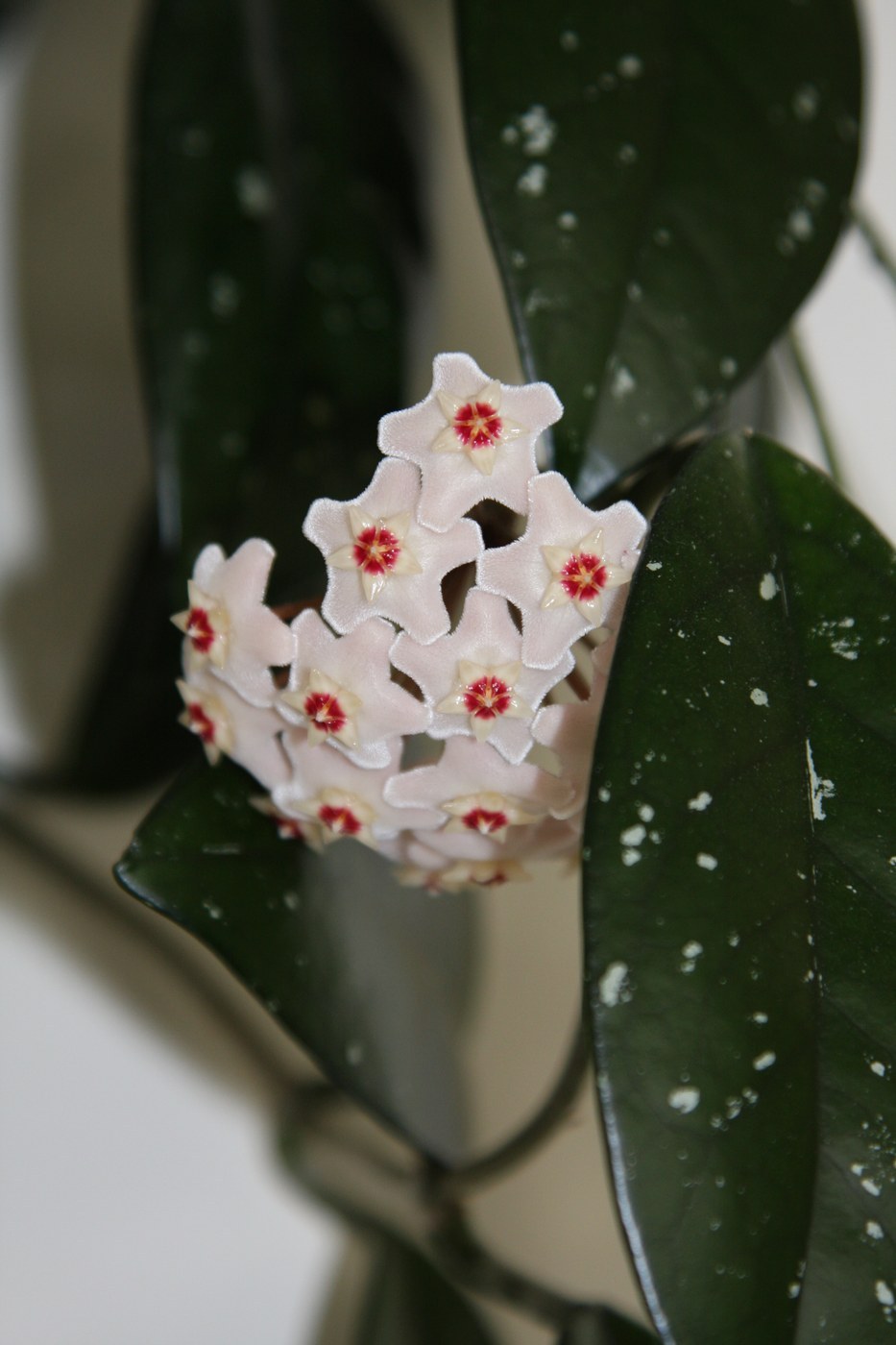
The wax plant is a long-lived trailing vine with thick, waxy leaves and clusters of star-shaped, sweetly scented flowers that look almost like porcelain.
- Light
- Bright indirect light
- Water
- When soil dries; let dry between
- Difficulty
- Easy
Got a plant like this?
Identify any plant from a photo, free.
Overview
Hoya carnosa is a semi-succulent climbing vine grown for its glossy, thick foliage and remarkable flowers. Mature plants produce rounded clusters (umbels) of small, star-shaped blooms that appear waxy or porcelain-like, often with a sweet evening fragrance and beads of nectar.
Hoyas are tough, slow to outgrow their pots, and tolerant of neglect, making them excellent houseplants. They climb or trail and can live for decades.
Flowers form on persistent stalks called spurs, which should never be removed since they rebloom year after year.
How to identify it
Identify the wax plant by:
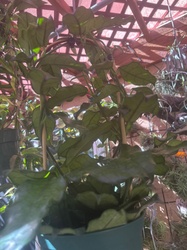
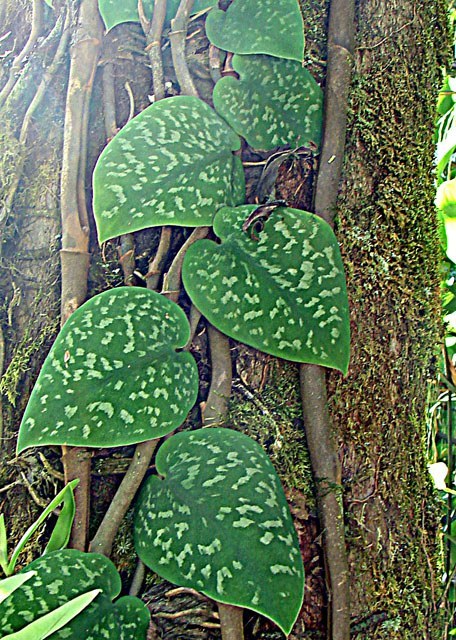
- Leaves: thick, waxy, oval, deep green (some variegated or with silver flecks)
- Vines: long, twining stems that climb or trail
- Flowers: tight, rounded clusters of small five-pointed star flowers, often pink with a red center
- Texture: blooms appear waxy or porcelain-like and may produce nectar droplets
- Spurs: bare flowering stalks that persist and rebloom
Care & growing
- Light: bright, indirect light; some gentle sun encourages blooming
- Water: water when the soil dries out, then water thoroughly; let it dry between waterings
- Humidity: average to high; tolerant of normal indoor air
- Soil: very well-draining mix, such as potting soil with orchid bark and perlite
- Temperature: 60-80 degrees F
- Feeding: light feeding during spring and summer
- Propagation: easy from stem cuttings with at least one node, rooted in water or soil
- Tip: do not remove old flower spurs, as they rebloom
Habitat & origin
Hoya carnosa is native to East Asia and Australia, ranging through southern China, India, and parts of Southeast Asia, where it grows as an epiphytic vine on trees in warm, humid forests.
It has become one of the most widely grown houseplant hoyas around the world, valued for its durability and fragrant blooms.
Frequently asked questions
Why won't my hoya bloom?
Hoyas often need to mature and be slightly root-bound before blooming, plus bright light. Give it ample indirect light, avoid repotting too often, and be patient.
Should I cut off the flower stalks after blooming?
No. Hoyas rebloom from the same spurs each year, so leaving the old flower stalks in place encourages future flowers.
Why are my hoya leaves shriveling?
Shriveled, soft leaves usually signal underwatering or, less often, root rot from overwatering. Check the roots and adjust to a thorough-then-dry watering routine.
Wax Plant guides
In-depth guides for identifying, growing, and caring for Wax Plant.
How to Care for Wax Plant
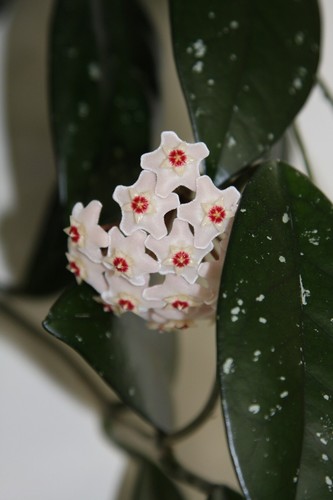
Grow a lush Hoya carnosa with the right light, careful watering, and patience for its fragrant, star-shaped flower clusters.
Wax Plant Identification Guide
Identify the Wax Plant (Hoya carnosa) by its thick waxy leaves, twining vines, and clusters of star-shaped, sweetly scented flowers.
Wax Plant identified by the community
Real specimens identified with Plant Identifier.