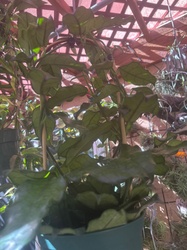
Wax Plant Identification Guide
Identify the Wax Plant (Hoya carnosa) by its thick waxy leaves, twining vines, and clusters of star-shaped, sweetly scented flowers.
Read the full Wax Plant encyclopedia entry →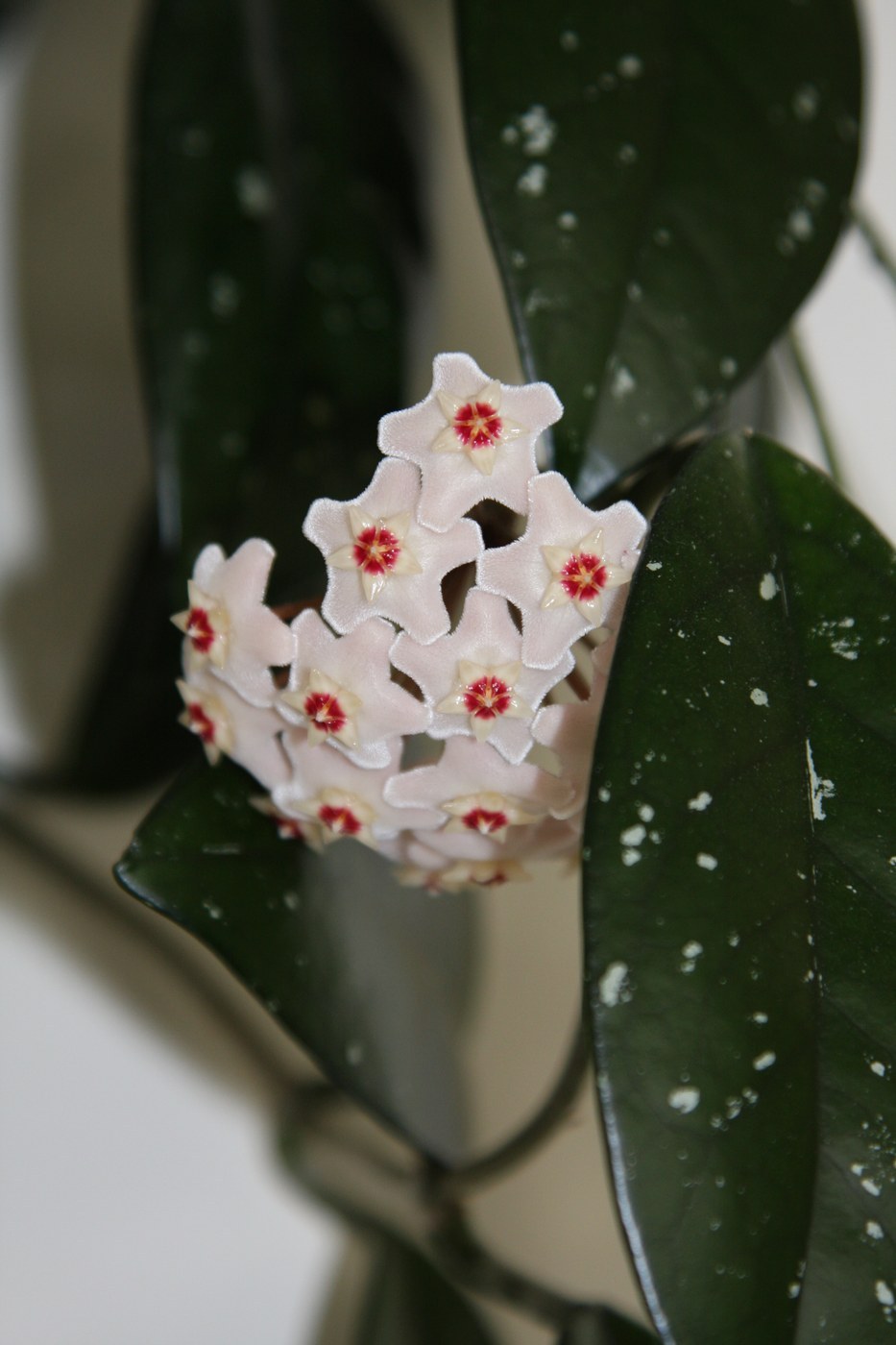
Key Identifying Features
The Wax Plant (Hoya carnosa) is a long-lived tropical climbing vine grown for both its thick, glossy, waxy leaves and its remarkable ball-shaped clusters of star-flowers. It belongs to the milkweed subfamily (Asclepiadoideae) and is an epiphyte in nature.
- Leaves are succulent, stiff, and coated in a waxy sheen
- Stems twine and trail, often producing long bare runners
- Flowers form rounded umbels of waxy, star-shaped, fragrant blooms
Leaves & Stems
The waxy foliage gives the plant its name and is a strong ID feature:
- Leaves are opposite, oval to elliptical, 5-8 cm long, thick and fleshy/succulent
- Surface is deep green and highly glossy, almost plastic-looking; some cultivars are variegated with cream or pink, or speckled silver
- Stems are flexible, twining vines that climb supports and send out long, leafless searching tendrils
- Cut stems exude a milky sap
- Flowers grow from persistent woody spurs (peduncles) — never remove these, as they rebloom
Flowers & Fruit
The blooms are the showstopper:
- Hemispherical clusters (umbels) of 15-40 tiny flowers
- Each flower is a perfect five-pointed star, waxy and often pale pink to white with a red or pink central crown (corona)
- They look almost artificial or porcelain-like and produce a sweet evening fragrance and droplets of nectar
- Fruit is a slender paired follicle (milkweed-type pod), rare on houseplants
How to Tell It Apart from Look-Alikes
- String of hearts / other trailing succulents: lack the woody flowering spurs and star-shaped umbels.
- Stephanotis (Madagascar jasmine): a related vine but with larger trumpet-shaped white flowers, not star clusters.
- Hoya's signature is the thick waxy leaves + porcelain-like star-flower balls + milky sap, a unique trio.
Where You'll Find It
A classic houseplant and hanging-basket vine, the Wax Plant is prized for tolerating neglect and living for decades. Native to East Asia and Australia, it grows wild as an epiphyte clinging to trees in warm, humid forests.
Quick ID Checklist
- Thick, waxy, glossy succulent leaves
- Twining/trailing vine with long bare runners
- Milky sap when cut
- Ball-shaped umbels of five-pointed star flowers
- Flowers waxy, fragrant, with a central crown
Waxy leaves plus clusters of porcelain star-flowers confirm a Hoya carnosa.
Frequently asked questions
Why is it called a Wax Plant?
Both the thick, glossy leaves and the star-shaped flowers have a distinctly waxy, almost artificial sheen. This waxy texture is one of the easiest ways to identify Hoya carnosa.
Should I cut off the old flower stalks?
No. Hoyas rebloom from the same woody spurs (peduncles) year after year, so removing them prevents future flowers. The persistent spurs are also a clue that you have a Hoya.
What do the flowers look like?
They form rounded clusters of many tiny, five-pointed star flowers, usually pale pink or white with a contrasting red or pink central crown, and they often look like porcelain and smell sweet in the evening.
How do I tell a Hoya from other trailing houseplants?
Look for the combination of thick waxy succulent leaves, milky sap when cut, and the unique ball-shaped umbels of waxy star flowers, which together are unique to Hoya.
Wax Plant identified by the community
Recent Wax Plant specimens identified with Plant Identifier.