Velvet Calathea
Goeppertia rufibarba
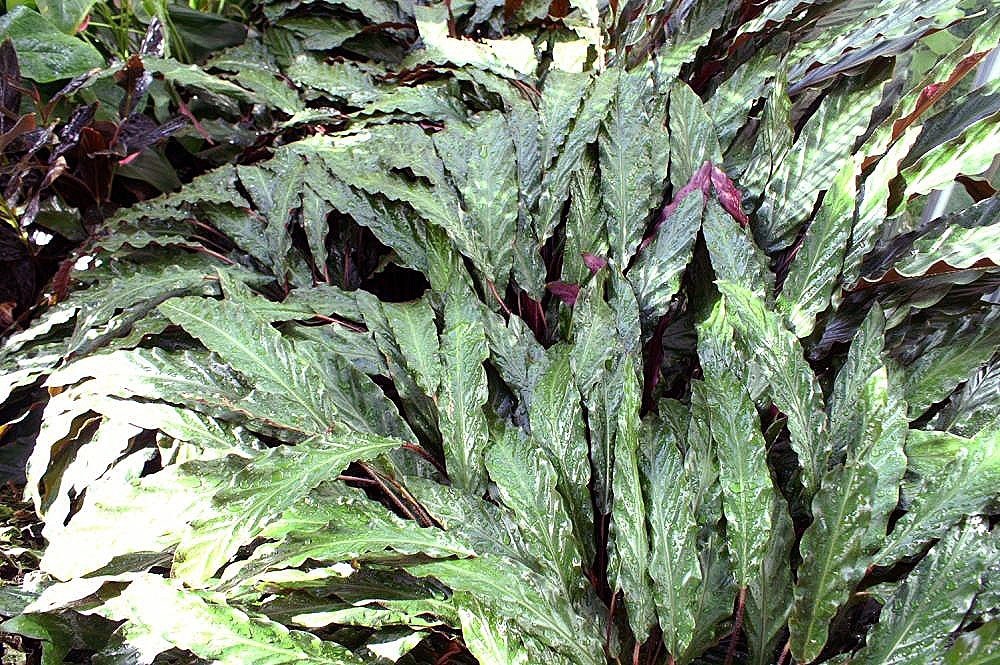
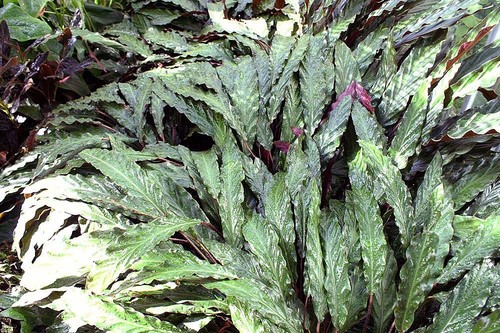
A prayer-plant relative with long, wavy-edged leaves that are velvety to the touch and flushed deep maroon underneath. Beautiful but thirsty for humidity and sensitive to hard water.
- Light
- Medium to bright indirect light
- Water
- Keep evenly moist
- Difficulty
- Hard
Got a plant like this?
Identify any plant from a photo, free.
Overview
Velvet Calathea, also sold as Calathea rufibarba, is a member of the prayer-plant family (Marantaceae) now classified in the genus Goeppertia. Its narrow, ruffled leaves have a soft, fuzzy texture and a striking maroon-purple underside.
Like other calatheas it performs nyctinasty, folding its leaves upward at night and relaxing them by day. It is undeniably gorgeous but demands consistent humidity, warmth, and clean water, placing it firmly among the more challenging houseplants.
How to identify it
Identify it by long, narrow, wavy-edged leaves with a velvety surface and reddish-purple undersides.
- Leaves: elongated, lance-shaped, with rippled (undulate) margins
- Texture: softly fuzzy/velvety on the surface and stems
- Underside: rich maroon to burgundy purple
- Movement: leaves rise at night and lower during the day
- Size: clumping, reaching 1-3 ft tall
Care & growing
Light: Medium to bright indirect light; direct sun fades and scorches the leaves.
Water: Keep the soil evenly moist, never soggy or bone dry. Use filtered, distilled, or rainwater, since fluoride and salts cause brown edges.
Soil: Rich, well-draining, moisture-retentive mix.
Temperature: Warm, 65-80F, away from cold drafts.
Humidity: High humidity is essential; use a humidifier or pebble tray.
Feeding: Diluted fertilizer monthly in the growing season.
Propagation: By division of the rhizome clump during repotting.
Habitat & origin
Native to Brazil, where it grows on the humid, shaded floor of tropical rainforests.
It is grown worldwide as an ornamental houseplant and is best suited to warm, humid spots such as bright bathrooms or rooms with a humidifier.
Frequently asked questions
Why are the leaf edges turning brown?
Most often low humidity or mineral buildup from tap water. Raise humidity and switch to filtered, distilled, or rainwater.
Why are the leaves curling?
Curling usually signals underwatering, low humidity, or stress from cold or direct sun. Keep it warm, humid, and evenly moist.
Why do the leaves move up and down?
This natural rhythm, called nyctinasty, raises the leaves at night and lowers them by day. It is normal and a sign of a healthy plant.
Velvet Calathea guides
In-depth guides for identifying, growing, and caring for Velvet Calathea.
How to Care for Velvet Calathea
Master Velvet Calathea (Goeppertia rufibarba) with bright indirect light, evenly moist soil, high humidity, and soft water.
Velvet Calathea Identification Guide
Identify the Velvet Calathea (Goeppertia / Calathea rufibarba) by its wavy-edged leaves with a soft fuzzy underside and feathery texture. Includes look-alike comparisons.