
How to Care for Velvet Calathea
Master Velvet Calathea (Goeppertia rufibarba) with bright indirect light, evenly moist soil, high humidity, and soft water.
Read the full Velvet Calathea encyclopedia entry →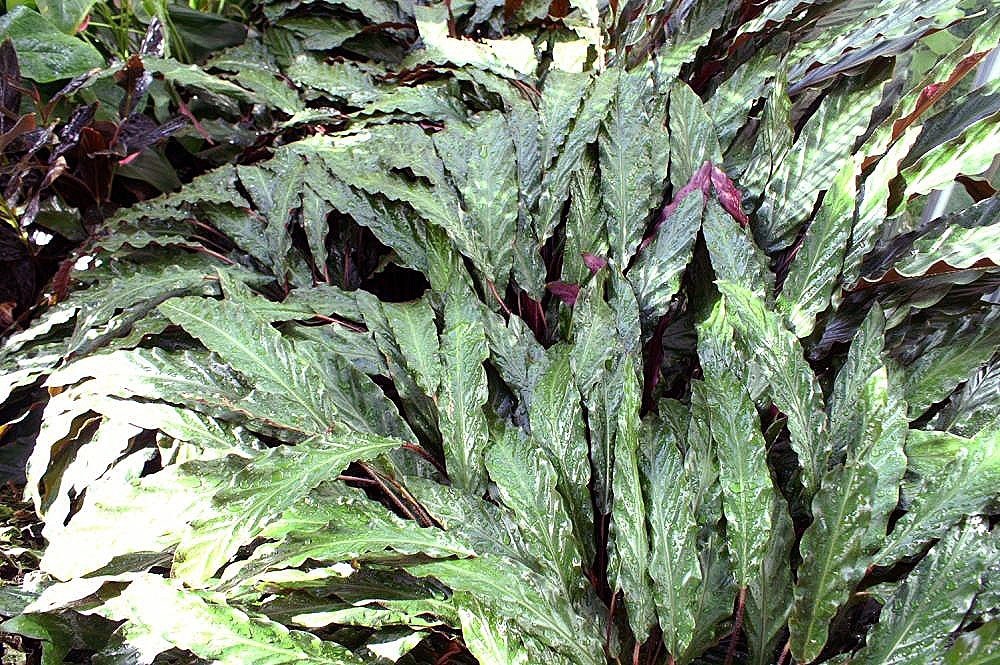
Velvet Calathea (Goeppertia rufibarba), also sold as Furry Feather calathea, is a striking prayer-plant relative with wavy-edged leaves covered in fine, velvety fuzz and rich maroon undersides. It is a demanding, humidity-loving houseplant that rewards attentive care with lush, dramatic foliage.
Light
Give it medium to bright indirect light. An east-facing window or a spot set back from a brighter window is ideal. Direct sun scorches and fades the velvety leaves, while too little light dulls the coloring and slows growth. Consistent, filtered light keeps the foliage at its best.
Water
Keep the soil evenly moist at all times, never soggy and never bone dry. Water when the top inch begins to feel slightly dry, and use lukewarm, low-mineral water. This species is sensitive to the salts, chlorine, and fluoride in tap water, so filtered, distilled, or rainwater helps prevent leaf-edge browning. Empty the saucer so roots never sit in water.
Soil & Potting
Use a light, airy, moisture-retentive mix: a peat- or coir-based potting soil loosened with perlite and a little orchid bark works well. The mix should hold moisture yet drain freely. A pot with drainage holes is essential to avoid waterlogging the sensitive roots.
Humidity & Temperature
High humidity is the key to success. Aim for 60% or more; a pebble tray, grouping with other plants, or a humidifier all help, and a humidifier is by far the most reliable. Keep temperatures warm and stable, around 65-80F (18-27C), and shield it from cold drafts, heating vents, and sudden temperature swings, all of which cause crisping and curling.
Feeding
Feed with a balanced, diluted houseplant fertilizer roughly monthly during spring and summer. This plant is sensitive to fertilizer salt buildup, so use a weak dose and flush the soil with plain water periodically. Stop feeding in fall and winter when growth slows.
Propagation
Propagate by division at repotting time. Gently separate the rootball into clumps, each with its own roots and several leaves, and pot them up individually in the same moist, airy mix. Keep divisions warm and humid while they re-establish. Stem or leaf cuttings do not work for this rhizomatous plant.
Repotting / Pruning
Repot every year or two in spring when roots fill the pot, moving up just one pot size. Prune only to remove damaged, yellowed, or crisped leaves, cutting them off at the base with clean shears. Minimal pruning is needed beyond tidying, since the plant grows from a central clump.
Common Problems & Pests
Browning, crispy leaf edges are the classic complaint, caused by low humidity, dry soil, or mineral-laden tap water; raise humidity and switch to filtered water. Yellowing leaves often signal overwatering or cold. Faded color points to too much light. Spider mites are the main pest, thriving in dry air, so keep humidity up and inspect the undersides regularly; treat with insecticidal soap if needed. Curling leaves usually mean the plant is too dry or too cold.
Seasonal Care Tips
In spring and summer, provide steady bright indirect light, keep the soil evenly moist, feed lightly, and maintain high humidity as growth accelerates. In fall and winter, reduce feeding and slightly ease watering, but keep humidity high, as indoor heating dries the air and stresses the leaves. Watch for cold drafts near windows during winter.
Frequently asked questions
Why are the leaf edges on my Velvet Calathea turning brown and crispy?
Crispy brown edges are usually caused by low humidity, soil drying out, or minerals in tap water. Raise humidity above 60%, keep the soil evenly moist, and switch to filtered, distilled, or rainwater.
What kind of water should I use for Velvet Calathea?
It is sensitive to chlorine, fluoride, and salts, so use lukewarm filtered, distilled, or rainwater rather than straight tap water. This helps prevent leaf-edge browning.
How do I keep humidity high enough for Velvet Calathea?
Aim for 60% or more. A humidifier is the most reliable option; a pebble tray or grouping it with other plants also helps, though these are less effective on their own.
Can I propagate Velvet Calathea from a cutting?
No. This rhizomatous plant is propagated by division at repotting time, separating the rootball into clumps that each have roots and several leaves. Stem or leaf cuttings will not root.